

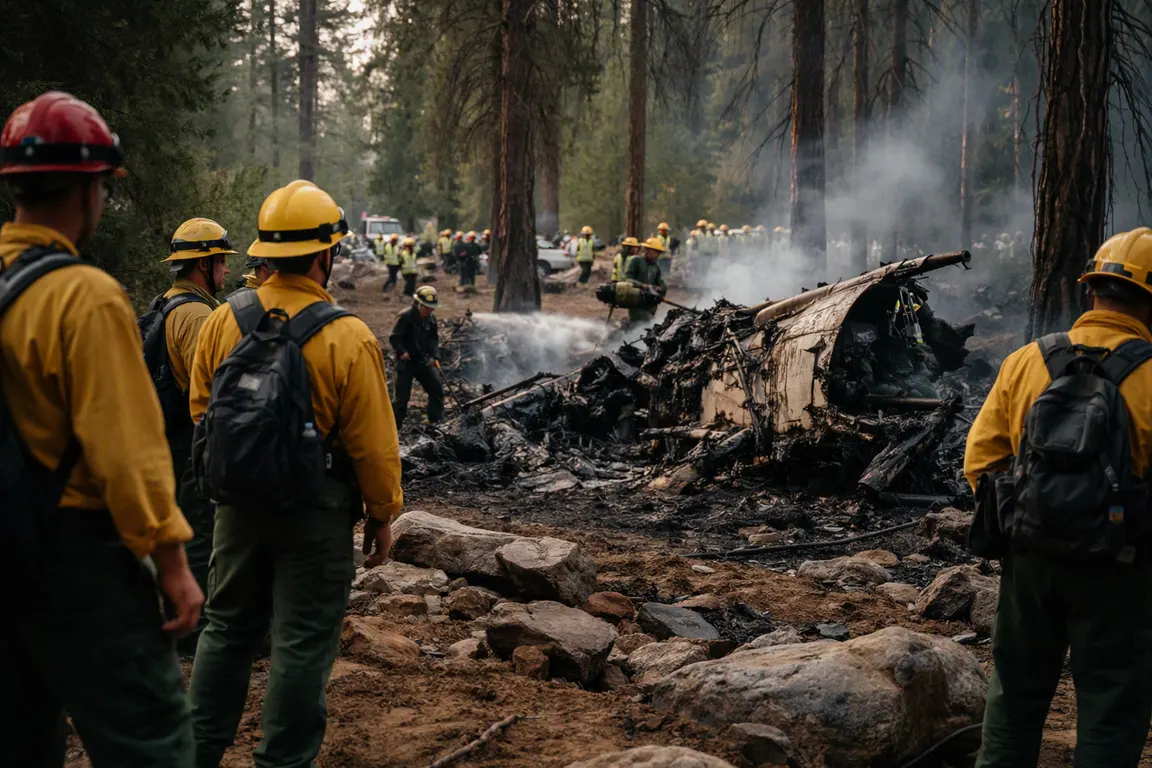
Two U.S. Forest Service‑contracted helicopters crashed Sunday afternoon while dropping water on the Yosemite Dome Fire, killing both pilots, the agency confirmed. The Federal Aviation Administration has opened an investigation into the accident.
The Dome Fire ignited on Sept. 15 near Wawona and has burned more than 3,000 acres. About 500 firefighters are on the ground protecting park structures, the historic Wawona Hotel district and nearby trailheads. The loss of two aerial crews comes as the fire’s rapid spread is stretching both personnel and equipment.
Both helicopters were on water‑drop missions when they went down around 3 p.m. No other crew members were injured. The FAA’s preliminary report says the aircraft were operating in “challenging conditions,” a term that typically refers to low visibility, turbulent air or terrain‑induced wind shear common in wildfire zones. The exact cause remains unknown pending a full investigation.
Helicopters are a cornerstone of modern wildfire suppression, delivering thousands of gallons of water or retardant to hotspots that ground crews cannot reach. With two aircraft now out of service, the remaining fleet will have to increase sortie rates, raising the risk of equipment wear and crew fatigue. The Forest Service has not said whether it will request additional helicopters from neighboring jurisdictions, though past incidents have prompted temporary reallocations.
The crash also puts a spotlight on safety protocols for firefighting aviation. Federal regulations require pilots to undergo specialized training for low‑altitude, low‑visibility operations, and aircraft must carry redundant communication and navigation systems. After a series of high‑profile accidents in recent years, the FAA has updated guidance on night flights and flight‑path deconfliction. Officials say the investigation will look for any procedural gaps that may have contributed to Sunday’s crash, but no policy changes have been announced.
Families of the two pilots have been notified and are receiving assistance through the Forest Service’s emergency assistance program, which offers counseling, financial aid and liaison services with veteran and first‑responder groups. Specific details of the support plans have not been released.
The Dome Fire continues to threaten the Wawona Hotel district and several visitor trailheads. Fire crews have contained roughly half of the fire’s perimeter, but hot spots remain on the northern flank where steep terrain hampers ground advancement. Forecasts call for gusty winds later this week, a factor that could reignite unburned sections and further test already‑strained resources.
The incident underscores a growing tension in wildfire management: longer, climate‑driven fire seasons are increasing demand for aerial suppression while the pool of qualified pilots remains limited. The FAA’s investigation will likely examine mechanical and environmental factors, as well as staffing levels, crew rest cycles and the adequacy of current training curricula.
For now, the Forest Service is focusing on stabilizing the Dome Fire with the assets still available while awaiting the FAA’s findings. The outcome of that investigation could shape future safety standards for firefighting aviation and influence how agencies allocate limited aerial resources during high‑risk wildfire events.