

West Bank Settler Assault Injures French Officials and EU
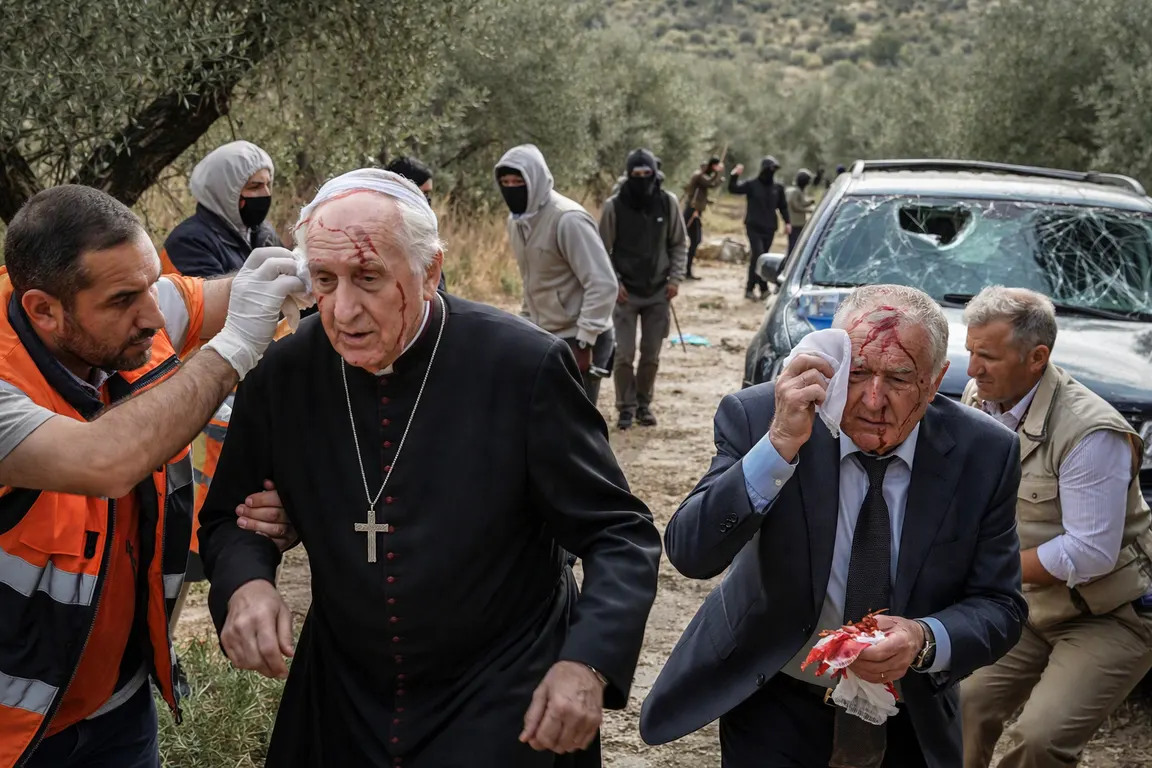
Masked Israeli settlers in the West Bank town of Taybeh carried out a West Bank settler assault that injured a French mayor, a French archbishop and three European diplomats while they observed an olive harvest on privately owned groves. All five victims were injured and a diplomatic‑plate vehicle sustained damage.
The victims were identified as Bernard Baudoux, mayor of Aulnoye‑Aymeries in northern France, and the archbishop of Cambrai, along with three unnamed European diplomats. According to The Guardian, the delegation was watching the harvest when a crowd of masked settlers confronted them, shouting, dragging the mayor and archbishop to the ground and striking the diplomats. The attackers also smashed the windshield of a vehicle bearing a diplomatic licence plate.
Israeli military spokesperson Colonel Yoav Mordechai condemned the violence, calling it "unacceptable" and promising a thorough investigation. He said the army does not tolerate attacks on civilians, foreign officials or property. In contrast, a spokesperson for Prime Minister Benjamin Netanyahu’s office dismissed the incident as part of a coordinated "smear" campaign aimed at tarnishing Israel’s image abroad.
The assault comes amid a documented rise in settler‑related incidents in the occupied territories. The United Nations Office for the Coordination of Humanitarian Affairs has recorded dozens of attacks on Palestinian farmers, journalists and civil‑society workers over the past year, many aimed at blocking agricultural activity. Olive harvesting, a seasonal livelihood for many West Bank residents, has become a flashpoint because it often occurs on land claimed by nearby settlements.
European officials responded with concern. France’s foreign ministry summoned the Israeli ambassador to convey "deep disappointment" over the assault on its mayor and archbishop. The European Union’s diplomatic service issued a statement urging Israel to ensure the safety of all diplomatic personnel in the territories. The United Kingdom’s foreign office warned its staff to exercise heightened caution when travelling to the West Bank, and several European embassies have begun reviewing security protocols for visits to the area.
The divergent messages from Israel’s defence establishment and the prime minister’s office raise questions about the government’s policy stance. While the army’s condemnation suggests an intention to prosecute the perpetrators, the political leadership’s framing of the incident as a media‑driven smear could limit pressure to hold settlers accountable. Analysts say the lack of a unified response may embolden further attacks, especially as settlement expansion continues and legal accountability remains uneven.
For Palestinian olive growers, the episode underscores the precariousness of their seasonal work. The Taybeh groves are privately owned by families who have faced repeated harassment from nearby settlers seeking to claim the land. Violence during the harvest threatens future yields, household incomes and the regional olive market, which supplies a significant portion of Europe’s extra‑virgin olive oil.
The incident is expected to surface in upcoming diplomatic engagements between Israel and European capitals. France, Germany and the United Kingdom are likely to raise the matter in bilateral talks, potentially linking aid and trade discussions to Israel’s handling of settler violence. Observers say the next step will be the Israeli military’s investigation report, which will determine whether charges are filed and how security measures for foreign delegations are adjusted.