

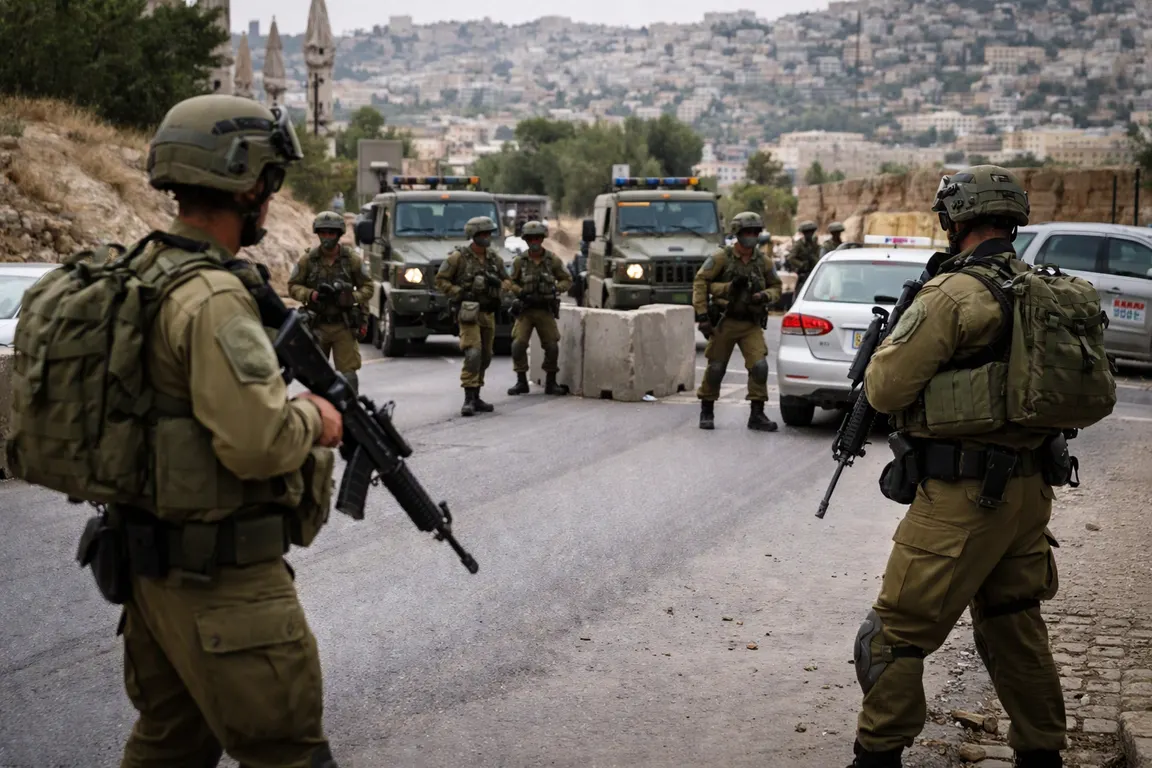
A gunfight near the Farsh al‑Hawa checkpoint outside Hebron on Friday left two Israeli soldiers dead and five Israeli civilians wounded, prompting Prime Minister Benjamin Netanyahu to order a full West Bank lockdown.
The clash began early Friday when two Palestinian men, armed with a handgun and an automatic rifle, opened fire near the checkpoint. Israeli troops returned fire, killing the attackers. Two soldiers were killed in the exchange, and five Israeli civilians in their twenties were wounded, two of them critically, according to local reports.
Within hours Netanyahu announced that the Israel Defense Forces would cordon Hebron and extend a territory‑wide lockdown across Judea and Samaria. The order calls for expanded checkpoint inspections, a dusk‑to‑dawn curfew in most towns, and “offensive counter‑terrorism operations” that include house raids and mass arrests.
Israeli forces have sealed off major roads linking Hebron to Jerusalem and Ramallah and deployed additional troops to monitor movement. Schools in Hebron and nearby villages have been ordered to close, businesses report a sharp drop in customers, and Palestinian workers who commute to Israel face new permit hurdles.
Human‑rights groups warn that the scale of the raids could affect hundreds of families, though the exact number of arrests has not been disclosed. The Palestinian Authority condemned the measures as collective punishment, while Hamas issued a statement praising the Hebron attack, a claim that remains unverified by independent sources.
The expanded checkpoint regime has lengthened travel times for Israeli commuters heading to settlements and cities, and the curfew limits movement for residents in the affected zones. Families of the wounded civilians have been urged to remain in hospitals, and security personnel report heightened alert levels across the country.
Politically, the timing of the crackdown is likely to influence voter sentiment ahead of Israel’s national election on Tuesday. Hard‑line parties are using the incident to argue for stricter security policies, while centrist factions warn that the heavy‑handed approach could alienate moderate voters who fear further escalation. Analysts note that security concerns have historically boosted support for right‑wing candidates, but the full impact of the lockdown on the vote remains uncertain.
The Israeli military says the operation aims to dismantle any remaining cells that could threaten civilians and to deter future attacks before the election. However, officials have provided little public guidance on curfew hours, road closures or the criteria for arrests, leaving many residents in a state of uncertainty.
As the lockdown continues, the next steps will depend on whether security pressure yields additional arrests or whether diplomatic pressure from the international community prompts a scaling back of restrictions. The episode underscores how a single firefight in Hebron has become a flashpoint that could shape Israel’s political landscape and the daily reality of millions living in the occupied territories.