

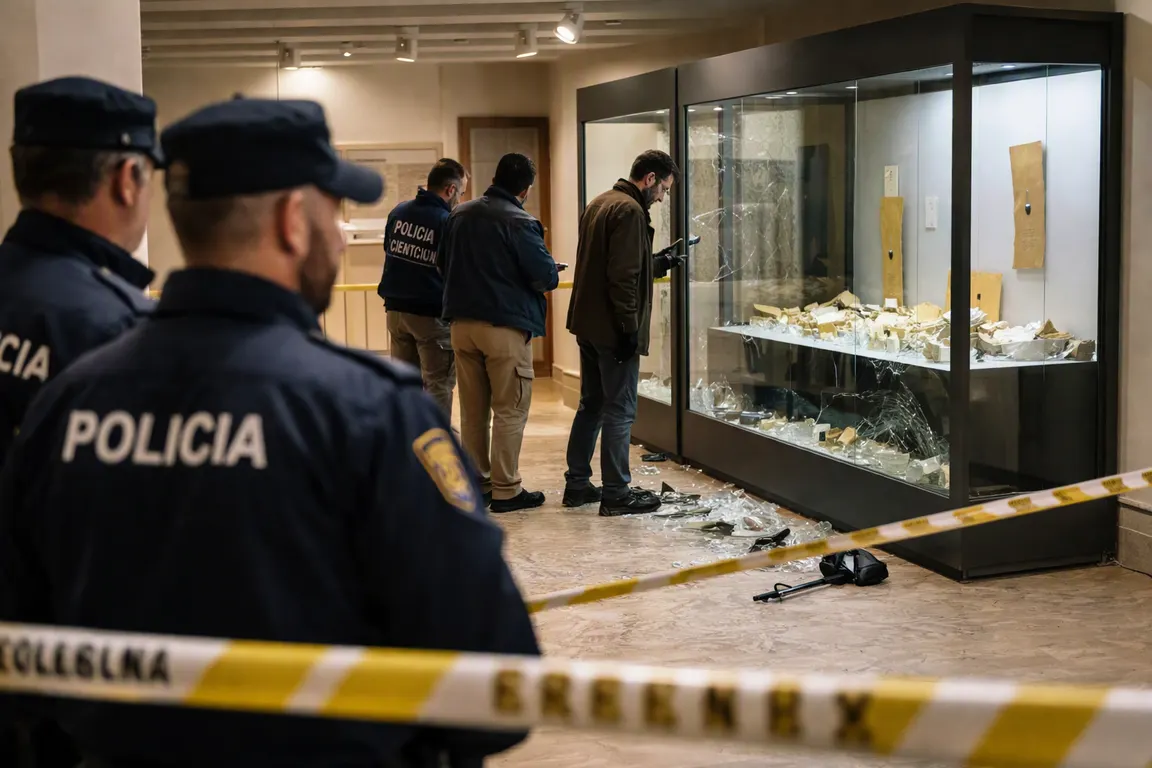
Thieves stole the bulk of the Treasure of Villena – Europe’s most important Bronze Age gold collection – from the municipal museum in Villena, Spain, in a raid that lasted about four minutes on Thursday morning. Police say the thieves disabled the alarm, entered the display hall and removed at least 50 gold objects, valued at a minimum of €1.7 million. The loss includes bowls, bottles, bracelets and other ornaments that together weigh almost 10 kg of gold.
The Treasure of Villena, catalogued at roughly 66 items, is considered the continent’s most significant prehistoric find because it offers rare insight into Bronze Age metallurgy, trade routes and social hierarchy. Its disappearance deprives scholars of a unique archaeological record.
According to investigators, the operation was “very well planned” and “super‑fast.” The alarm re‑triggered only after the thieves had cleared the cases, and museum staff discovered the empty displays within minutes.
Authorities have not disclosed the exact security measures that were in place, but the speed of the theft suggests existing surveillance, alarms and physical barriers were inadequate. The Ministry of Culture has ordered a review of security protocols at regional museums, though no specific reforms have been announced.
Beyond the cultural loss, the theft threatens the illicit antiquities market. Stolen gold can be melted down or sold on black markets, erasing provenance and eliminating any chance for further research. Police have opened a criminal investigation and are working with Interpol to track any movement of the artifacts.
Villena, a town that markets the Bronze Age exhibit as a tourist draw, now faces a blow to local pride and potential economic impact. School groups, researchers and visitors will find the centerpiece of the exhibition missing, prompting the museum to consider limiting public access to high‑value items while a full risk assessment is completed.
Museum officials say they will upgrade alarm systems, reinforce physical security and reassess display practices. The case remains open, and the incident has reignited calls across Europe for stronger protection of cultural heritage against organized crime.