

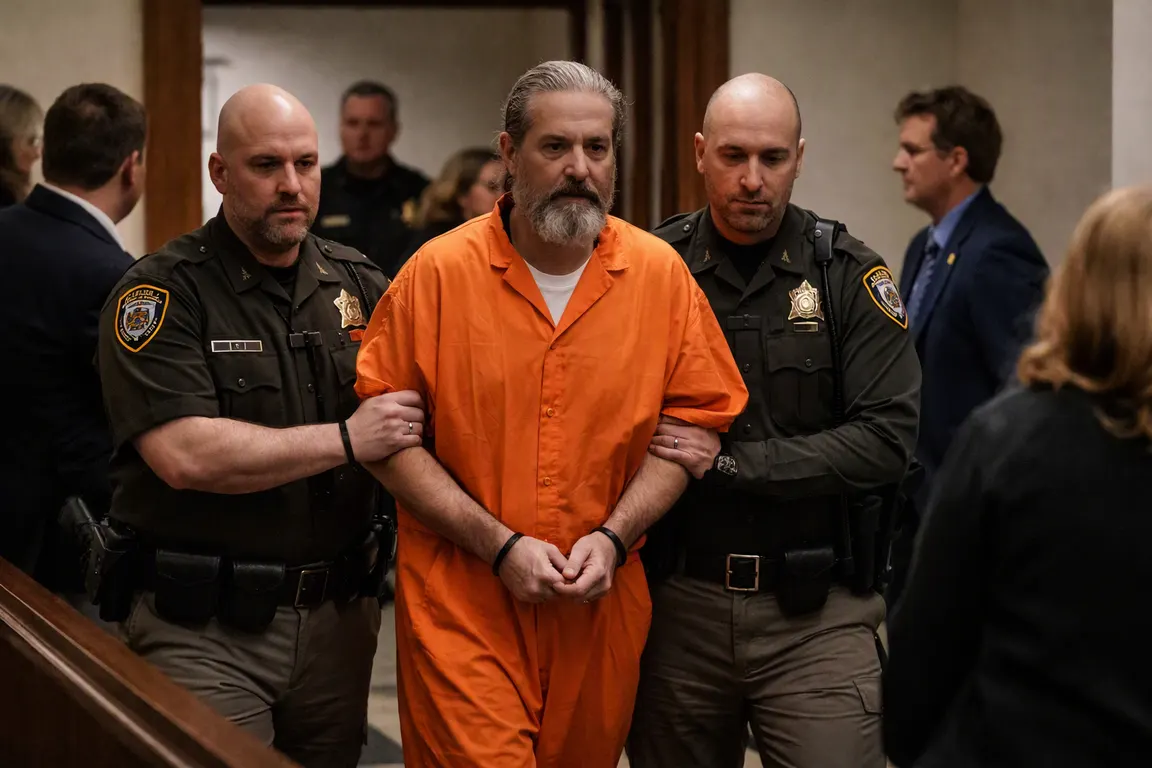
A Burlington jury delivered a Vermont attempted murder verdict, convicting Jason Eaton, 51, of attempted murder for the November 2023 shooting that injured three University of Vermont students and left one permanently paralyzed. The verdict rejected Eaton’s insanity claim that he acted on orders from U.S. and Israeli intelligence agencies.
On Nov. 12, 2023, Eaton opened fire on a sidewalk near the UVM campus, striking Hisham Awartani, Tahseen Aliahmad and Kinnan Abdalhamid. Awartani was left paralyzed from the waist down; Aliahmad and Abdalhamid suffered serious injuries but survived. Police quickly linked the gunfire to Eaton, a Burlington resident, and arrested him on suspicion of attempted murder and hate‑crime violations.
Eaton’s defense argued he was legally insane, asserting that the CIA and Israel’s Mossad had compelled him to carry out the attack. Prosecutors countered that the allegations were baseless and that Eaton acted on his own anti‑Palestinian bias. After several days of testimony, the jury returned a unanimous guilty verdict on the attempted‑murder charge and rejected the insanity defense. A sentencing hearing has not yet been set; the conviction carries a potential life sentence.
The jury’s rejection of the “foreign‑orders” defense highlights a growing judicial reluctance to accept speculative conspiracy claims in hate‑motivated crimes. Legal analysts say the verdict may deter future defendants from using similar arguments and reinforces the principle of personal responsibility.
University of Vermont officials have not released a detailed security plan, but campus police said they will review patrol routes, add lighting and install additional emergency‑call stations. Student groups, including the Arab Student Association, have called for stronger protection measures and a public condemnation of anti‑Palestinian bias. Burlington Mayor Miro Weinberger expressed relief that the case moved forward and pledged continued cooperation with law‑enforcement to address community safety concerns.
The conviction adds to a national conversation about hate‑crime legislation and the adequacy of existing statutes to address attacks targeting specific ethnic or national groups. While federal hate‑crime laws already cover such offenses, advocates argue that more robust reporting mechanisms and victim‑support services are needed to prevent future incidents.
Eaton’s sentencing date remains unknown, and the length of any prison term will be determined at that hearing. In the meantime, the University of Vermont community awaits concrete steps to restore a sense of security, and the broader public watches how the legal system continues to handle extremist‑motivated violence.