

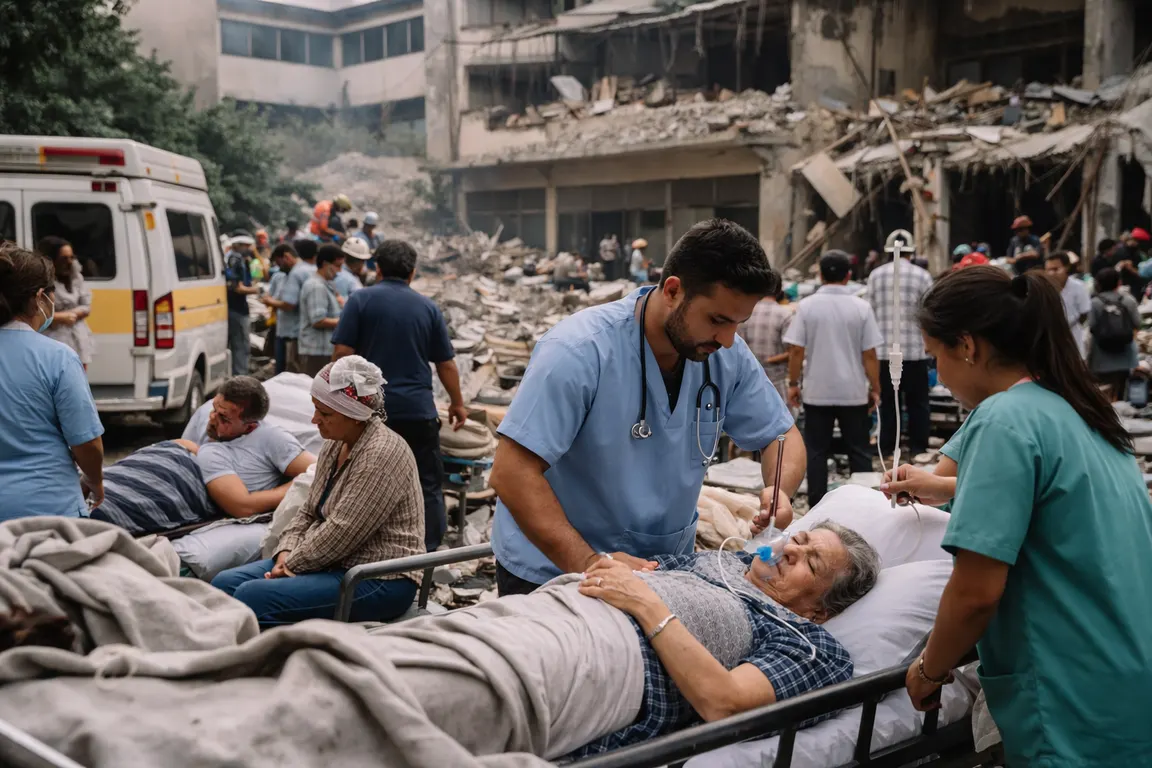
Two powerful earthquakes that hit Venezuela on June 24 have pushed the country's already fragile healthcare system to its limits, leaving thousands of people without access to medical care. The earthquakes have increased the risk of disease outbreaks, which could lead to a significant loss of life, according to the World Health Organization.
The death toll stands at over 1,900 people, with more than 10,500 injured and nearly 6,500 rescued from the rubble in La Guaira. The World Health Organization has warned of an increased risk of outbreaks of vaccine-preventable diseases such as measles and diphtheria. The United Nations estimates that 680,000 children are in need of humanitarian assistance nationwide.
The earthquakes have damaged or destroyed 58,870 buildings, according to NASA. Thousands of people have been left without access to medical care, food, and shelter. The earthquakes have had a significant impact on the country's economy, with an estimated $6.7 billion loss. The disaster has affected 7 million people in Venezuela, according to the UN.
The government's slow response to the disaster has been criticized by many Venezuelans. There is a discrepancy between the official death toll and the number of people reported missing, with some estimates suggesting that the true death toll could be much higher. The government has not provided an official count of missing people, leading to uncertainty and confusion.
As aid groups warn of a humanitarian crisis, the country's healthcare system faces its greatest challenge yet, with thousands of lives hanging in the balance. The WHO has warned that the risk of disease outbreaks will remain high in the coming weeks, and aid groups are working to provide medical care and supplies to those in need. The long-term implications of the disaster for Venezuela's economy and infrastructure are still unclear, but it is certain that the country will need significant support to recover.