

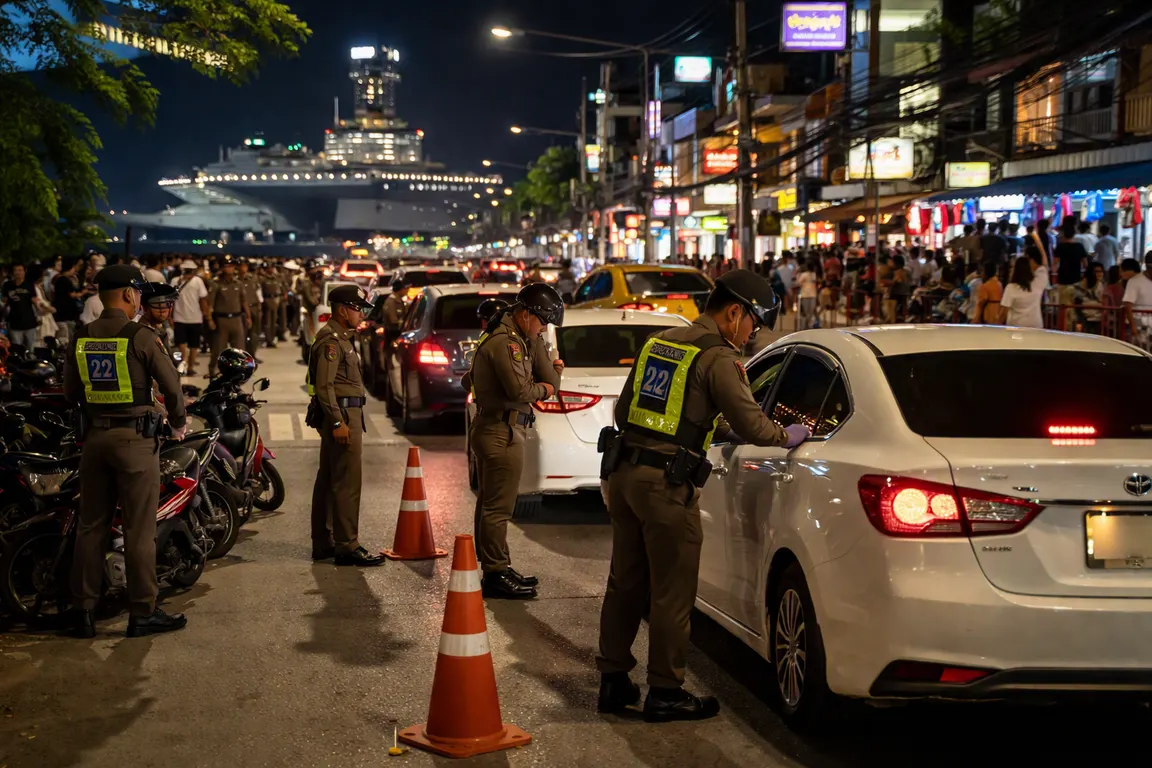
The USS Abraham Lincoln arrived at a port adjacent to Pattaya on Sept. 3, 2024, after a 250‑day Indo‑Pacific deployment. With about 5,000 sailors on shore‑leave, Thai police launched a city‑wide crackdown on illegal sex work.
Police set up checkpoints on the main roads to the beach, deployed additional uniformed units and mobile command posts near the harbor, and announced spot checks in known red‑light districts. The operation is being carried out without a publicly disclosed bilateral agreement on crew conduct, suggesting it is an ad‑hoc response to the expected influx of sailors.
Pattaya’s economy relies heavily on tourism, with a large share of revenue generated by bars, nightclubs, massage parlors and hotels that cater to nightlife seekers. A sudden surge of foreign sailors can boost sales for these venues, but the heightened police presence and threat of arrests may deter some patrons, raising concerns among business owners about lost earnings during the carrier’s stay.
Local residents have expressed mixed reactions. Some welcome the increased police visibility, citing past incidents linked to large numbers of foreign visitors, while others worry that the crackdown could disrupt the city’s tourism flow.
Neither the U.S. Navy nor Thailand’s Ministry of Defence has issued a formal statement outlining new conduct guidelines for sailors on shore‑leave. Existing rules remain unchanged, leaving sailors to navigate Thai prostitution laws on their own.
The situation underscores the tension that can arise when a major foreign military presence intersects with a host‑nation’s local economy and public‑order priorities. While the carrier’s visit highlights the strategic partnership between the United States and Thailand, it also forces Thai authorities to allocate resources that might otherwise be used for routine policing or tourism promotion.
The next few days will test how effectively Thai police can enforce the crackdown without unduly harming Pattaya’s tourism sector, and whether the U.S. Navy will seek a more formal conduct protocol for future port calls.