

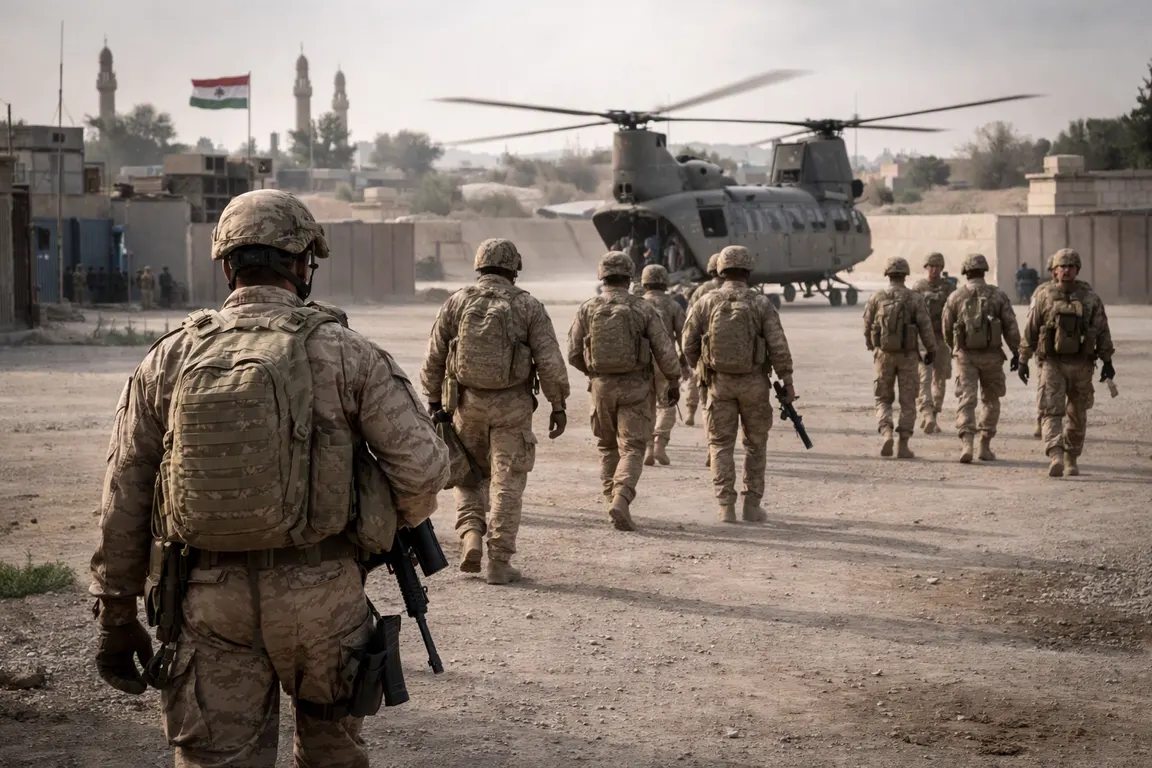
U.S. troops will pull out of the last remaining bases in Iraq on Wednesday, ending a two‑decade military presence that began with the 2003 invasion. The departure will be marked by nationwide “Sovereignty Days” ceremonies meant to underscore Baghdad’s reclaimed autonomy. The U.S. withdrawal Iraq creates an immediate security vacuum that Iraqi officials must fill while confronting a surge of armed militias and an expanding Iranian footprint, raising risks for civilians, critical infrastructure and regional stability.
For twenty years the United States maintained a network of air bases, training facilities and advisory outposts across the country. Recent diplomatic talks produced a withdrawal timetable, and the final convoy will roll out of Baghdad’s al‑Muthanna airfield, the last visible symbol of the U.S. footprint. No official figure has been released for the remaining troop count, but officials describe the force as “minimal” and focused on advisory roles.
At the same time, Iraqi leaders have pressed militia commanders to surrender weapons held by tens of thousands of fighters. Compliance has been limited; many groups that were formed to fight ISIS now operate as political and sectarian power bases. The Wall Street Journal notes that the shortfall in militia disarmament leaves a security gap that rival factions could exploit.
Analysts link the timing of the withdrawal to a broader shift in regional power dynamics. Tehran’s influence in Baghdad has expanded as Washington steps back, a view echoed by Al Jazeera, which describes Iraq’s balancing act as “high‑stakes.” Observers warn that Iran could fill the void left by U.S. forces, especially in areas where militias receive funding and training from Iran‑aligned networks.
For ordinary Iraqis, the stakes are concrete. Armed groups that retain weapons pose a direct threat to neighborhoods, increasing the likelihood of street clashes and reprisals. Critical services—electricity grids, water treatment plants and transport corridors—have already suffered disruptions from militia‑related incidents, and the loss of U.S. logistical support could worsen those vulnerabilities. Business owners and foreign investors are watching the security picture closely; heightened risk premiums could slow the modest economic recovery that followed the defeat of ISIS.
Regional actors are also recalibrating. Iran, Turkey and Gulf states are likely to adjust diplomatic and military postures in response to the new balance, potentially reshaping trade routes and security cooperation frameworks. The precise impact remains uncertain, as no detailed timeline for Iraqi security reforms or militia disarmament has been published.
Iraqi authorities say they will convene a high‑level security council next week to draft a joint plan for integrating militia members into state forces and strengthening border patrols. The council’s recommendations are expected to be provisional, and the timeline for full disarmament remains unclear.
As the last U.S. convoy leaves Iraqi soil, the nation stands at a crossroads where the promise of sovereignty collides with an entrenched militia landscape and a looming Iranian foothold, leaving policymakers and citizens alike to watch how the power shift unfolds.