

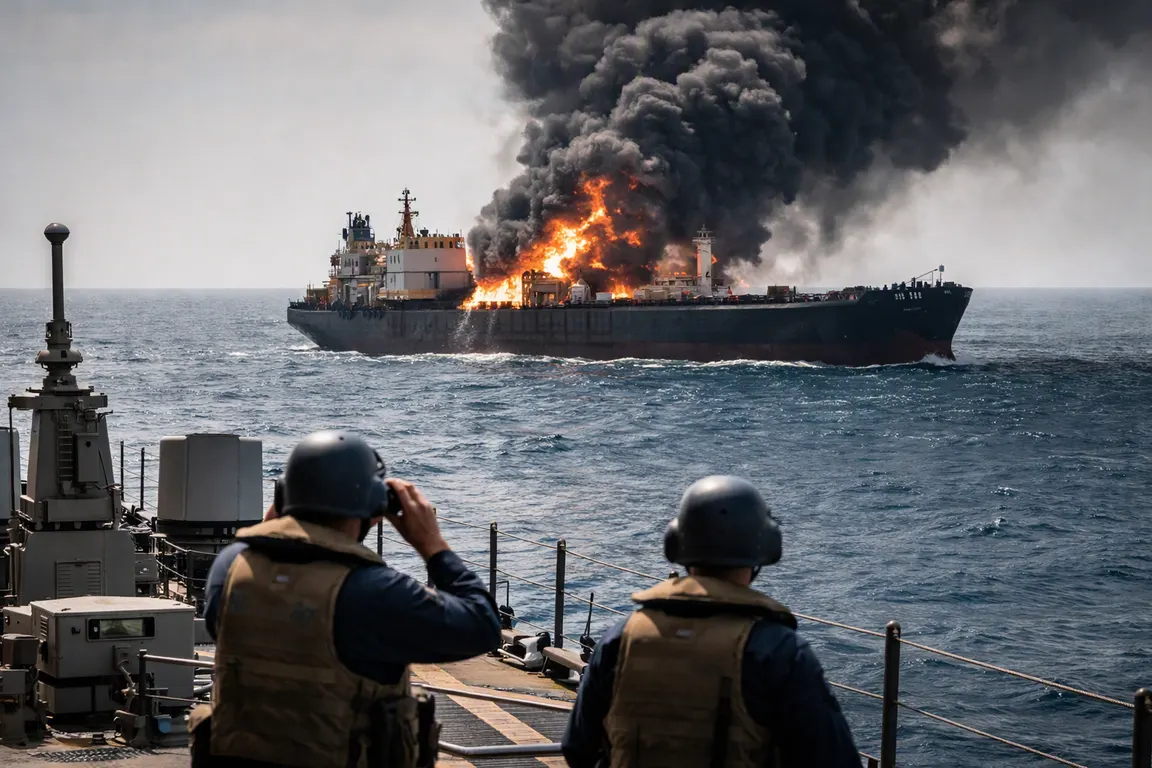
The United States hit three Iranian tankers in the Strait of Hormuz on Saturday, responding directly to missile launches aimed at a U.S. aircraft carrier and a destroyer patrolling the waterway. The strikes, carried out by aircraft launched from the carrier, marked the first kinetic response to Iranian fire in the region in months.
The Strait of Hormuz carries roughly one‑fifth of the world’s petroleum shipments, so any disruption can ripple through global oil markets, raise insurance costs for commercial vessels and strain regional economies that depend on uninterrupted export flows.
U.S. Central Command said the three tankers were targeted near Iran’s Kharg Island, the country’s main oil‑export hub. All were reported to be carrying crude, though cargo volumes were not disclosed. Iranian forces launched missiles toward the carrier and destroyer as they conducted routine patrols. U.S. warships maneuvered to avoid the projectiles and reported no injuries or damage to the ships.
After evading the missiles, U.S. aircraft struck the three tankers, which the United States described as “limited and exposed” elements of Iran’s oil fleet. U.S. officials warned that further attacks on Iranian oil infrastructure could follow if Tehran continued what they called hostile actions. The Islamic Revolutionary Guard Corps, which oversees Iran’s naval operations, was told that additional strikes would impose an “even higher economic cost.” No Iranian spokesperson confirmed or denied the missile launch, leaving the intent of the initial salvo unverified.
The incident raises immediate safety concerns for commercial shipping. Vessels transiting the Strait now face the prospect of being caught in a broader exchange between two militaries, a risk that could prompt operators to reroute or delay voyages. Such changes would tighten an already constrained corridor and could curtail the daily flow of an estimated 20 million barrels of oil.
Oil futures edged higher on reports of the strikes, reflecting trader anxiety over potential supply bottlenecks. If insurers raise premiums for ships operating in the waterway, freight costs could climb, adding pressure to the global price outlook. Regional economies that rely on oil export revenues—particularly Iran and Gulf Cooperation Council states—could see short‑term fiscal strain if reduced shipments materialize.
Analysts note that the escalation underscores the fragility of the status quo in the Gulf. While the United States framed its action as a proportionate response to protect its forces, neither side has indicated a willingness to step back, and the lack of public Iranian commentary adds uncertainty about future intentions.
Diplomatic channels are likely to shape the next steps. U.S. officials have signaled a willingness to continue targeting Iran’s oil‑transport capacity if missile threats persist, while Tehran’s military rhetoric suggests it may seek to impose additional economic penalties. Observers will watch for any official Iranian response and for moves by regional actors to either de‑escalate or bolster their own naval postures.