

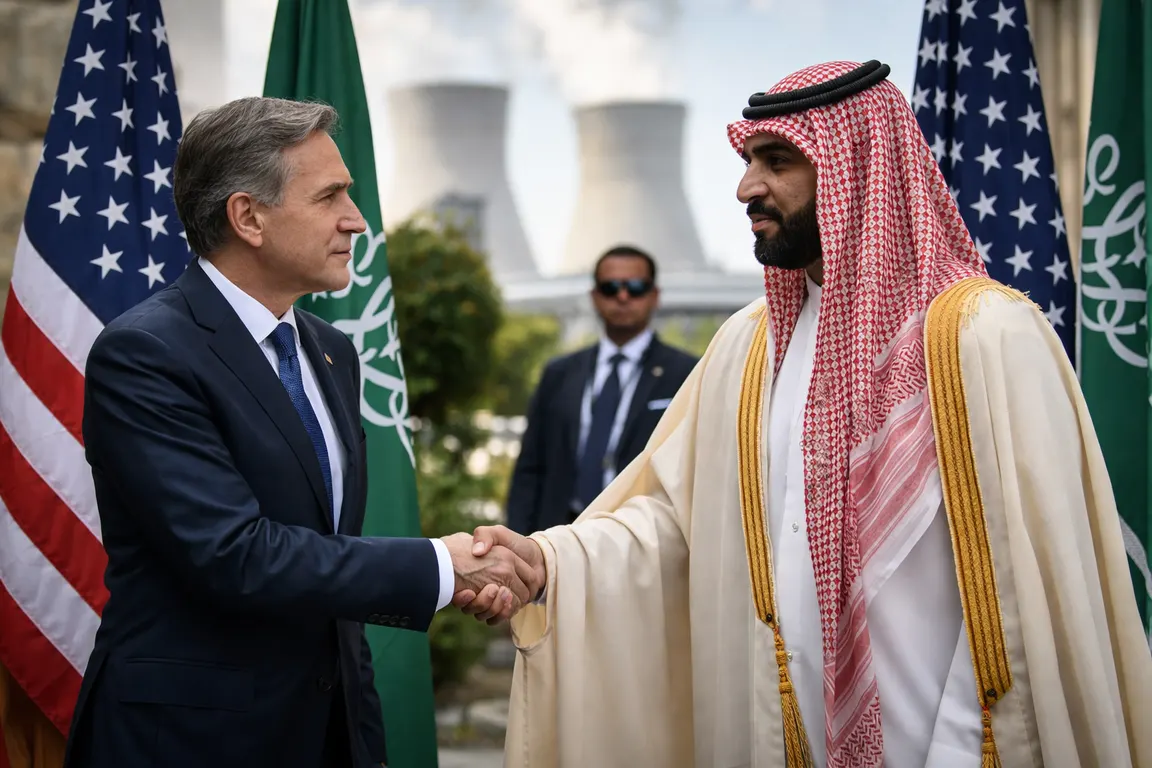
The US-Saudi nuclear deal's approval is now uncertain due to a new condition requiring Saudi Arabia to normalize relations with Israel. This development has sparked concerns over the deal's implications for regional stability and nuclear proliferation. The US and Saudi Arabia signed a civilian nuclear cooperation agreement, which will be sent to Congress for review.
The agreement allows US companies to build a uranium enrichment facility in Saudi Arabia but does not include enrichment of nuclear material. President Trump stated that the deal is contingent on Saudi Arabia joining the Abraham Accords, a move aimed at normalizing relations between Israel and Arab countries. The condition has introduced a new layer of complexity, with some questioning whether Saudi Arabia will agree to normalize relations with Israel.
The implications of this deal are far-reaching, with potential impacts on regional stability, nuclear proliferation, and US-Saudi relations. The agreement has been controversial among US lawmakers due to concerns over nuclear proliferation. As the deal moves forward, lawmakers and experts will be closely watching to see how Saudi Arabia responds to the new condition.
The economic implications of the deal are also significant, with potential benefits for both the US and Saudi Arabia. However, the deal's uncertain fate has raised concerns among investors and businesses. The next step will be for Congress to review the agreement, which will likely involve intense debate and scrutiny. The outcome is far from certain, leaving many to wonder what the future holds for the US-Saudi nuclear deal.
The US-Saudi nuclear deal's fate hangs in the balance, as Congress prepares to review the agreement. The deal's approval is uncertain, and its implications will be closely watched by lawmakers, experts, and the public. With potential impacts on regional stability, nuclear proliferation, and US-Saudi relations, the deal's outcome will have significant consequences for the region and the world.