

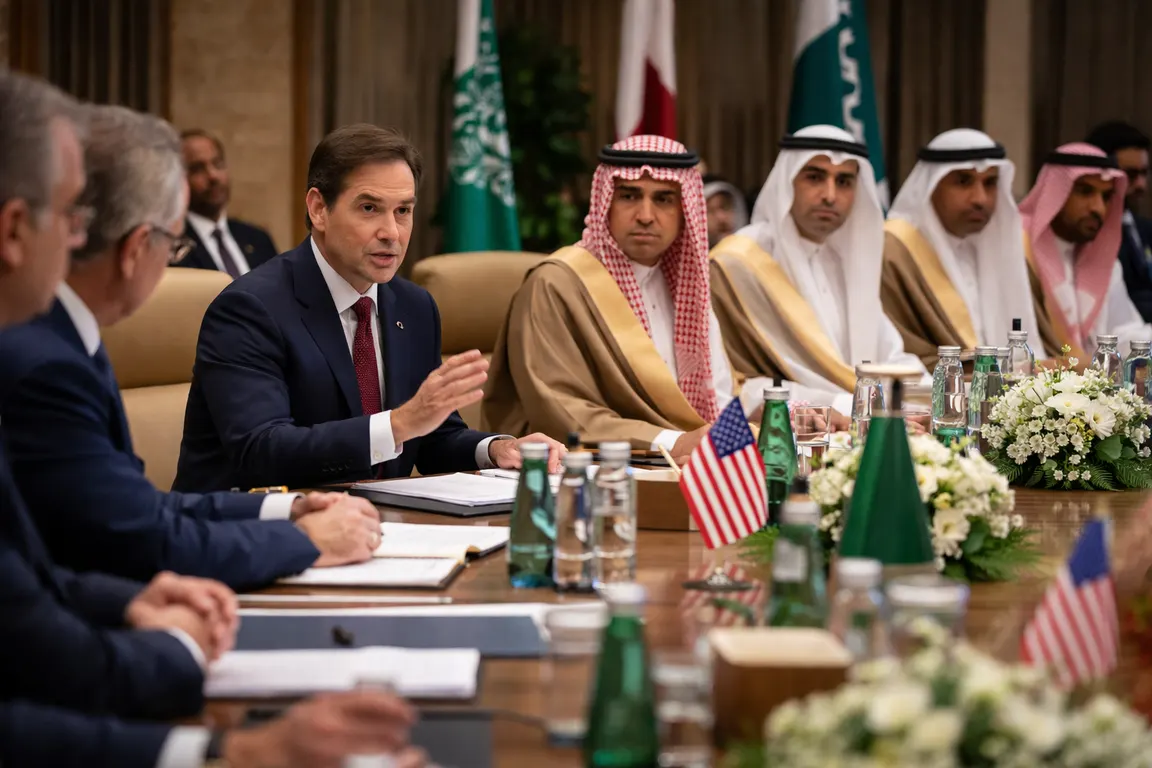
US Secretary of State Marco Rubio met with Gulf Cooperation Council states to address concerns about the Iran deal, particularly the Strait of Hormuz. The US is navigating a delicate balance in its negotiations with Iran, seeking to address the concerns of its Gulf allies while pushing for a deal that does not compromise regional security or stability.
The US and Iran signed a preliminary deal to end the conflict, with negotiations expected to touch on issues like Tehran's nuclear program and sanctions relief. The Strait of Hormuz is a crucial waterway for energy shipments, with the US and its allies rejecting Iran's plan to introduce maritime service fees. Oman's top diplomat, Badr Albusaidi, said plans for Hormuz do not entail the imposition of any transit fees.
A memorandum of understanding between Tehran and Washington stipulates that commercial ships may transit the strait free of charge for 60 days. The Gulf states, which rely on the Strait of Hormuz for oil and gas exports, are watching the negotiations closely. Global energy markets could be affected by any disruption to shipping in the strait. The US has asked Congress for nearly $88 billion in supplemental funding to cover the cost of the war.
Technical talks between the US and Iran are expected to resume in the coming days, with key sticking points including Iran's support for proxies and missile program. The US and its allies are seeking to ensure regional security and stability. Rubio's meeting with GCC states was an attempt to reassure them that their security concerns will not be sacrificed for the sake of a deal.
The current status of the US-Iran talks is uncertain, with the next steps in the process expected to be determined in the coming days. The potential consequences of a disruption to shipping in the Strait of Hormuz are significant, and the US and its allies will need to work to mitigate them. As the negotiations continue, the US will need to balance its desire for a deal with the need to address the concerns of its Gulf allies and ensure regional security and stability.