

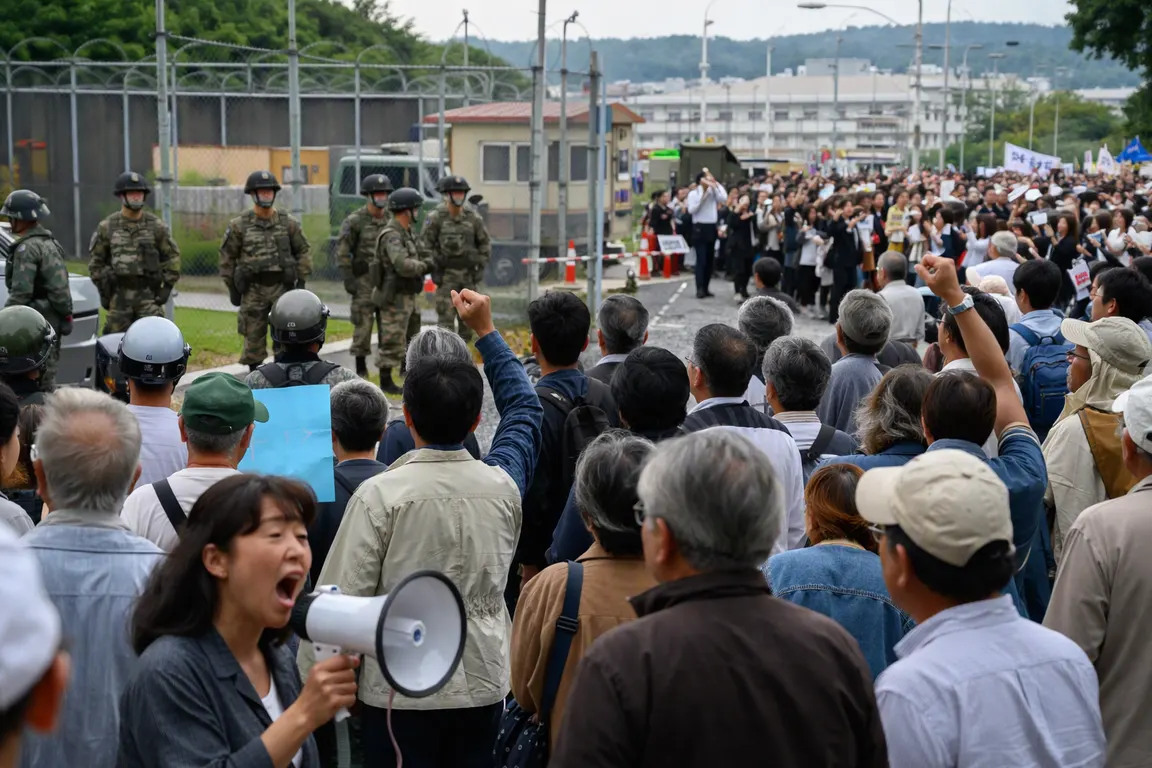
A U.S. Marine murder in Okinawa has sparked renewed protests over the American military presence on the island. A 20‑year‑old Marine, Jacob Ballad, was taken into custody on Sunday, Oct. 2, after police said he is suspected of killing 39‑year‑old Japanese woman Anna Yagi at a hotel in Naha on Oct. 1. Investigators identified Ballad from security footage that showed a foreign‑looking man entering Yagi’s room, leaving with her belongings and later discarding a wallet that was recovered.
The arrest has revived long‑standing demonstrations that the local population sees as a disproportionate security burden. Okinawa hosts roughly 70 percent of the 54,000 U.S. service members stationed in Japan, and protest groups regularly rally outside the Futenma air base. In response to the Yagi case, organizers announced larger demonstrations this week, citing the incident as proof that the current “status‑quo” endangers residents.
Japanese police said Ballad turned himself in at a Naha precinct after his image was matched to the video. No formal charges have been filed yet; he remains under investigation for murder and theft. U.S. Ambassador George Glass posted a statement on X expressing condolences to Yagi’s family and pledging full cooperation with Japanese authorities.
Prime Minister Sanae Takaichi called the killing “exceptionally brutal and vicious” and urged the United States to tighten discipline among its troops. Local officials echoed the call, but no policy changes have been announced. The Wall Street Journal noted that the case could strain the U.S.–Japan security alliance, which relies on Okinawa’s bases for rapid response in the Indo‑Pacific. The Manila Times reported that Washington has not signaled any shift beyond the ambassador’s pledge of cooperation.
Beyond politics, the murder has an immediate human impact. Yagi’s family, speaking through a spokesperson, asked for privacy while the investigation proceeds. Local businesses that rely on tourism fear that renewed protests could deter visitors, a concern echoed by the Okinawa tourism board, which warned of potential revenue losses if unrest escalates.
Japanese prosecutors will decide in the coming days whether to formally charge Ballad. The U.S. military’s legal office is expected to review the case under the Uniform Code of Military Justice. Observers will watch how Washington balances demands for accountability with the operational needs of its forces in a region already marked by heightened security tensions.