

U.S. destroys five Iranian tankers in Hormuz after missile
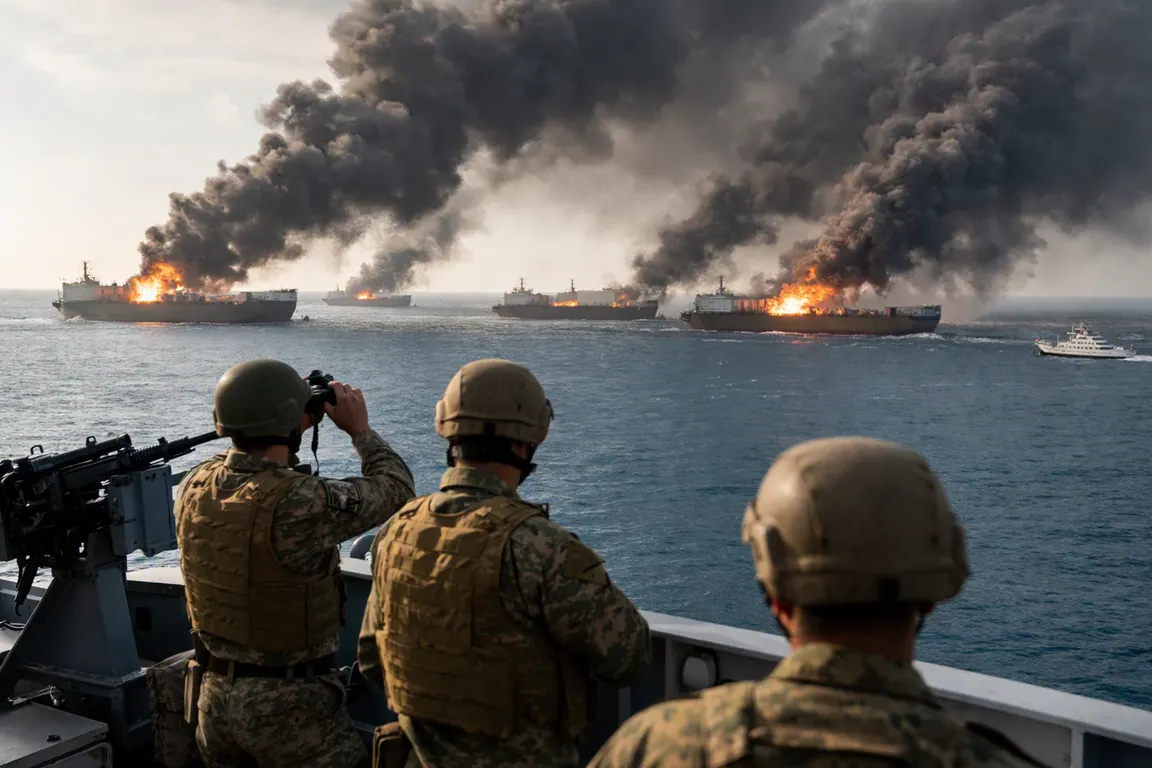
The United States said Tuesday it destroyed five Iranian tankers in the Strait of Hormuz, saying the strikes were retaliation for two ballistic‑missile attacks on a U.S. warship. The action highlights the growing risk to Iranian tankers Hormuz and to global oil shipments.
U.S. Central Command reported that the Islamic Revolutionary Guard Corps launched two missiles at the warship within a two‑day span. The vessel evaded the missiles and continued its patrol. In response, U.S. forces targeted five Iranian tankers, ordering their crews to abandon ship before the weapons hit. No injuries were reported.
The attacks follow a U.S. operation three days earlier that sank three additional Iranian crude carriers after an attempted assault on a U.S. aircraft carrier and a guided‑missile destroyer. In total, eight Iranian tankers have been hit in a week; neither side disclosed the cargo volumes.
The IRGC warned it would target oil tankers docked in Kuwaiti and Bahraini ports, urging operators to “leave their vessels.” It also claimed to have seized a U.S. underwater drone that malfunctioned in the strait, a claim U.S. officials did not confirm. They described the drone as an older, non‑classified model undergoing repairs.
The rapid succession of strikes raises practical concerns for commercial shipping. Tanker operators may reroute vessels around the strait, adding days to transit times and raising insurance costs. The Strait of Hormuz carries roughly 20 percent of global oil consumption, and any sustained disruption could tighten supplies and lift prices, as market analysts have already noted.
Regional economies that depend on oil export revenues are also vulnerable. Kuwait and Bahrain, whose ports were singled out in the IRGC warning, could see a decline in throughput if carriers choose longer routes through the Arabian Sea. Diplomatic efforts to de‑escalate U.S.–Iran tensions remain stalled, with no new talks announced since the latest strikes.
U.S. officials reiterated that they will continue to strike Iranian tankers in response to missile attacks on American naval assets, linking military retaliation directly to the protection of global oil flows. Iran has not confirmed plans to seize additional vessels, but its rhetoric remains focused on Gulf ports.
The next steps hinge on whether diplomatic channels can reopen. Both Washington and Tehran have signaled a willingness to discuss de‑escalation, yet concrete proposals have not emerged. In the meantime, shipping firms and oil markets will watch closely for any further developments that could widen the conflict or further choke the Hormuz corridor.