

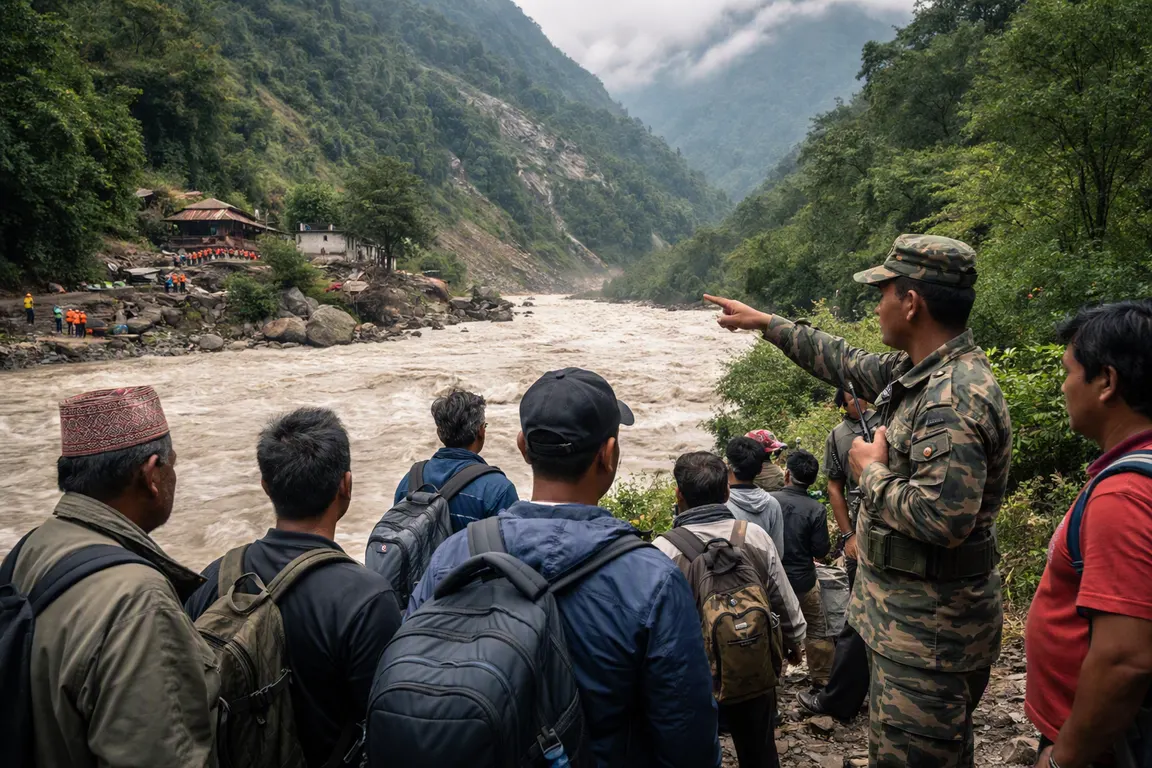
Authorities in Nepal issued fresh flood warnings Sunday after Chinese officials identified an upstream crater Nepal flood holding about 1.4 million cubic metres of water—enough to trigger a second surge downstream. The alerts, sent to residents’ phones, come as rescue crews clear the Kathmandu‑to‑Dhading highway, repair a damaged power plant and continue searching for thousands of missing people.
The warning follows a glacial collapse high in the Himalayas on Wednesday that unleashed a flash flood across Nepal and Tibet. Nepal’s National Disaster Risk Reduction and Management Authority confirmed at least 788 deaths and 2,502 people missing in the country. Chinese authorities reported 16 deaths and 546 missing in Tibet, including more than 100 Nepali workers. The disaster has isolated villages, destroyed bridges and cut power to over 20,000 residents in four districts.
The newly identified crater, located 5.6 km upstream of the flood‑hit zones, contains an estimated 1.4 million cubic metres (about 370 million gallons) of water, according to China’s water resources ministry. Scientists say the structure remains unstable, but they have not quantified the likelihood of a breach. If the water were to surge, downstream communities could face sudden inundation, endangering families already sheltering on higher ground.
In response, Nepal’s disaster agency dispatched teams to reinforce riverbanks, clear debris from the main highway and inspect the power plant that supplies electricity to more than 20,000 homes. Engineers are installing temporary flood‑control barriers where feasible. The agency has urged residents to evacuate to designated safe zones and to keep phones on for alerts, noting that some alarms have already sounded at night, prompting multiple evacuations.
International assistance is arriving. Malaysia announced a search‑and‑rescue unit and a US$1 million aid package, while other neighboring states have pledged supplies and expertise. Nepal’s foreign ministry has appealed for a coordinated climate‑change response, though experts caution that linking the event directly to climate trends remains premature.
Locating the missing remains a logistical challenge. Authorities are cross‑checking lists of tourists, pilgrims and migrant workers who were traveling through the affected districts. One report cited 85 U.S. citizens among the missing, a figure not confirmed by other sources, highlighting gaps in consolidated data. Families of the missing have been directed to hotlines and liaison officers at consulates for assistance.
The unfolding situation underscores the vulnerability of Himalayan river systems, where glacial melt, unstable moraine dams and seismic activity can combine to produce sudden floods. Regional cooperation on early‑warning systems and shared monitoring could reduce future risk, but differing assessments of climate responsibility and the lack of a unified data set on foreign nationals complicate the response.
Officials continue to monitor water levels in the upstream crater. Any sign of rising pressure will trigger additional alerts and possible evacuations. Until the reservoir’s stability is confirmed, the threat of a secondary flood remains a key concern for communities still reeling from the initial disaster.