

UN walkout and Gaza protests highlight growing backlash
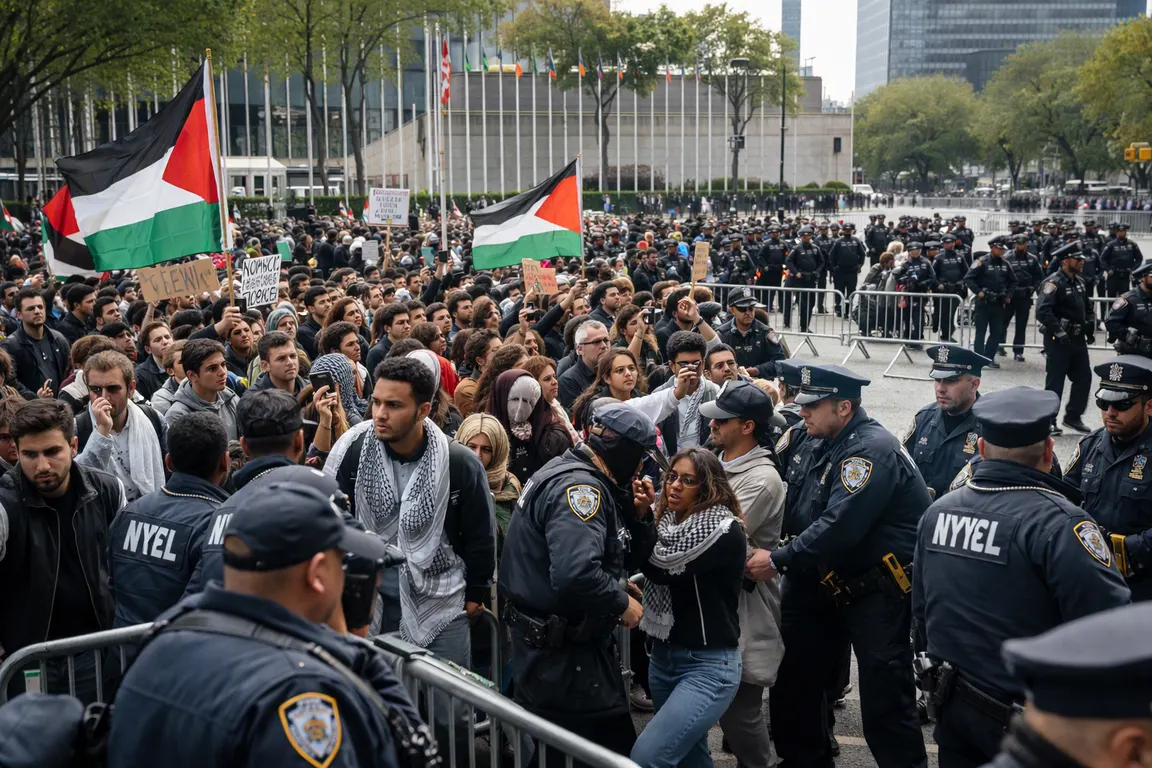
Benjamin Netanyahu addressed the United Nations General Assembly on Thursday, Sept. 21, 2023, as delegations from roughly thirty member states exited the chamber and more than one hundred demonstrators were detained outside the UN complex. The UN walkout Gaza protests underscore an accelerating backlash against Israel’s Gaza campaign and raise questions about the UN’s ability to balance security with free expression during highly charged speeches.
Netanyahu framed Israel’s actions in Gaza as “the opposite of genocide” and accused New York City Mayor Eric Adams of antisemitism, claiming many Jews feel unsafe in the city. Adams had earlier said the city would enforce an International Criminal Court arrest warrant against the Israeli premier, then clarified that municipal authorities lack jurisdiction to act on such a warrant.
Al Jazeera reported that at least thirty countries walked out or were absent from the hall during the speech. While the exact list of nations has not been confirmed, the coordinated departure signals a diplomatic rebuke of Israel’s conduct in Gaza and could affect bilateral trade, aid programs, and security cooperation that rely on close coordination with Israel.
Outside the UN, New York City police arrested more than 100 protesters, including actress Susan Sarandon, former Army intelligence analyst Chelsea Manning and activist Caleb Hearon, according to The Guardian. Charges ranged from unlawful assembly to resisting police orders, though officials have not released a detailed breakdown. Civil‑rights groups have criticized the police response, questioning crowd‑control tactics and the balance between public safety and the right to protest at a high‑profile international venue.
The episode highlights the logistical challenges host cities face when the UN convenes contentious speakers. The UN has no formal mechanism to halt a member‑state leader’s remarks, but the walkout and arrests may prompt a review of protocols governing speaker conduct, security coordination with host‑city police, and the handling of on‑site protests. Such a review could shape future General Assembly sessions, where the line between diplomatic decorum and political protest is increasingly blurred.
The Gaza conflict, which the Manila Times reports has caused over 73,000 Palestinian deaths since Oct. 7, remains the central catalyst for the diplomatic and public dissent. No formal UN resolution or policy shift emerged from Netanyahu’s speech, but the visible dissent among member states and the scale of street protests suggest a growing divergence within the international community on how to address the war.
As the UN prepares for its next session, officials will need to decide whether to adjust security arrangements, allow greater space for dissenting voices, or establish new norms for speech that could inflame already volatile geopolitics. The walkout and arrests also raise the question of whether the United Nations can remain a neutral forum when member‑state leaders use the platform to advance contested narratives.
For now, the immediate impact is clear: Israel faces heightened diplomatic isolation, New York City grapples with the fallout of a massive protest operation, and the UN confronts a test of its procedural resilience. How the organization and host cities adapt to such flashpoints will shape the conduct of future high‑profile diplomatic events.