

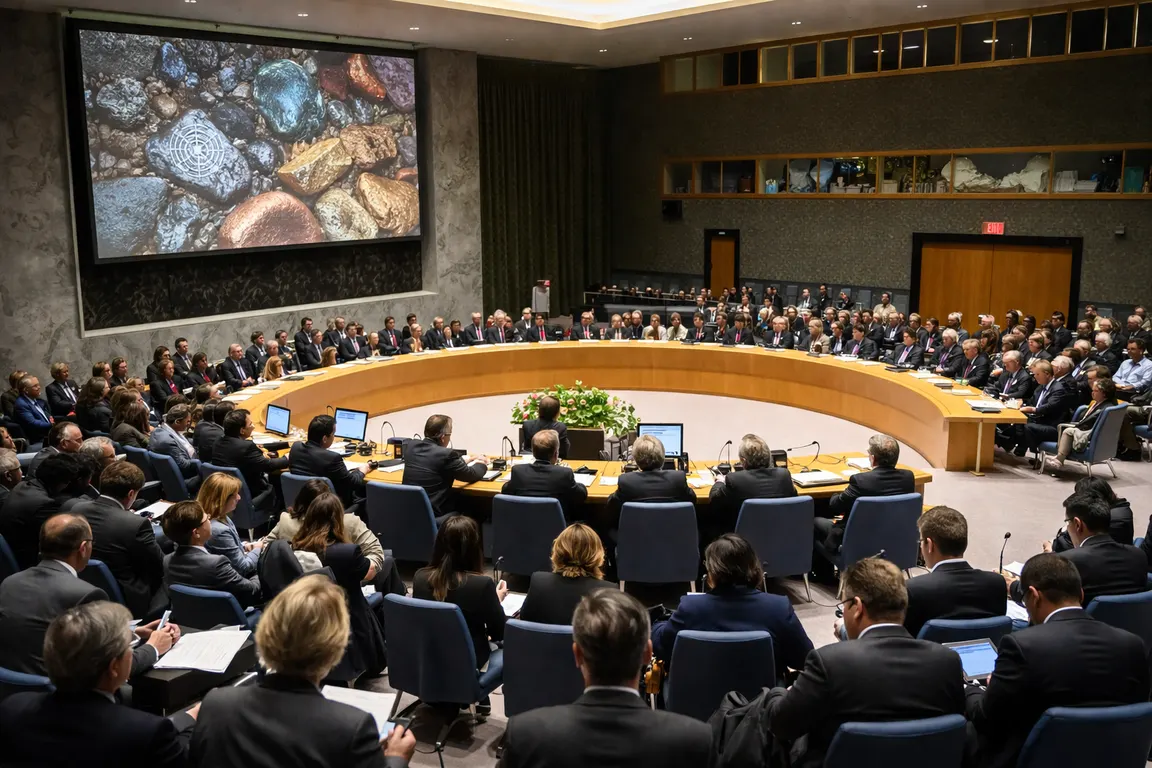
The UN Security Council is meeting in New York to discuss the role of critical minerals in building peace and prosperity. The global shift to clean energy is driving a significant demand for these minerals, which include lithium, cobalt, copper, and nickel. These minerals are essential for the production of renewable energy technologies.
The demand for critical minerals is expected to triple by 2030, driven by the transition to clean energy. The UN is providing technical assistance and support to help countries manage their mineral resources effectively. However, the outcome depends on how the minerals are managed, and there is uncertainty about whether the demand will lead to conflict and corruption or peace and prosperity.
The increasing demand for critical minerals could have significant impacts on communities and countries that produce these minerals, as well as the global economy and environment. The Security Council meeting aims to discuss how to ensure that the benefits of critical minerals are shared equitably and that their production does not harm the environment or local communities.
One of the key questions being debated is how to balance the need for critical minerals with the need to protect the environment and ensure that local communities benefit from their production. The UN is working with countries to develop sustainable and responsible mining practices. This includes providing guidance on environmental and social impact assessments, as well as promoting transparency and accountability in the mining sector.
As the Security Council meeting comes to a close, it remains to be seen what concrete steps will be taken to address the challenges and opportunities presented by critical minerals. The meeting has highlighted the need for international cooperation to ensure that the transition to clean energy is managed in a way that promotes peace, prosperity, and sustainability for all. The UN will continue to work with countries to develop and implement effective strategies for managing critical minerals and promoting sustainable development.