

UN climate finance walkout as delegations leave briefing
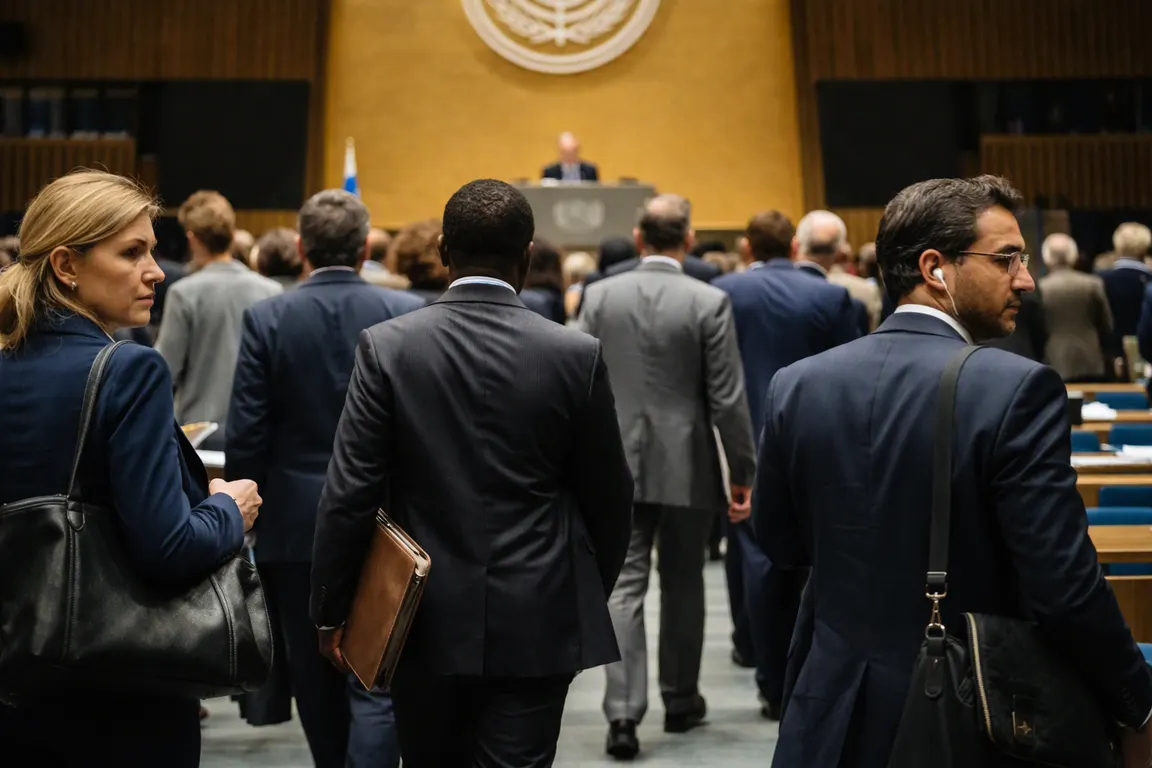
NEW YORK (AP) — A routine briefing at the United Nations headquarters on Tuesday turned into a UN climate finance walkout when several delegations left the chamber after a senior official used the podium to launch a campaign message.
The incident occurred during a scheduled briefing on the UN's upcoming climate finance summit. Instead of delivering the expected update, the UN's Under‑Secretary‑General for Economic Affairs, Maria Alvarez, pivoted to promote a new initiative aimed at securing private‑sector investment for renewable‑energy projects in developing nations. Alvarez’s remarks included a call for “global leaders to rally behind the Green Future Fund,” a proposal that has been under discussion for months but had not yet been formally adopted.
Representatives from the European Union, Brazil, and South Africa rose from their seats and exited the room within minutes, citing “political misuse of UN platforms” as the reason for their departure. A spokesperson for the EU delegation said the move blurred the line between diplomatic dialogue and partisan advocacy, undermining the UN’s role as a neutral convenor.
The walk‑out prompted a brief interruption in the session, after which the UN’s chief of protocol, Ahmed Patel, asked the remaining delegates to resume the scheduled agenda. The briefing continued with a concise update on the financing mechanisms for the upcoming summit, but the atmosphere remained tense.
Observers noted that the incident highlights growing friction within the UN over how to mobilize funding for climate action. While some member states welcome private‑sector involvement, others fear that such approaches could sideline public‑funded commitments and weaken accountability mechanisms.
The UN’s Department of Economic and Social Affairs released a statement after the event, emphasizing that Alvarez’s remarks were intended to “inform member states of ongoing discussions” and not to constitute a formal campaign launch. The statement also affirmed that the organization will review its protocols to ensure that future briefings remain focused on agenda‑driven content.
The episode comes at a time when the UN is under pressure to deliver concrete results on climate finance ahead of the November summit in Glasgow. Negotiators are expected to finalize a framework that will guide contributions from both public and private sources, a process that many developing nations view as critical to meeting their emissions‑reduction targets.
In the wake of the walk‑out, diplomatic channels are reportedly active, with senior officials from the United Nations and the departing delegations seeking to de‑escalate the situation. No formal complaints have been filed, but the incident is likely to be referenced in upcoming discussions about the UN’s role in facilitating, rather than directing, climate‑finance policy.
The UN has not indicated any changes to the schedule of the climate finance summit, which remains set for early November. However, the episode may prompt a reevaluation of how member states use high‑profile UN platforms for policy advocacy, a topic that could surface at the next General Assembly meeting.
As the organization prepares for the summit, the focus remains on securing reliable, transparent funding streams that can support the transition to low‑carbon economies worldwide, a goal that both supporters and skeptics of private‑sector involvement agree is essential for global climate resilience.