

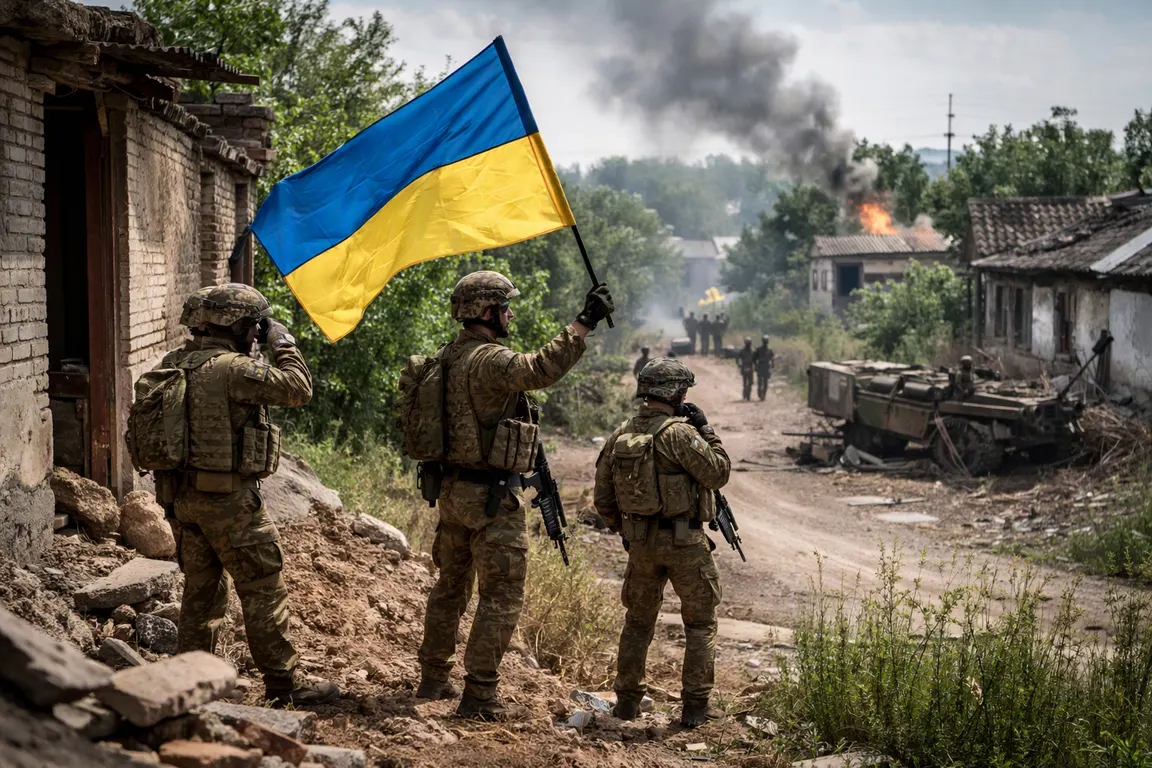
Ukraine recaptures Donbas as its forces have reclaimed about 277 square kilometres (106 square miles) of territory in the region over the past several weeks. The advance pushes Russian troops back along a stretch of front line that includes a string of villages in Donetsk oblast and restores limited civilian services.
Operation Vivaldi, Kyiv’s counter‑offensive in the east, began months ago with the aim of retaking occupied settlements and disrupting Russian supply routes. Ukrainian defence ministry reports, corroborated by the BBC, confirm that forces have seized a contiguous area of roughly 277 km² in Donetsk. The advance was enabled by artillery strikes, mechanised infantry assaults and, increasingly, satellite‑based communications provided by SpaceX’s Starlink network. Ukrainian commanders say the high‑bandwidth links allow real‑time coordination, rapid intelligence sharing and more resilient command structures in contested zones where traditional communications are vulnerable.
The recaptured villages include several that had been without reliable electricity, water or schooling for months. Local officials report that utilities are being re‑connected where possible and municipal administrations are re‑establishing basic services. The return of Ukrainian control does not guarantee lasting safety; the front line remains fluid and artillery fire continues to threaten civilian structures. Human‑rights monitors have not released updated displacement figures, but renewed fighting could prompt further population movement.
The operational success unfolds against a backdrop of diplomatic activity. Al Jazeera noted that the same week Ukrainian troops made these gains, the U.S. administration finalized a diesel‑fuel deal with Russia. Analysts view the deal as a pragmatic step to address energy needs, but it also underscores divergent approaches to the conflict. The briefings do not link the agreement directly to battlefield outcomes, and Kyiv has not indicated any operational impact.
For Ukraine’s defence logistics, the Starlink rollout represents a tangible upgrade. Low‑latency connections enable faster transmission of targeting data and more reliable coordination between forward units and headquarters. While the technology is not the sole factor in the recent territorial gains, officials credit it with reducing delays that previously hampered command decisions.
From a market perspective, the shift in the front line has drawn attention to reconstruction contracts and aid allocations in Donetsk. International donors and private firms monitoring the area see the reclaimed zones as potential sites for infrastructure projects, though any investment remains contingent on security guarantees.
Looking ahead, Ukrainian commanders are likely to focus on consolidating the newly held ground, fortifying positions and extending Starlink coverage to adjacent sectors. The durability of the advance will depend on how quickly Russian forces can mount counter‑attacks and whether supply lines can be secured. Observers will watch for further statements from Kyiv and Washington as battlefield developments and diplomatic moves continue to shape the conflict’s trajectory.