

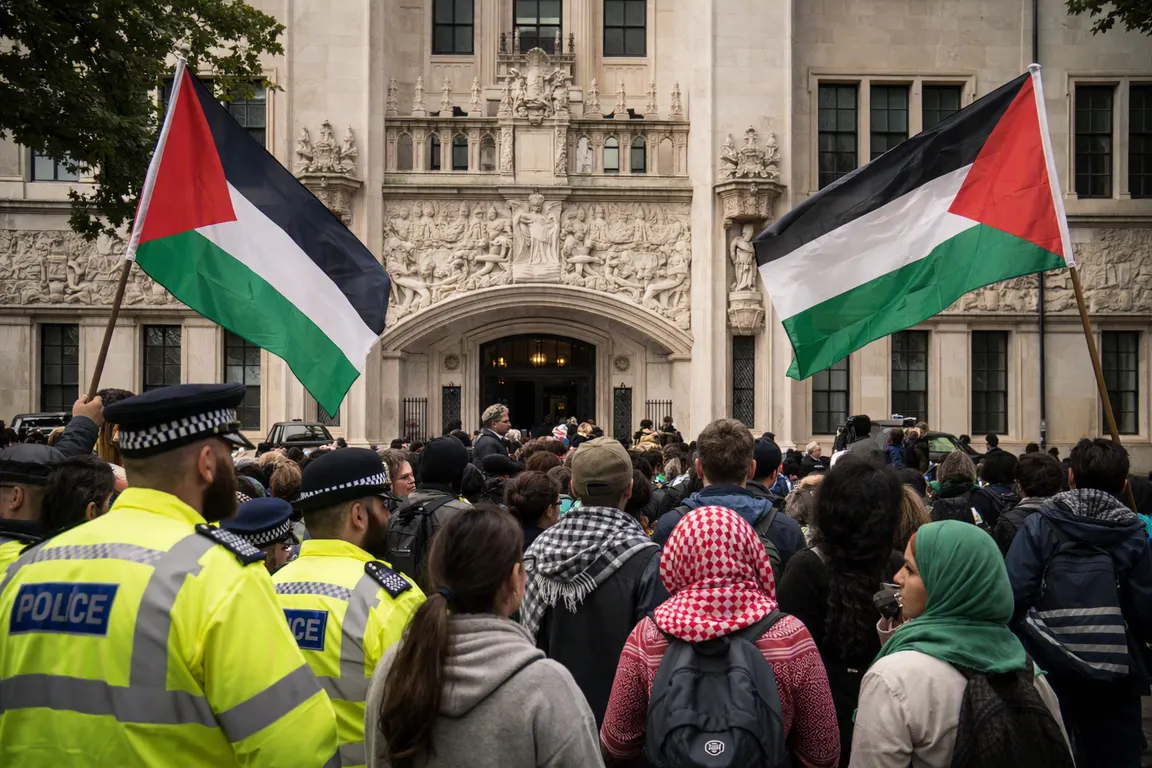
The UK Supreme Court has agreed to review the government's ban on Palestine Action, a decision that could have significant implications for freedom of expression and national security in the UK. In 2025, the UK government banned the group, citing its use of violence and property destruction, making membership or support for the group a crime punishable by up to 14 years in prison. The ban has already led to the arrest of 77 people outside a London courthouse for expressing support for the group and over 3,000 people for actions related to Palestine Action since the ban was imposed.
The case raises questions about the balance between national security and freedom of expression in the UK. The Court of Appeal previously ruled that the ban was a 'justified and proportionate' interference with freedom of expression. However, the Supreme Court's decision to review the ban has given new hope to the group's supporters. The characterization of Palestine Action's actions is disputed, with some describing them as 'direct-action civil disobedience' and others as 'violent' and 'destructive'.
The Supreme Court case is due to be heard between October and December. The ruling will have significant consequences for public safety and community relations in the UK. As the UK Supreme Court prepares to review the ban, concerns have been raised about the potential consequences for community relations and public safety. The outcome of the case will be closely watched, and the implications of the ruling will be far-reaching, affecting not only the group's members but also thousands of people who have been arrested or charged for expressing support for the group.
The UK government's use of anti-terrorism legislation to ban Palestine Action has been a point of contention. The ban has been criticized for its potential to stifle free speech and peaceful protest. The Supreme Court's review of the ban will provide an opportunity for the court to clarify the limits of the government's power to restrict freedom of expression in the name of national security. The case has significant implications for the UK's human rights record and its commitment to upholding freedom of expression.
The Supreme Court's decision to review the ban on Palestine Action is a significant development in the ongoing debate about the balance between national security and freedom of expression in the UK. The case will be closely watched by human rights groups, community organizations, and individuals concerned about the impact of the ban on public safety and community relations. The outcome of the case will have far-reaching consequences for the UK's approach to counter-terrorism and its commitment to upholding human rights.