

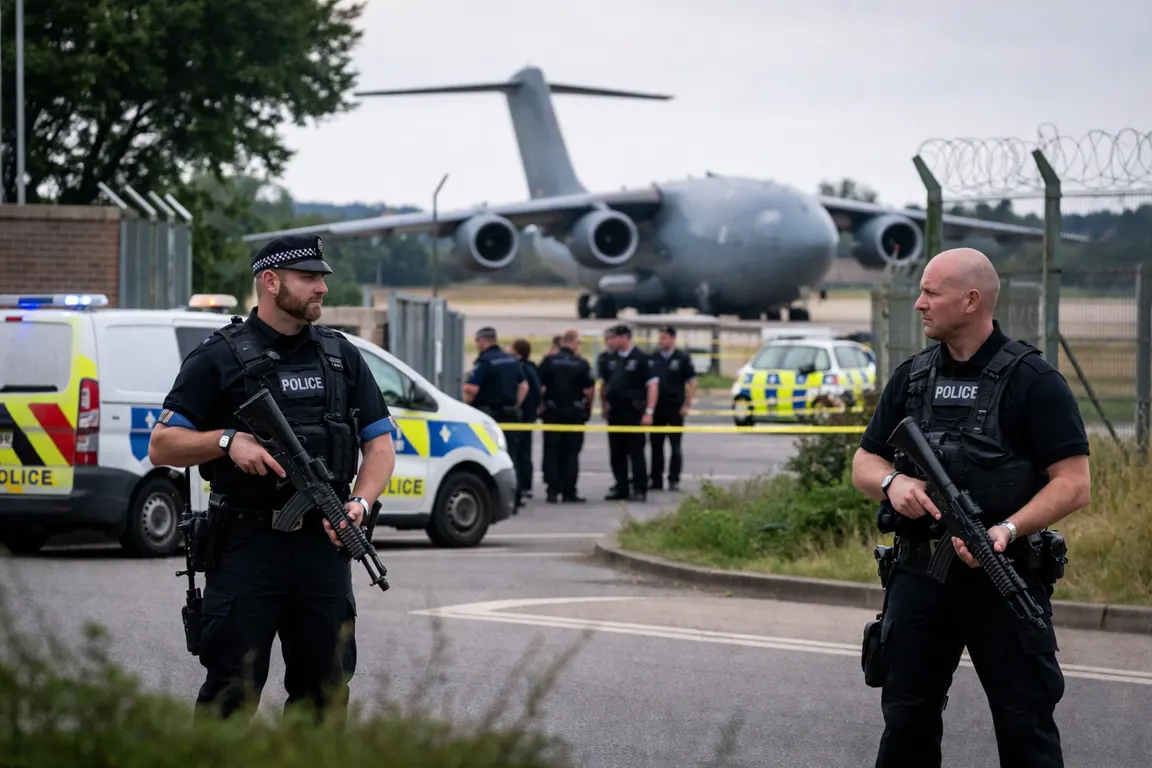
British officials say an Iran plot aimed at the US‑run RAF Fairford base led to the arrest of five men on suspicion of planning a terrorist act. The prime minister said intelligence provides "strong indications" of Tehran involvement, sparking a diplomatic exchange with Iran and increased security around the airfield.
RAF Fairford is a key NATO‑US hub; aircraft based there have launched recent operations over the Middle East, including strikes on Iranian targets. Any credible threat to the facility raises public‑safety concerns for nearby communities and forces a review of force‑protection protocols.
The prime minister’s remarks did not cite specific evidence or name an Iranian agency. The five suspects, whose identities remain undisclosed, are being held on suspicion of plotting a terrorist act, but no indictment linking them to a foreign state has been filed. The government described the Iranian link as an indication, not a proven fact, and no operational changes at the base have been announced.
Iran’s foreign minister rejected the accusation, calling the British claim "barking up the wrong tree" and insisting Tehran had no role. The dispute highlights the uncertainty surrounding the allegation, as analysts have not seen any publicly released proof of state sponsorship.
Local residents reported an increased police and military presence, road closures and heightened patrols as authorities secured the perimeter. Community leaders urged calm while acknowledging the disruption caused by the security response. The Ministry of Defence said flight operations and the base’s role in US‑led missions remain unchanged.
The diplomatic fallout could have broader implications. The United Kingdom and the United States coordinate closely on intelligence and defence, and a perceived Iranian threat on British soil may prompt tighter information sharing and joint security measures. Tehran’s denial and the lack of disclosed evidence risk deepening mistrust, potentially affecting negotiations on nuclear talks and sanctions.
Questions remain about the evidentiary basis of the UK’s claim. Authorities have not released details of the intelligence that led to the "strong indications," and the motives of the arrested men are still under investigation. Without an indictment or formal attribution, the allegation may remain a point of contention rather than a catalyst for policy change.
The next steps likely include a parliamentary briefing on the security situation, continued monitoring of the suspects, and diplomatic outreach between London and Washington to align response strategies. Iran is expected to maintain its denial and may intensify rhetoric in forthcoming statements. As the investigation proceeds, the balance between safeguarding a strategic military asset and managing international tensions will shape the narrative surrounding the foiled plot.