

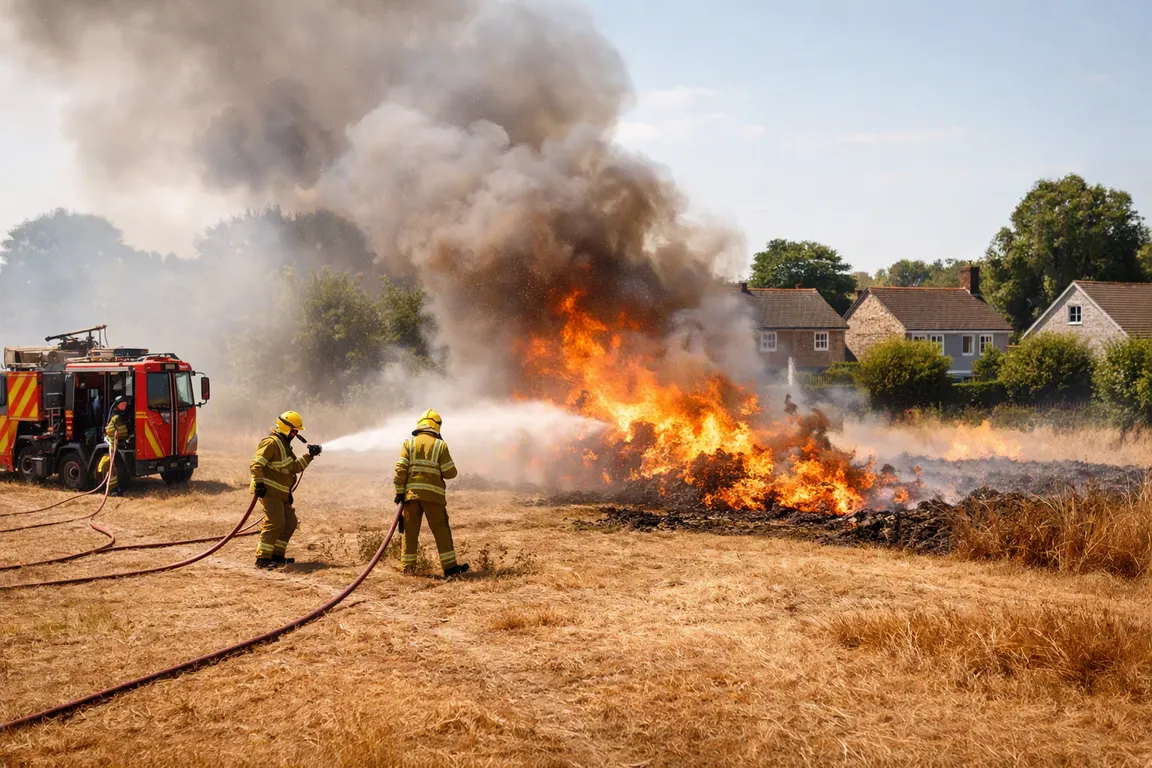
The UK recorded its hottest day of the year with a temperature of 38.1 degrees Celsius in west London, leading to multiple fires breaking out in the West Midlands. A child and three firefighters were taken to the hospital following a wildfire in Stourbridge.
The current UK heat wave has led to significant wildfires, health risks, and infrastructure challenges, making it a pressing public safety concern. The West Midlands fire service described the situation as 'one of the most significant' incidents they have dealt with. The UK is experiencing its fifth heat wave of the year, with 2026 having a record four days with temperatures of 36 C or higher.
An amber extreme heat warning is in place for parts of England until midnight. The heat wave and wildfires have affected the West Midlands region, with several houses burned to the ground. The situation is described as 'extremely worrying and fast-moving' by the West Midlands mayor. As the UK and Europe swelter in the latest wave of extreme heat, the focus shifts to the devastating impact of wildfires and the pressing need for public safety measures to mitigate the effects of climate change.
The cause of the wildfires in the West Midlands has not been determined, and it may take days to put out the fires. Authorities are working to respond to the situation, with firefighters and emergency services on the ground. The public is being advised to take precautions to stay safe during the heat wave, including staying hydrated and staying indoors during the hottest parts of the day.
The long-term implications of the heat wave and climate change for public health, infrastructure, and the economy are still being assessed. For now, the focus remains on responding to the immediate risks and challenges posed by the heat wave and wildfires. France has also endured its fifth heat wave this year, with temperatures approaching 41 C in several areas, highlighting the broader European impact of the extreme weather.