

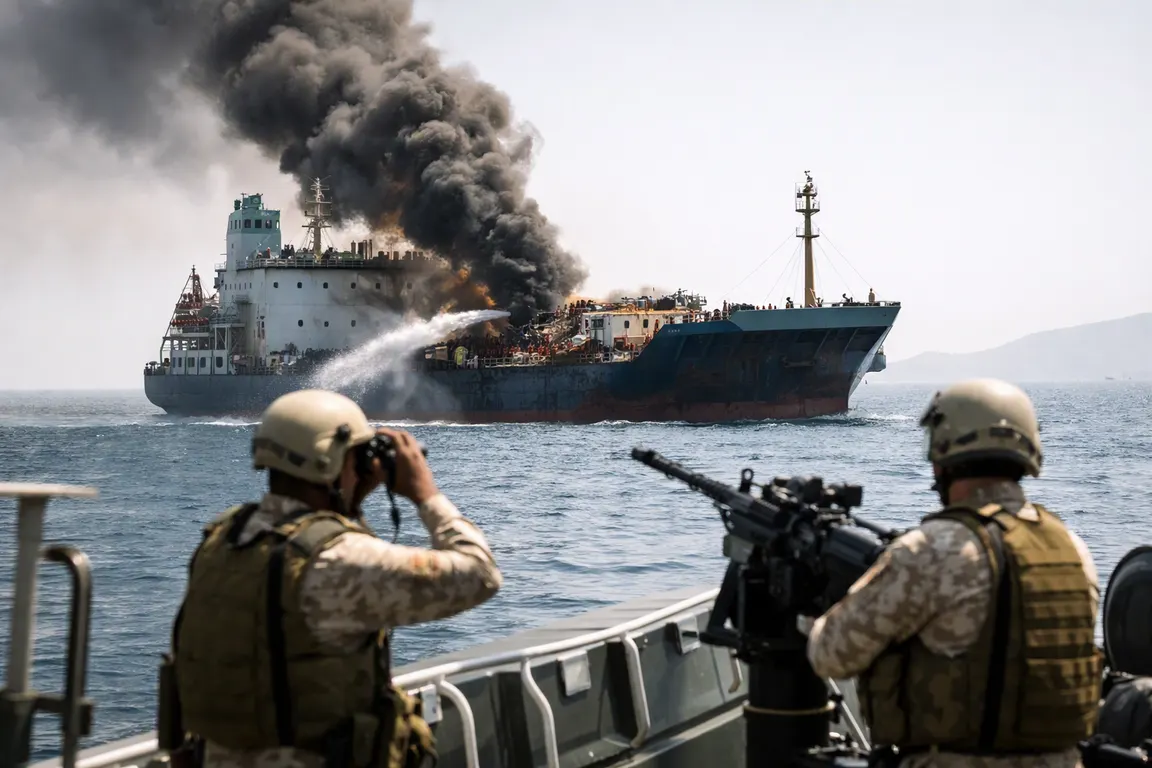
The United Arab Emirates reported that one of its ships was targeted in the Strait of Hormuz, allegedly by Iran, raising concerns about the safety of this critical waterway through which a significant portion of the world's oil passes. The alleged attack on a UAE ship by Iran in the Strait of Hormuz raises concerns about the safety of this critical waterway, potentially impacting global energy markets and regional stability.
The incident occurred amid heightened tensions between the US and Iran over the Strait of Hormuz, with Iran previously threatening to close the waterway in response to US sanctions. The attack allegedly occurred on a tanker owned by ADNOC, an Emirati oil company, with no casualties reported.
Gulf and Arab governments have condemned Iran over the alleged missile strike, further complicating efforts to negotiate a deal to open the strategic waterway. Iran's military stated that the waterway would only be reopened when the US accepts Iran's conditions, though the specifics of these conditions are unclear.
The Strait of Hormuz is a critical waterway for global oil trade, with a significant portion of the world's oil passing through it. The alleged attack affects global oil markets, regional security, and the safety of ships passing through the Strait of Hormuz, with potential consequences for the global economy and energy prices.
As the world's most critical oil chokepoint, the Strait of Hormuz has become a flashpoint in the escalating tensions between Iran and the US. The incident has raised questions about the implications of the alleged attack on global oil prices and the economy, as well as the safety of ships passing through the Strait of Hormuz.
The UAE and other Gulf states are likely to increase pressure on Iran to reopen the waterway, while the US may consider further sanctions or diplomatic efforts to resolve the situation. The situation in the Strait of Hormuz remains uncertain, with the potential for further escalation and disruption to global energy markets.