

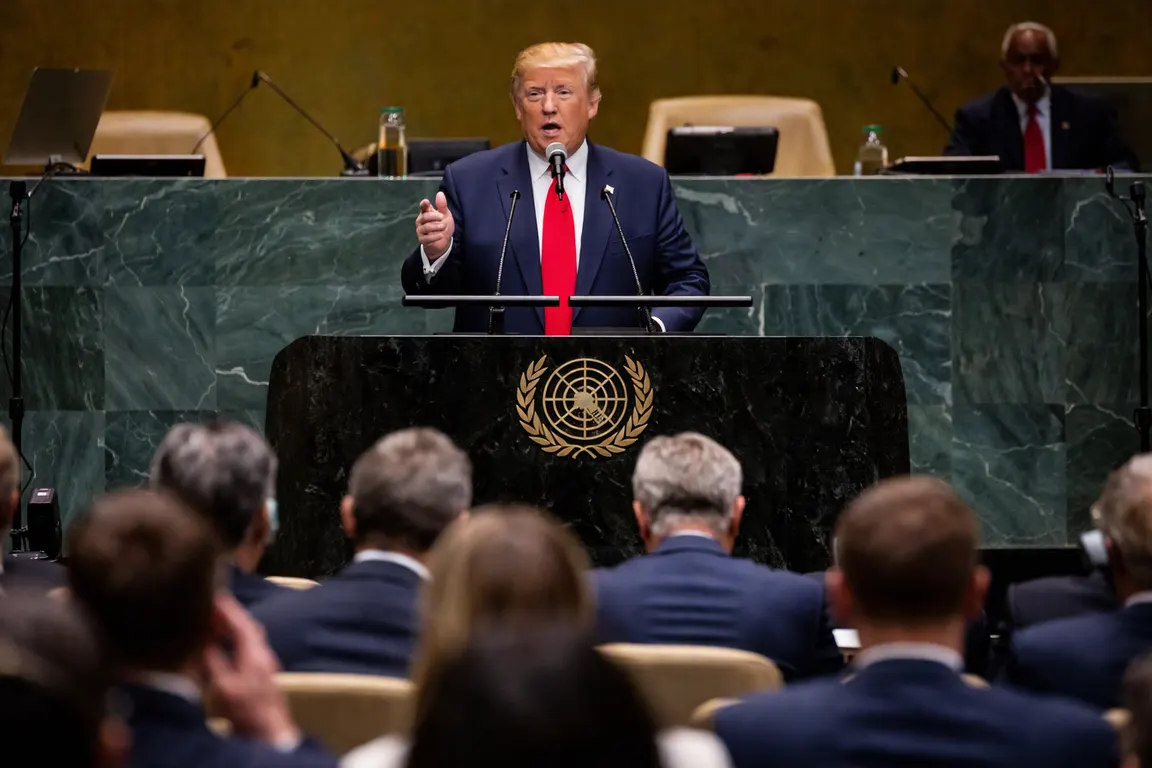
President Donald Trump warned the United Nations on Tuesday that the United States would “annihilate” Iran and drive it “into Hell,” a statement that offered no concrete policy steps. The "Trump UN Iran threat" was delivered amid applause from several delegations, leaving allies, investors and policymakers uncertain about Washington’s next moves in the Middle East and the Western Hemisphere. No sanctions, diplomatic initiatives or military orders accompanied the threats.
Trump arrived at the UN minutes before his speaking slot, exchanged a brief jab at CNN, and then took the podium. He framed the United States as confronting “world threats” while reiterating an “America First” posture. The speech pivoted to Iran, where he repeated the phrases “annihilate Iran” and “drive them into Hell,” and added that the United States would “settle the war” when pressed by a reporter about Russian President Vladimir Putin.
Beyond Iran, the president named Cuba, Mexico, Greenland and the broader Western Hemisphere, declaring that the United States would not allow “any threat to gain a foothold” in those regions. He offered no new sanctions, legislative measures or military directives to back the rhetoric.
Foreign delegations applauded his pledge to halt Iran’s nuclear ambitions, but no official commitment followed. The Guardian and the New York Post highlighted the hostile tone and the applause; the Wall Street Journal noted Trump’s self‑portrayal as a decisive leader; Al Jazeera called the remarks a “big decision” pending, underscoring uncertainty about any operational shift.
The lack of concrete action raises immediate security concerns. If Washington were to move from words to sanctions or military steps, civilian populations in Iran and neighboring states could face heightened risk. Regional allies such as Israel and Saudi Arabia are likely to reassess threat assessments while awaiting clearer signals.
Financial markets have already registered the rhetorical escalation. Oil futures edged higher on the perception of increased geopolitical risk, though analysts said the absence of an actionable policy dampened any sustained price surge. U.S. firms operating in the Western Hemisphere are monitoring for potential follow‑up measures that could affect trade with Cuba or Mexico, but no directives have emerged.
The episode also spotlights media framing. Divergent emphases—from the Guardian’s focus on the applause to Al Jazeera’s suggestion of pending decisions—shape public understanding of the speech’s significance. Without a policy announcement, the United Nations podium became a stage for performance rather than a forum for concrete diplomatic outcomes.
The next step remains unclear. The White House has not released a detailed plan to address Iran’s nuclear program, and no congressional action has been reported. As diplomatic channels stay quiet, policymakers and observers will watch for any follow‑up statements or moves that translate the fiery language into measurable policy, a development that will determine whether the speech marks a rhetorical escalation or the prelude to an operational shift.