

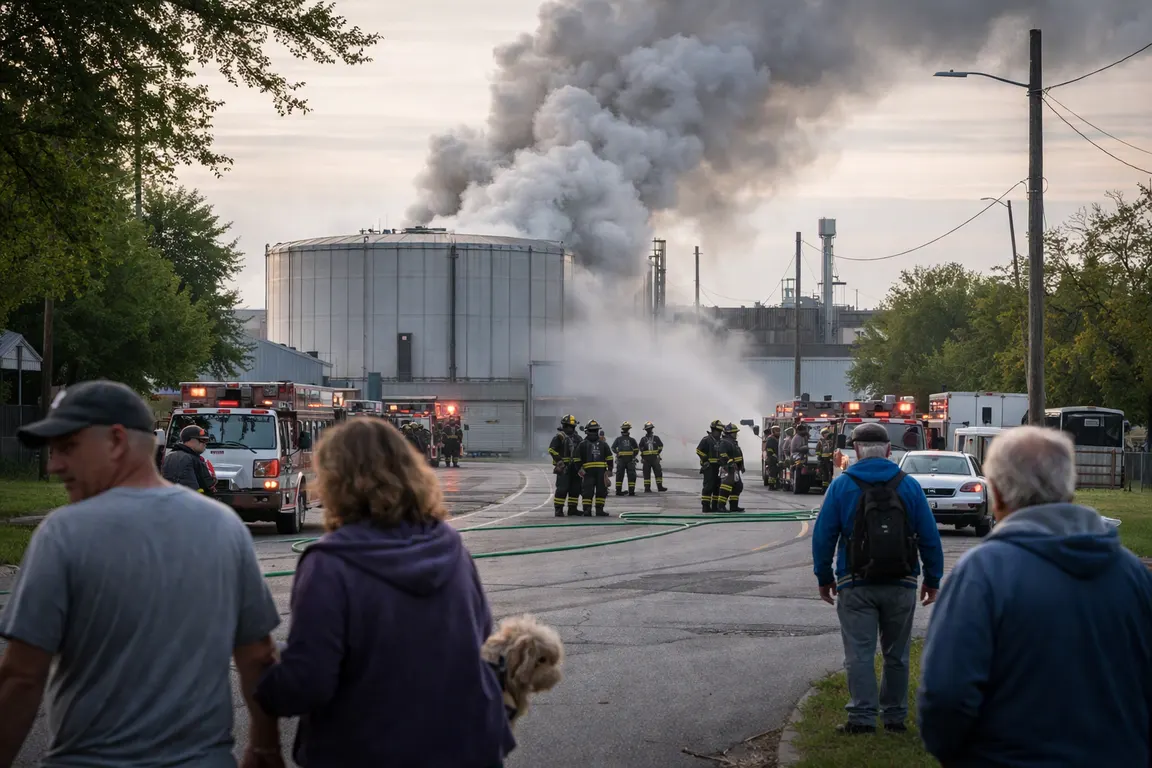
A breach in a storage tank at MC Tank’s north‑Toledo bulk‑liquid terminal released an unidentified chemical plume early Wednesday, prompting Toledo Fire & Rescue to order the evacuation of residents within a one‑mile radius and a shelter‑in‑place directive for those between one and three miles.
The incident was reported shortly after 2:00 a.m. on Oct. 21, 2026. Roughly 1,000 households were displaced and an additional 3,000 people were told to remain indoors while officials tested air quality and identified the substance.
Workers first noticed a faint haze near the terminal around 11 p.m. on Oct. 20. The nearby Toledo Assembly Complex, operated by Stellantis, was evacuated as a precaution. By early Wednesday the terminal confirmed a tank breach. Toledo Fire & Rescue spokesperson Sheldon Collins relayed the evacuation and shelter‑in‑place orders, and WTOL‑11 broadcast the directives.
The site stores caustic soda, sulfuric acid, hydrochloric acid and other specialty compounds, but officials have not identified which chemical escaped. Health officials warned that exposure could cause eye and skin irritation, respiratory discomfort and nausea. No injuries have been reported; emergency medical teams are stationed at community‑center shelters within the evacuation zone.
The response has stretched local resources. Fire & Rescue deployed multiple units to monitor air quality, enforce the evacuation perimeter and coordinate with the Ohio Environmental Protection Agency for testing. Residents instructed to shelter in place were told to seal windows and doors, turn off ventilation systems and await further updates.
Traffic on major north‑Toledo arteries was rerouted, and several businesses reported reduced foot traffic as the plume reduced visibility across the area.
The leak also halted MC Tank’s handling of bulk chemicals destined for regional manufacturers. The evacuation of the Stellantis plant disrupted production lines, raising concerns about downstream effects on the automotive supply chain. Local merchants along the affected corridors reported a dip in sales as commuters avoided the area.
Investigators are examining the tank’s structural integrity, maintenance records and recent operational changes to determine the cause of the breach. The Ohio Department of Commerce, which oversees hazardous‑material facilities, has pledged a comprehensive review of safety protocols at MC Tank and similar sites.
As air‑quality readings return to safe levels, officials will formally lift the shelter‑in‑place order. Until then, residents remain dependent on updates from fire officials and public‑health agencies. The incident underscores the need for faster, clearer communication when invisible hazards are released and raises questions about the adequacy of existing warning systems.