

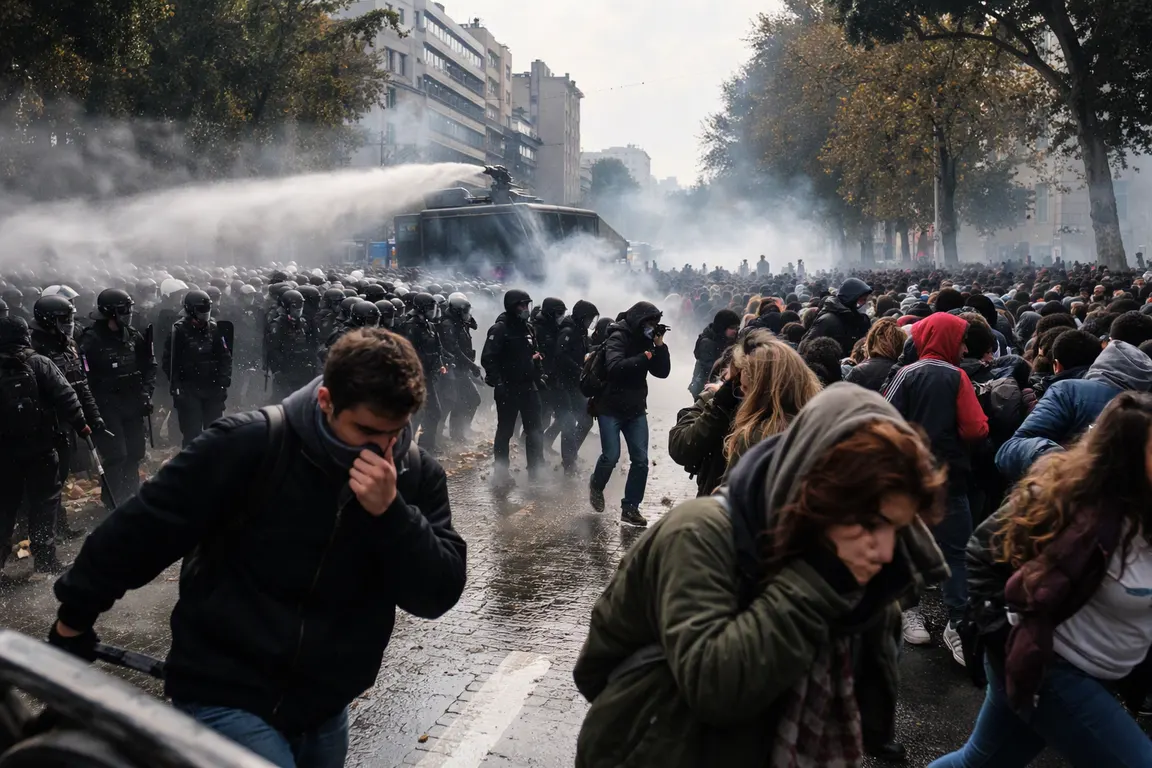
Police in Albania’s capital deployed tear‑gas and water‑cannon on the third day of Tirana student protests tuition hikes, demanding higher‑education reform and the resignation of Prime Minister Edi Rama. The clashes, sparked by recent tuition increases, have shut down major streets, disrupted commuters and raised concerns about the country’s EU accession timetable.
The unrest began three days ago when university students gathered in central Tirana to protest what they describe as unaffordable tuition fees and opaque university finances. Demonstrators called for Rama’s resignation, a transparent tuition framework and an independent audit of university budgets. The first day’s march remained largely peaceful, with protesters blocking traffic but police taking a limited approach.
On day two the crowd swelled and spread to additional avenues. Authorities responded with tear‑gas to clear intersections and restore traffic flow. By the third day, demonstrators had erected barricades and marched toward government buildings. Police escalated their response, using water‑cannon to disperse the crowd. Similar tactics were reported in smaller rallies in secondary cities, where local police also employed tear‑gas.
Students say recent fee hikes make higher education out of reach for middle‑class families and accuse university administrations of corruption, citing unclear fee structures and alleged favoritism in admissions. While the government has not detailed specific policy changes, officials reiterated that Rama will not step down and promised a round‑table with university representatives later this week, without setting a timetable for reforms.
The protests have tangible impacts on daily life. Road closures forced drivers onto peripheral routes, increasing congestion, fuel consumption and delivery delays. Downtown businesses report a drop in foot traffic and sales, and some owners fear property damage if the unrest spreads.
International observers note that Albania’s EU accession talks depend on progress in governance, rule of law and anti‑corruption measures. Continued turmoil in the education sector could be read as a failure to implement promised reforms, potentially slowing the accession process and deterring foreign investment.
Opposition parties have called for an independent parliamentary inquiry into the alleged corruption, while civil‑society groups urge restraint on both sides to prevent further escalation. The government’s planned round‑table will be the first formal dialogue, but no concrete policy timeline has been announced.
The situation remains fluid. Whether the upcoming talks will produce substantive changes or the protests will intensify is uncertain, leaving Albania’s students, officials and the broader public awaiting the next development.