

Tigray rebels seize northern airports, ending cease‑fire
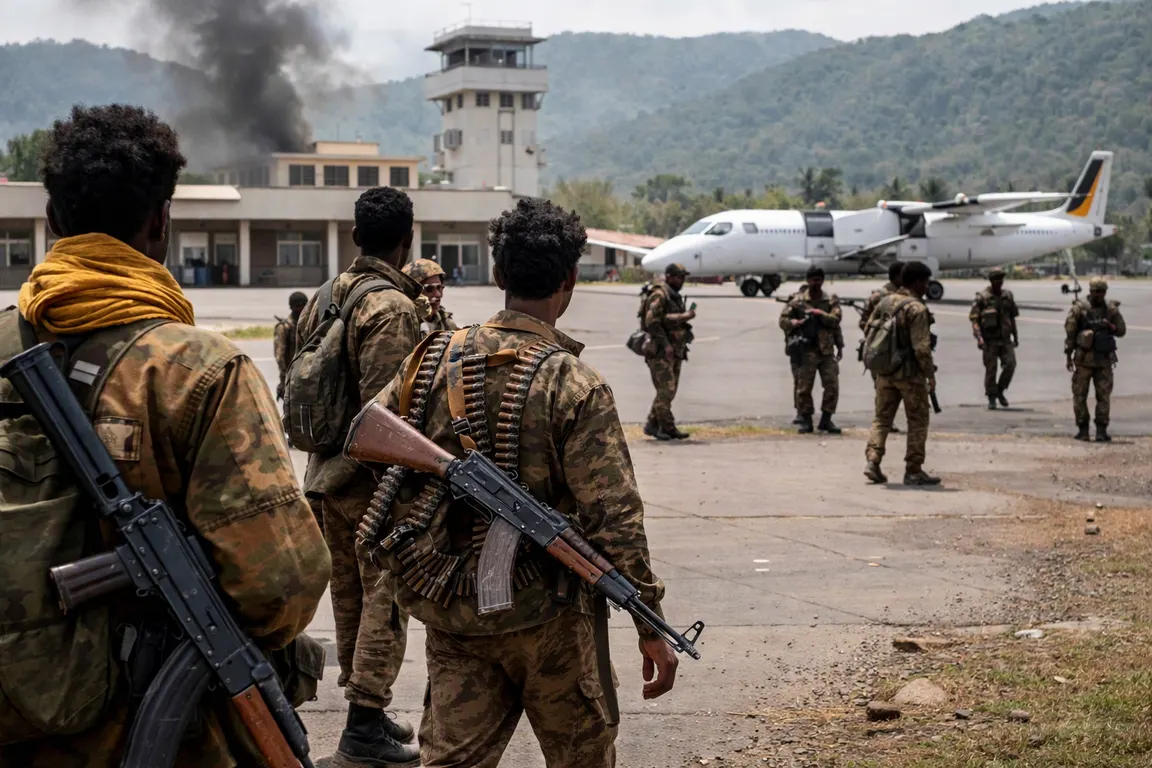
In the past week, Tigray rebels seize northern airports in Ethiopia’s north‑east and launch coordinated attacks into the neighboring Afar and Amhara states, effectively ending the four‑year cease‑fire that had limited large‑scale fighting.
The truce, brokered after the 2020‑2022 war between the Ethiopian army and the Tigray People’s Liberation Front, had kept combat to sporadic skirmishes. Its collapse raises the specter of a renewed civil war that previously claimed an estimated 600,000 lives. Civilians in Tigray, Afar and Amhara now face direct combat, mass displacement, disrupted humanitarian aid and a sharp shock to Ethiopia’s fragile economy.
The Wall Street Journal reported that the three seized airports control air access to the north‑eastern corridor and have been used for both military logistics and civilian flights. Their capture will hamper aid deliveries that have relied on air transport since the earlier conflict. The Guardian confirmed that armed groups moved beyond Tigray into Afar and Amhara, forming a new coalition that seeks to topple Prime Minister Abiy Ahmed’s government.
Al Jazeera noted that clashes are spreading across northern Ethiopia, heightening the risk of spillover into adjacent regions and further destabilising the Horn of Africa. Ethiopian officials have not provided a precise date for when the truce fell apart, and casualty figures for the current flare‑up remain unavailable.
The civilian impact is already evident. Residents of the three regions confront heightened risk of death, injury and forced displacement as frontlines shift daily. Damage to roads, power lines and agricultural zones threatens food security for millions who depend on seasonal harvests. The interruption of air traffic at the seized airports curtails the flow of aid supplies, potentially delaying relief operations critical since the 2020‑2022 war.
Economically, the renewed hostilities threaten to deter foreign investment and strain Ethiopia’s recovery. Trade routes that pass through the north‑east are disrupted, and donors may reassess funding for reconstruction and development projects amid the uncertainty.
International observers and regional bodies have called for an immediate cease‑fire, but the Ethiopian government has not announced any diplomatic initiative. As the rebel coalition consolidates its gains and the army mobilises a response, the coming days will determine whether Ethiopia can avert a full‑scale return to civil war or descend into a broader conflict that endangers millions of civilians and the nation’s stability.