

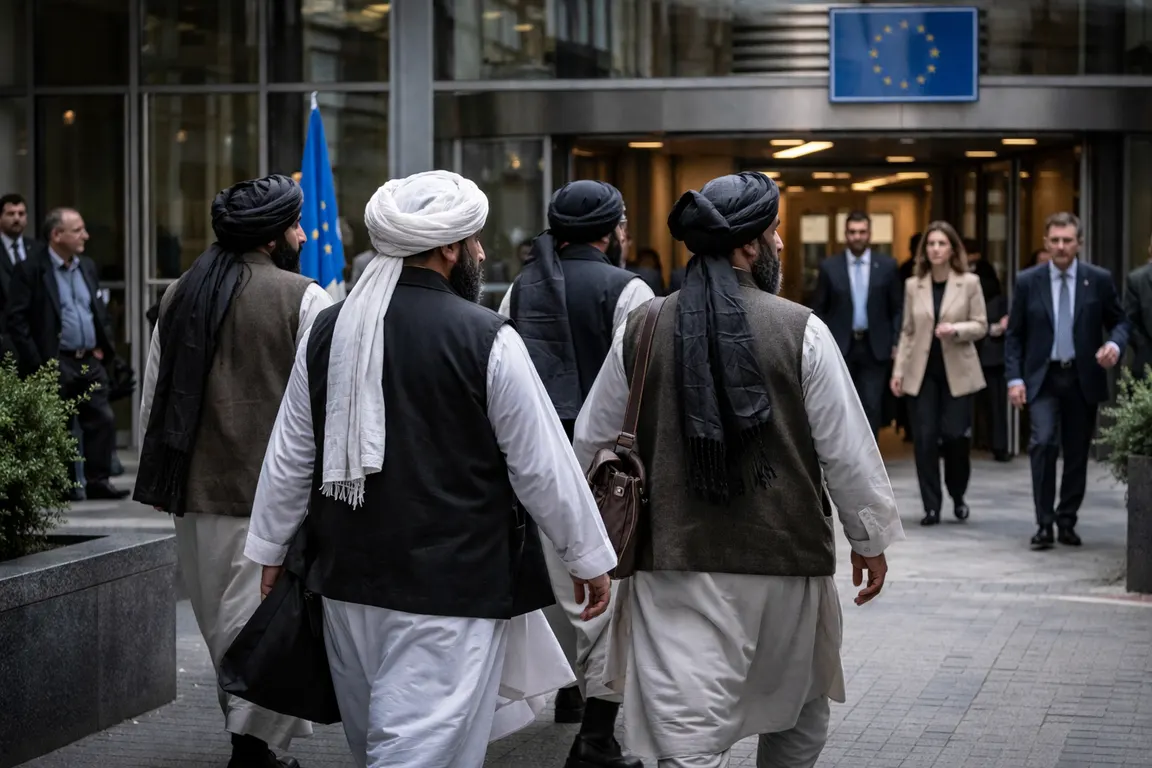
The European Union is set to host a Taliban delegation in Brussels for closed-door talks, focusing on the deportation of Afghan nationals without a right to stay in Europe, in what is seen as Taliban EU discussions. The meeting has sparked criticism from rights campaigners and MEPs, who warn that it risks normalizing a regime with a poor human rights record, particularly regarding women's rights.
The Taliban regime has banned girls from school beyond the sixth grade, and two leaders of the Taliban are accused of crimes against humanity. The Belgian foreign ministry issued five single-day visas to a Taliban delegation, with the meeting scheduled to take place on Tuesday. Critics argue that the meeting may mark a disturbing shift in the EU's approach to human rights and its relationship with a regime known for its repressive policies.
The EU has faced criticism for planning to host the Taliban in Brussels, with some sources disagreeing on the implications of the meeting. According to reports, the EU is seeking to discuss the deportation of Afghan nationals who do not have a right to stay in Europe. The meeting affects Afghan nationals living in Europe, particularly those who may face deportation, as well as the broader human rights community and women's rights advocates.
As the meeting approaches, critics are questioning the EU's decision to host the Taliban, citing concerns over the regime's human rights record. The EU's relationship with the Taliban regime is likely to be closely watched, with many wondering what the implications of this meeting will be for Afghan nationals living in Europe and for the EU's reputation on human rights. The meeting is set to take place on Tuesday, with the outcome and implications still uncertain.
The EU's decision to host the Taliban has sparked fierce criticism from rights campaigners and MEPs, who warn that it may undermine the EU's commitment to human rights. The meeting has also raised questions about the EU's approach to dealing with regimes with poor human rights records. As the EU navigates its relationship with the Taliban, it will be important to balance its interests with its commitment to human rights and the well-being of Afghan nationals living in Europe.
The implications of the meeting will be closely watched, particularly by Afghan nationals living in Europe who may face deportation. The EU's reputation on human rights is also at stake, as critics argue that hosting the Taliban may be seen as a sign of weakness or a willingness to compromise on human rights principles. As the meeting takes place on Tuesday, the EU will need to carefully consider the potential consequences of its actions and ensure that its commitment to human rights remains unwavering.