

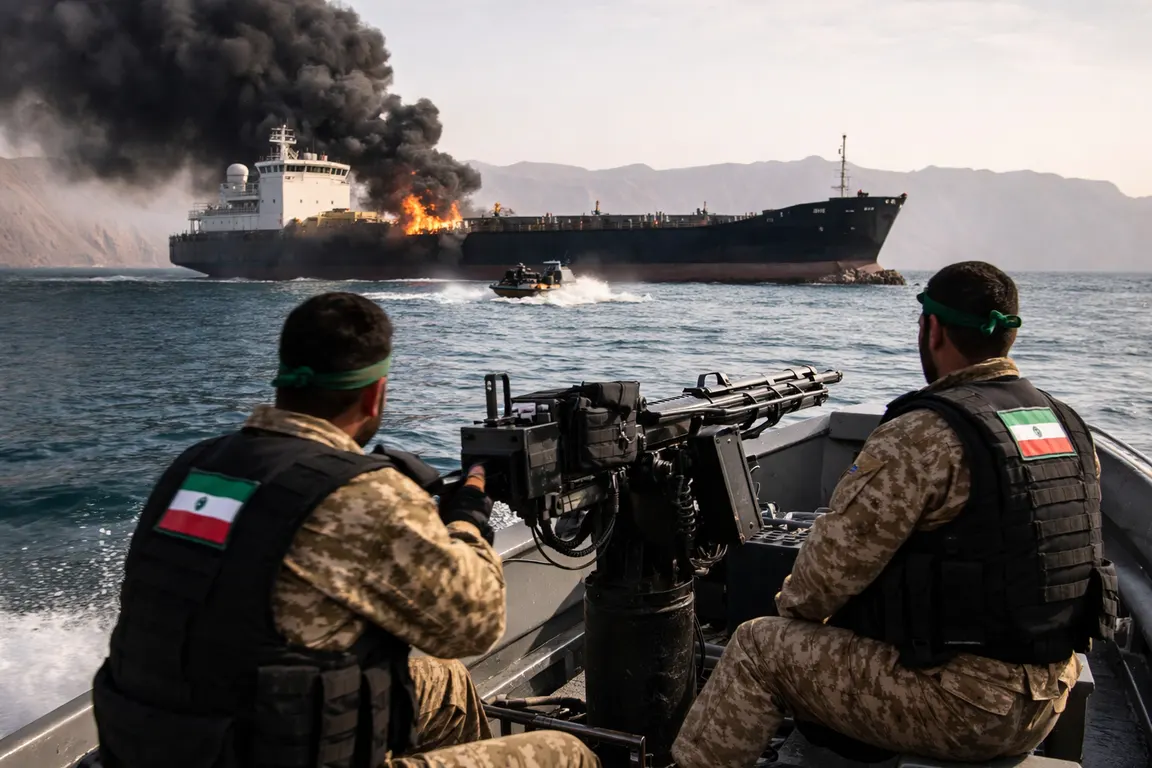
Three maritime incidents were reported in the Strait of Hormuz in the last 24 hours, with IRGC forces hitting a Qatari LNG tanker, a Saudi crude tanker, and an unidentified vessel. The recent attacks have significant implications for global oil prices, international trade, and the ongoing US-Iran peace talks.
The Strait of Hormuz is a critical waterway, with a fifth of all traded oil and natural gas passing through it. The US and many Gulf Arab states oppose Iran's demand to charge fees for passage through the strait. The UKMTO reported a third incident involving a tanker struck by an unknown Uncrewed Aerial Vehicle (UAV), and Brent crude rose to $72.76 a barrel following the attacks, while European natural gas prices surged as much as 6%.
The attacks may deter shipowners from transiting the Hormuz chokepoint, slowing the normalization process and affecting global oil supplies. Different sources attribute the attacks to different parties, with some implying Iranian involvement and others not directly claiming responsibility. The US and Iran have different interpretations of the interim peace deal, particularly regarding the control of shipping routes and fees for passage.
The situation has significant implications for international trade, with potential disruptions to the supply chain. The US-Iran conflict began in late February, and the US-Iran interim peace deal was reached, halting attacks and allowing the normalization process to begin. The recent attacks on ships in the Strait of Hormuz have reignited tensions and threatened to disrupt the peace process.
As the world watches the fragile US-Iran peace talks, the stakes are high, with the potential for increased oil prices, affecting consumers and the global economy. The next step will be to see how the US and Iran respond to the incidents, and what measures they will take to prevent further disruptions to global oil supplies.