

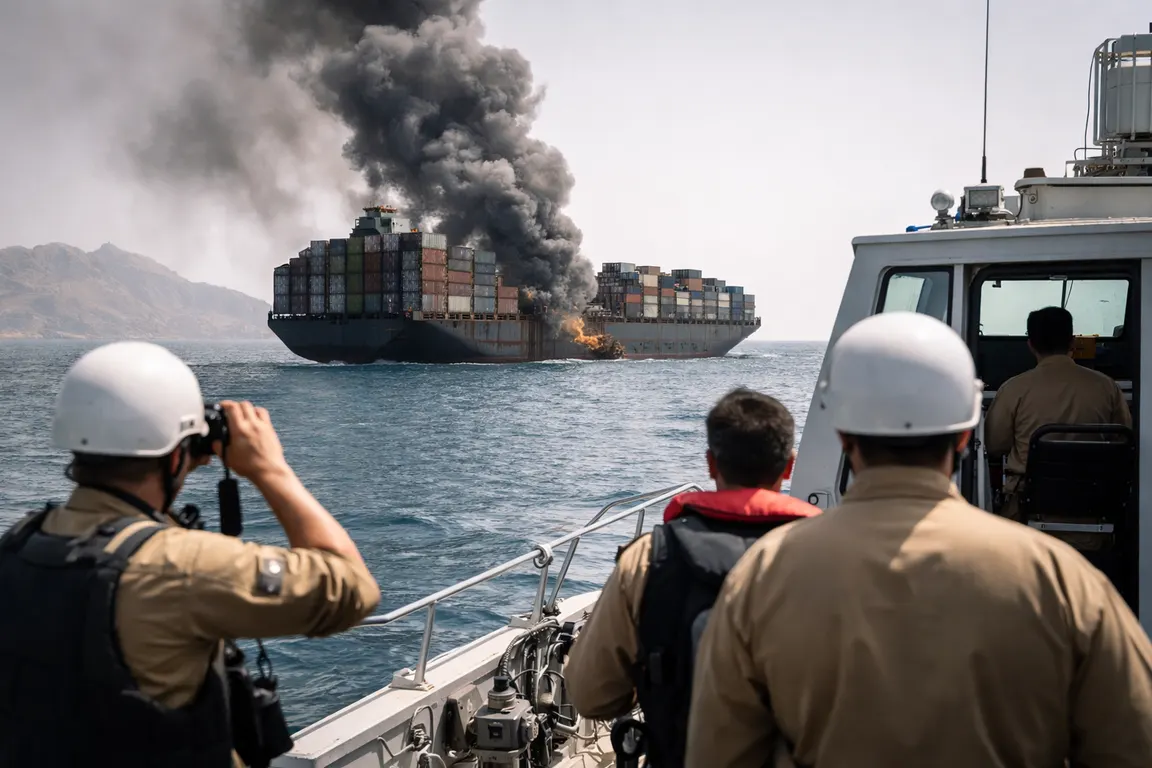
A container ship was struck near the coast of Oman on Thursday in the Strait of Hormuz, prompting the UN's International Maritime Organization to pause its evacuation plan for ships in the area. The attack has raised concerns about the safety of the waterway and the ability of the US and Iran to reach a deal, which could have significant implications for global energy markets and regional stability.
The US has accused Iran of being responsible for the attack, while the British maritime security agency UKMTO reported that the cargo ship was hit by an unknown projectile. Approximately 600 ships and their crews are trapped in the area, awaiting evacuation. The Strait of Hormuz is a vital waterway for global energy shipments, with many countries relying on it to export oil and liquefied natural gas.
The US and Iran are currently negotiating a deal to end the conflict that started in late February, with the US warning against Iran charging fees for passage through the Strait of Hormuz. The attack occurred just days after the signing of a memorandum of understanding between the US and Iran, and the start of negotiations in Switzerland on Sunday.
The pause in the evacuation plan has left the ships and crews trapped in the area in a precarious situation, with many countries relying on the Strait of Hormuz to export oil and liquefied natural gas. The implications of the attack on the ship in the Strait of Hormuz for the negotiations between the US and Iran are still unclear, but it is certain that the safety of the waterway and the ability of the two countries to reach an agreement are now major concerns.
The US and Iran must now navigate these challenges to reach a deal, with the next step being a meeting between the two countries' negotiators to discuss the details of the agreement. The situation in the Strait of Hormuz remains volatile, and the outcome of the negotiations will have significant implications for global energy markets and regional stability.