

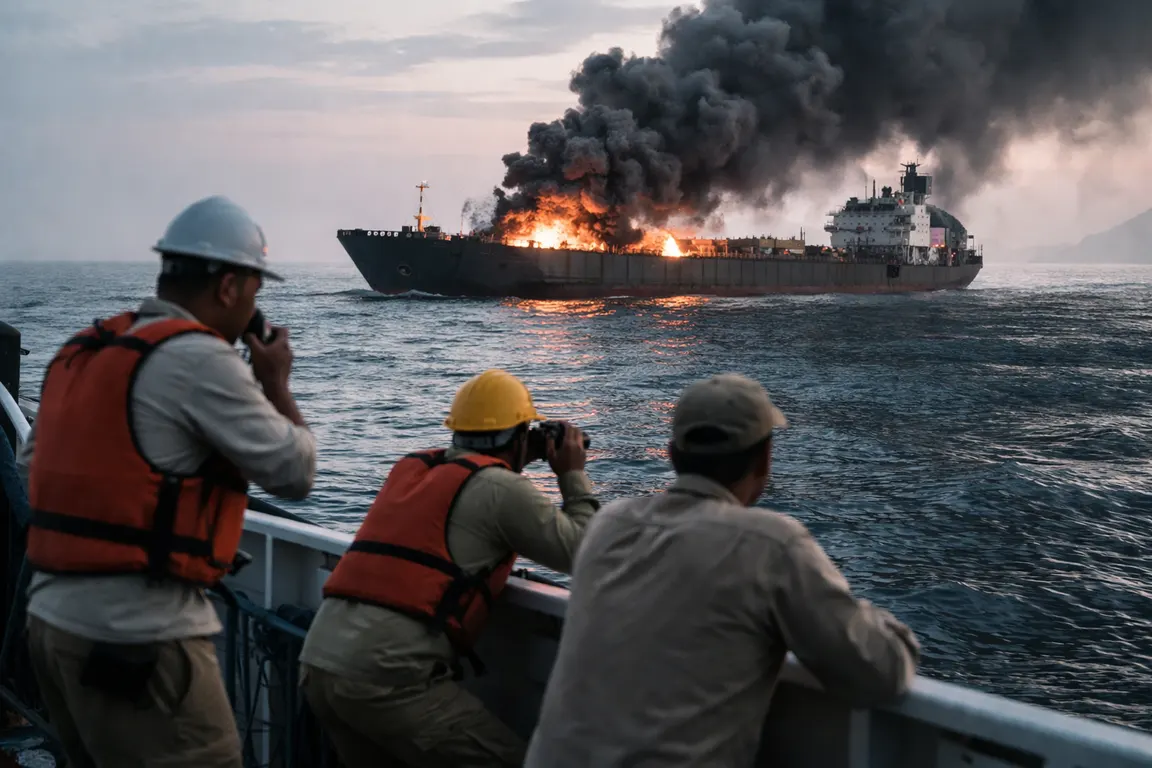
Iran's Revolutionary Guards fired at least two missiles at commercial ships in the Strait of Hormuz on Monday night, sparking concerns about public safety and the potential disruption of global oil supplies. The attack occurred with a tanker off the coast of Oman hit by an 'unknown projectile', causing a fire.
The UK's maritime agency reported the incident, which could complicate negotiations to end the US-Iran conflict. The attack may affect global oil supplies, disrupt trade, and escalate tensions in the region, potentially impacting the economy and public safety.
As the situation unfolds, the extent of the damage caused by the missile attack remains uncertain, with reports emerging on Tuesday. A funeral for a high-ranking Iranian official in Qom is also underway, adding to the uncertainty in the region. The potential implications for regional tensions and US-Iran negotiations are significant, with the attack potentially complicating ongoing efforts to resolve the conflict.
Measures are being taken to ensure public safety and prevent further incidents, but the situation remains volatile. The next step will be to assess the full extent of the damage and determine the best course of action to prevent further escalation. The incident raises concerns about the safety of commercial ships and the potential disruption of global oil supplies, highlighting the need for a swift and effective response to the situation.
The attack on commercial ships in the Strait of Hormuz is a significant development in the region, with potential implications for global oil supplies and regional tensions. The international community is closely monitoring the situation, and efforts are underway to prevent further escalation and promote a peaceful resolution to the conflict. The situation remains uncertain, but one thing is clear: the attack on commercial ships in the Strait of Hormuz has significant implications for public safety, infrastructure, and the economy.