

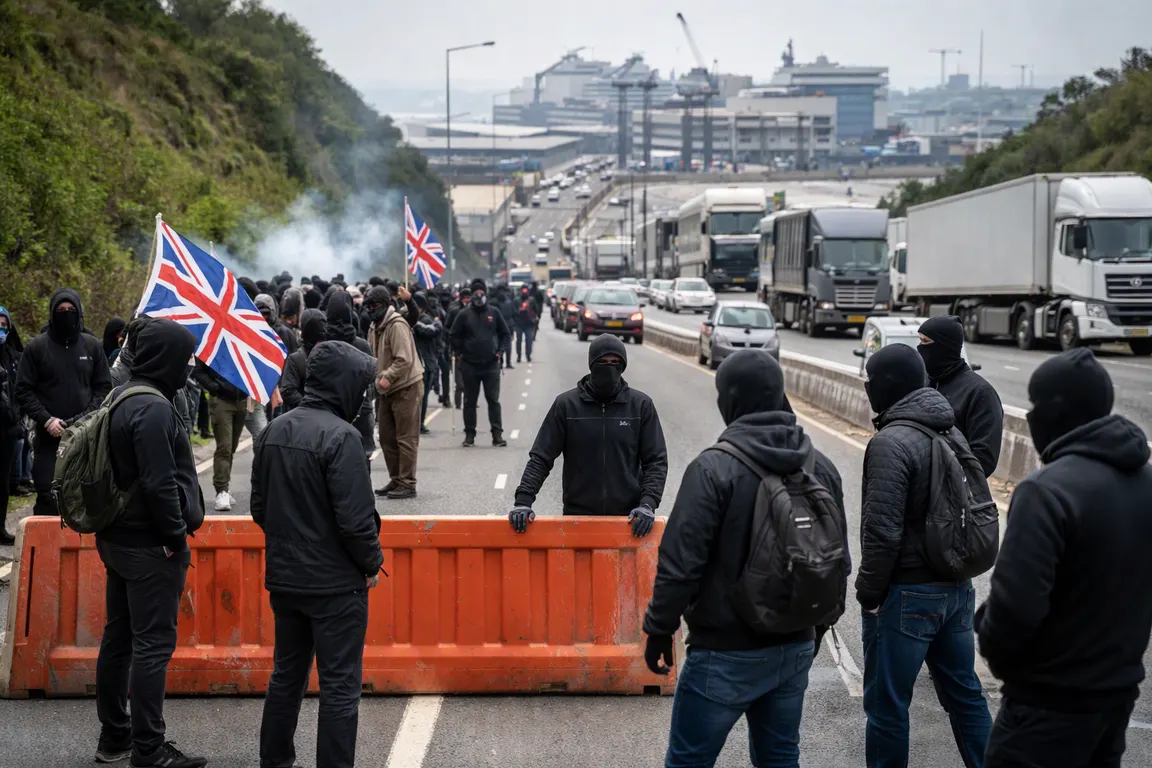
A group of masked activists linked to the “stop the boats” anti‑immigration movement staged a stop the boats protest Dover, blocking the main access routes to the Port of Dover on Saturday. The blockage halted ferry departures and caused several hours of traffic congestion on the A20 and nearby roads.
The disruption lasted about three hours. Ferry operators suspended services, leaving commuters, freight drivers and passengers stranded. By mid‑afternoon, queues stretched for miles and most scheduled sailings were delayed or cancelled until the roads were cleared.
The Department for Transport condemned the protest as “unacceptable” and urged demonstrators to respect the essential nature of the infrastructure. No arrests were reported, and police have not released details of their on‑scene response.
Dover handles a large share of the UK‑Europe freight corridor, moving millions of tonnes of goods each year. Even a brief interruption can ripple through supply chains, forcing freight firms to reroute cargo or adjust delivery windows. Local businesses that depend on foot traffic – cafés, shops and service providers – reported an immediate loss of revenue. Residents also faced heightened congestion, and emergency services noted longer response times during the peak of the blockage.
The protest fits a broader “stop the boats” narrative that has appeared at other UK ports, but the Dover incident was notable for its focus on a single, high‑traffic entry point rather than a prolonged sit‑in. Media outlets, including the BBC, Al Jazeera and The Independent, confirmed the anti‑immigration motive, though no organising body beyond the movement’s label was identified.
Industry observers say the episode highlights the need for contingency planning at critical transport nodes. While the port has protocols for weather‑related disruptions, a protest that physically blocks access routes presents a different set of challenges. The swift clearance of the roads suggests authorities were able to restore access without escalating the confrontation, but the incident may prompt a review of security measures and coordination with local police.
The UK government has reiterated its stance against disruptions to essential services. The Dover blockage raises a policy question: how can authorities balance the right to demonstrate with the imperative to protect infrastructure that underpins the national economy? No legal actions have been announced, and it remains unclear whether additional safeguards will be introduced to deter similar flash protests at other key hubs such as the ports of Hull, Liverpool and Southampton.