

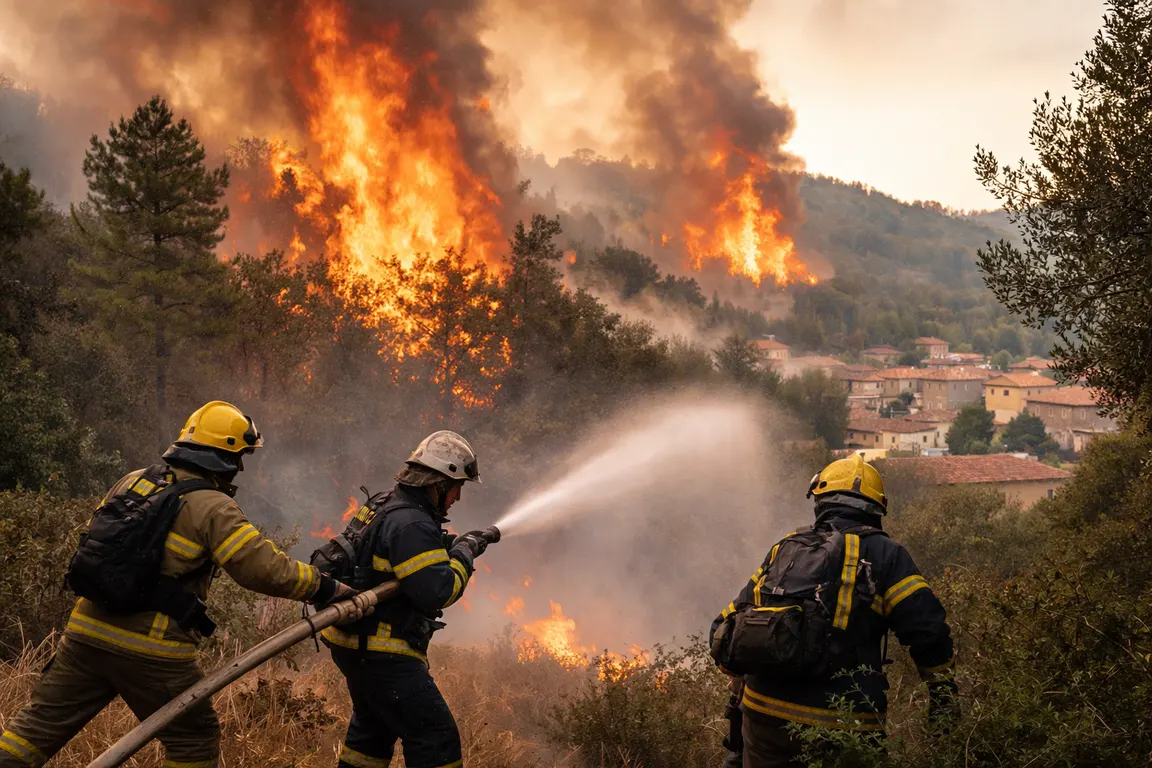
Wildfires are sweeping across southern Europe, forcing thousands to flee their homes and prompting the Tour de France to ban spectators from a stage of the cycling race. The early start to the summer wildfire season, exacerbated by a recent record-breaking heatwave, poses significant risks to public safety and infrastructure.
Over 19,000 hectares of land have been devastated by wildfires across Portugal, Spain, France, and Greece, with 10,000 local residents evacuated in southwestern France alone. A firefighter and a resident have been injured in the wildfires, which started in late June and have continued to spread throughout southern Europe. Temperatures are expected to rise again, reaching 40C in parts of the region, further fueling the fires.
The World Weather Attribution group of scientists has stated that the recent heatwave would have been 'virtually impossible' without climate change. The full extent of the damage and the number of people affected is still being determined, but the disruption to the Tour de France is likely to impact the local economy. As the situation continues, authorities are working to contain the fires and prevent further devastation.
The immediate focus is on public safety, with firefighters battling to control the blazes and residents being evacuated to safe areas. In the coming days, the authorities will face significant challenges in preventing further wildfires, with the hot and dry conditions expected to persist. The people of southern Europe can only wait and hope that the situation does not worsen, as they struggle to come to terms with the devastation already caused by the wildfires.
Authorities are working to assess the damage and provide support to those affected. The economic impact of the wildfires is also a concern, with the disruption to the Tour de France and other events likely to affect local businesses. Efforts remain focused on containing the fires and preventing further destruction, with the safety of those in the affected areas the top priority.