

South Korea Takes Custody of Captured North Korean Soldiers
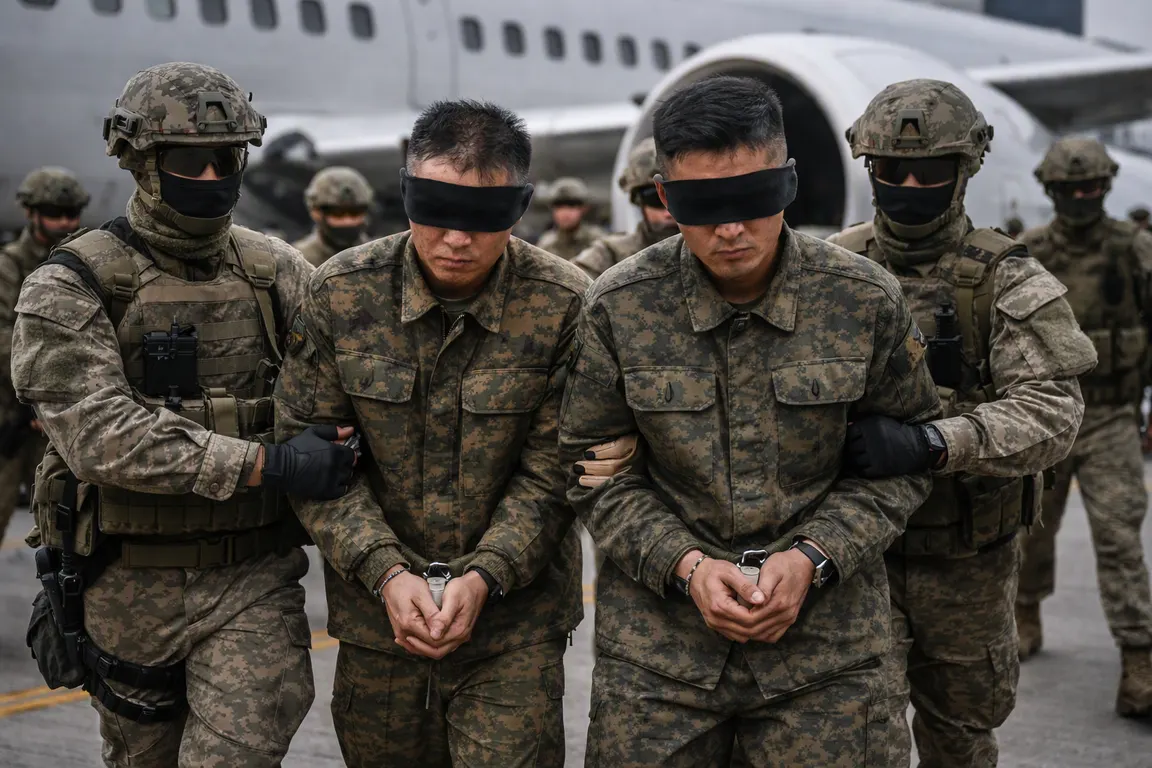
Kyiv said Wednesday that two North Korean soldiers captured by Ukrainian forces in Russia’s Kursk region in January have been transferred to South Korea for detention. President Volodymyr Zelensky announced the move in a televised briefing, saying it prevents North Korea from treating its citizens as a "currency" for Russia’s war effort. The transfer was reported by Al Jazeera, the New York Post and The Independent.
The two soldiers were seized during a Ukrainian combat operation near the Russian city of Kursk, according to the three outlets. The Independent noted that they are the first North Korean combatants captured alive since Pyongyang formally aligned with Moscow earlier this year. Zelensky’s criticism of North Korea’s role in the conflict was highlighted by Al Jazeera.
South Korean authorities have not disclosed the prisoners’ legal status or the conditions of their confinement. The lack of detail leaves Seoul with a range of options: holding the men in a military facility, interrogating them for intelligence, or pursuing legal action under international humanitarian law. Each path carries diplomatic implications for South Korea’s relationship with Pyongyang and its alliance with the United States, which has warned against the proliferation of foreign fighters in Ukraine.
North Korea’s involvement in the war remains limited in publicly known troop numbers, but the presence of its soldiers on the Ukrainian battlefield has raised concerns in Washington and Europe. By sending the captives to Seoul, Ukraine signals that it will not retain foreign combatants for long periods, potentially limiting Moscow’s ability to leverage allied personnel.
For South Korea, the case offers a rare glimpse into how North Korean forces are being employed by Russia. Information gathered from the detainees could inform future policy on sanctions, defense cooperation, or diplomatic pressure on Pyongyang. It also raises humanitarian questions for any families of the soldiers still in North Korea, though the North has not commented.
The development underscores how the Russia‑Ukraine conflict is drawing in actors far beyond Eastern Europe and extending its diplomatic and security ramifications to the Korean peninsula. Observers note that Seoul’s next steps—whether to prosecute, repatriate or hold the soldiers—will affect bilateral ties with the North and broader regional calculations about the war’s reach.
South Korean officials are expected to brief the National Assembly in the coming days, and diplomatic channels with Pyongyang are likely to be activated to address the prisoners’ status. How Seoul proceeds will shape not only its relationship with North Korea but also the wider regional response to the expanding scope of the conflict.