

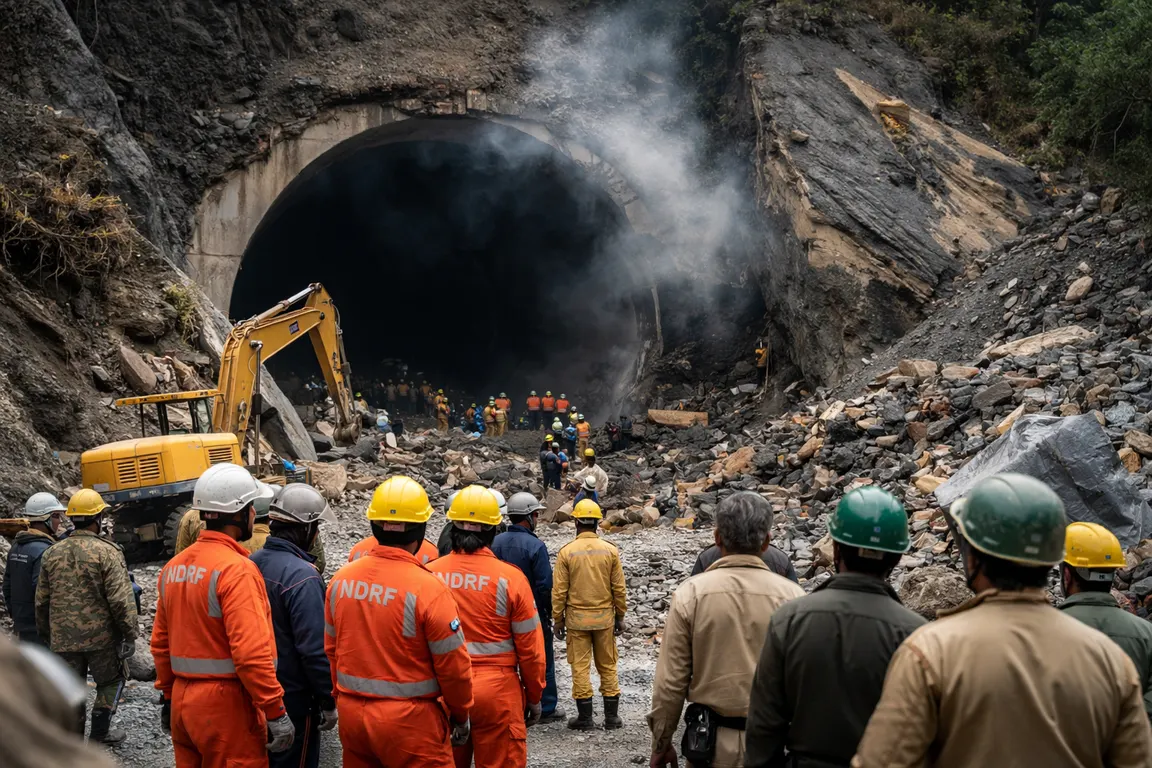
An explosion in a tunnel at a hydropower project in India's northeastern Himalayan state of Sikkim, specifically at the Sikkim hydropower project, has left at least 11 people dead and 14 missing. The incident occurred on Monday and has raised concerns about the safety of infrastructure development in the region. The explosion is believed to have been triggered by a build-up of methane gas.
The rescue efforts are ongoing, with the National Disaster Response Force working to rescue those trapped. However, the operation is challenging due to the presence of toxic gases, including methane, carbon monoxide, and hydrogen sulfide, in the tunnel. Six officials from the National Hydroelectric Power Corporation who entered the tunnel to assist in rescue efforts became trapped themselves.
The incident has affected the families of the workers who are dead or missing, as well as the local community. It raises questions about the safety of infrastructure development in the region, particularly in seismically active areas where fragile geology and extreme weather conditions can exacerbate the dangers. As India pushes to develop its infrastructure, the risks of accidents and disasters in such regions are becoming increasingly apparent.
The cause of the explosion is still being investigated, but it is clear that the safety of workers and the environment must be a priority in such projects. The Indian government has not commented on the incident, but it is likely to face scrutiny over the safety measures in place for such projects. The incident has also raised concerns about the potential environmental impacts of large-scale infrastructure projects in fragile ecosystems.
The fate of those trapped in the tunnel remains uncertain, with rescue efforts ongoing. The incident highlights the need for robust safety protocols and emergency response plans in infrastructure development projects, particularly in high-risk areas like Sikkim. The government and project developers must prioritize the safety of workers and the environment to prevent such incidents in the future.