

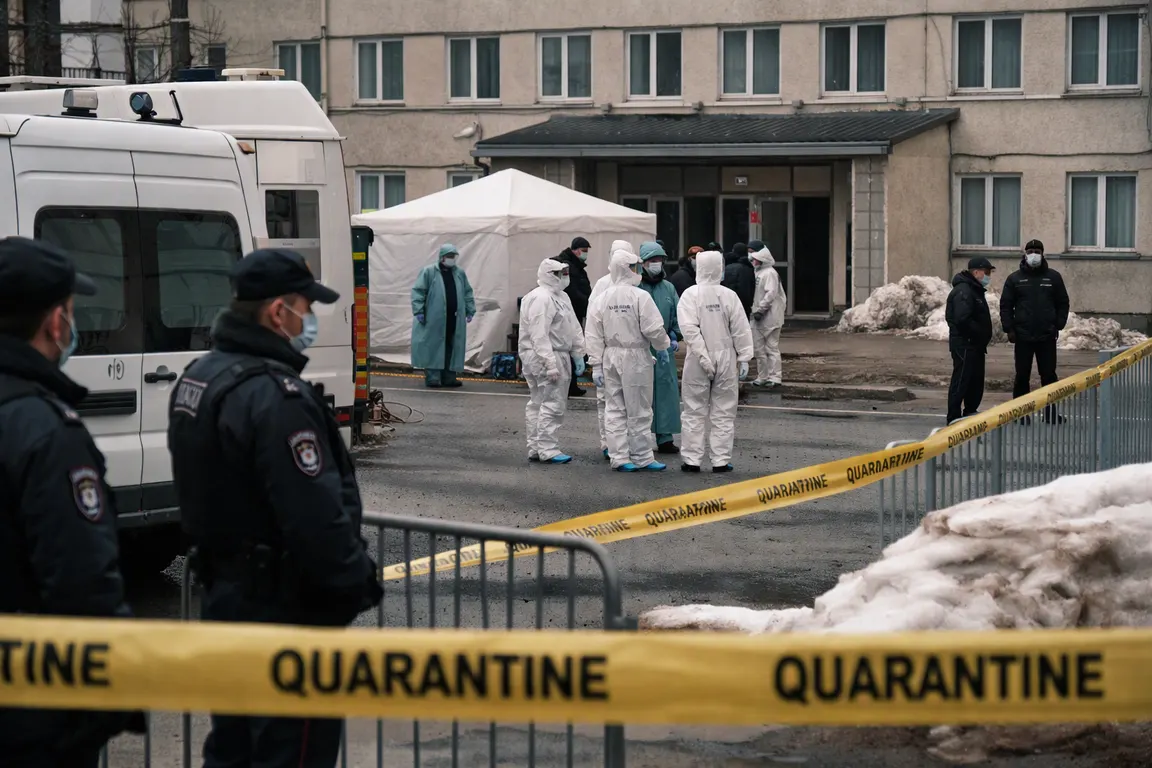
A Siberian pneumonia quarantine was imposed after a laboratory technician at the Irkutsk Anti‑Plague Research Institute died of an unidentified pneumonia. Regional authorities closed a hospital in Shelekhov and placed up to 200 contacts under observation.
The case has revived concerns about pneumonic plague, a disease that can spread person‑to‑person, and put Russia's Siberian public‑health system under intense scrutiny. The federal health watchdog Rospotrebnadzor said initial laboratory tests have not identified any known pathogen, while some local reports cite unnamed sources suggesting the illness could be Yersinia pestis. Mixed messages have led the United States to monitor the situation closely, underscoring the potential for an infectious‑disease event to strain regional resources and attract international attention.
Darya Shipilova, 32, fell ill in early May and was admitted to a hospital in Shelekhov, about 30 km from Irkutsk. She died a few days later. Rospotrebnadzor classified her condition as "pneumonia of unknown etiology" and said no microorganisms linked to her work at the anti‑plague institute were found in the first analysis.
In response, health officials ordered the closure of several hospitals in Irkutsk and placed the Shelekhov facility under quarantine. The hospital stopped admitting new patients, halted routine laboratory testing, and began tracing 189‑200 individuals who had been in contact with Shipilova or the facility. Among those tested, two were positive for a common‑cold virus and two for COVID‑19; the remaining contacts tested negative for the suspected pathogen.
Kremlin spokesperson Dmitry Peskov urged citizens to rely on official statements from Rospotrebnadzor rather than rumors. U.S. Secretary of State Marco Rubio said the United States is monitoring the case but does not consider it an immediate alarm. Both statements reflect a cautious diplomatic stance: Russian officials emphasize the lack of evidence for a lab‑origin plague, while U.S. officials keep the issue on their watchlist without confirming a threat.
The quarantine has immediate practical effects on residents. Movement in parts of Irkutsk and Shelekhov is restricted, and patients needing non‑emergency care must travel to facilities outside the quarantined zone. Workers at the Irkutsk Aluminum Plant and other local enterprises have been instructed to wear masks, and some shifts have been adjusted to limit crowding. Local businesses report a dip in foot traffic as anxiety grows.
If the illness were confirmed as pneumonic plague, public‑health protocols would shift dramatically. The disease, which historically caused devastating pandemics, can be transmitted through respiratory droplets, prompting broader isolation measures, travel advisories and the deployment of antibiotics on a regional scale. Such a scenario would likely trigger coordination with the World Health Organization and could affect international trade routes that pass through Siberia.
For now, the precise cause of Shipilova’s death remains uncertain. Russian authorities have not released detailed laboratory results, and independent verification is limited. Observation of contacts will continue for the next two weeks, after which health officials will decide whether further restrictions are needed. Both Russian and U.S. agencies are exchanging information through established channels, aiming to prevent misinformation and to address any emerging threat promptly.