

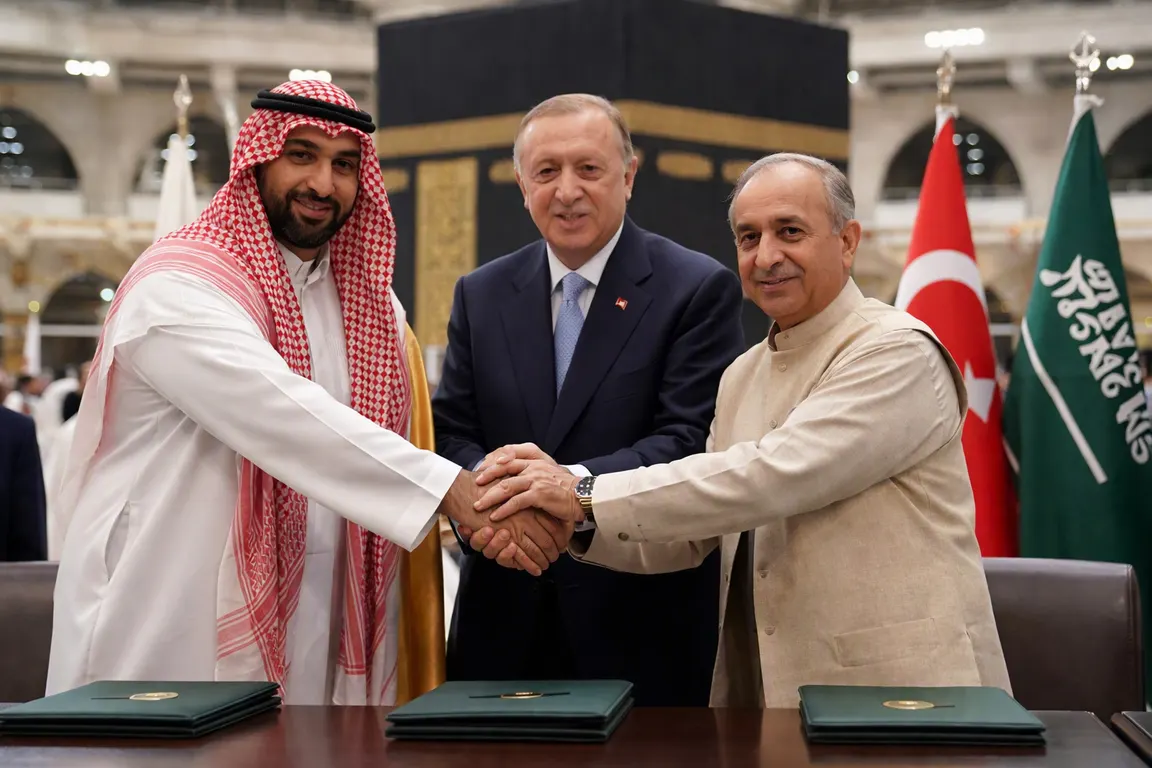
Saudi Arabia, Turkey, and Pakistan signed a joint defense agreement in Mecca on Friday, aiming to strengthen collective deterrence and promote peace, security, and stability in the region. The trilateral agreement comes amid growing concerns over Iran's military activities and the US's role in the Middle East.
The agreement stipulates that an armed attack against any of the three states shall be regarded as an attack against them all, and is intended to strengthen collective deterrence against any act of aggression. Turkey has the North Atlantic Treaty Organization's second-largest military, while Saudi Arabia is home to Islam's holiest sites and one of the world's top oil exporters. Pakistan is the only nuclear-armed Muslim country.
The agreement was signed after nearly a year of negotiations, and follows a significant escalation of regional conflicts, including attacks on Saudi Arabia and other Gulf states by Iran and its allies. Details of the commitments or obligations each country has accepted under the agreement have not been disclosed, leaving uncertainty over the potential impact on the US's role in the region.
The pact may affect the security and stability of the region, particularly in the context of the ongoing conflict between Iran and its allies and Saudi Arabia and its allies. Given Saudi Arabia's significant oil exports, the agreement may also have implications for the global energy market. As the Middle East teeters on the brink of further conflict, the new alliance between Saudi Arabia, Turkey, and Pakistan is poised to reshape the regional security landscape.
The key question now is how the agreement will impact the regional balance of power and the role of the US in the Middle East. With the agreement in place, the next step will be to monitor its implementation and assess its effectiveness in promoting peace and stability in the region. The agreement's impact on the regional security landscape will be closely watched, as the Middle East continues to navigate a complex web of alliances and rivalries.