

Saudi Drone Interception Near Mecca Highlights Red Line
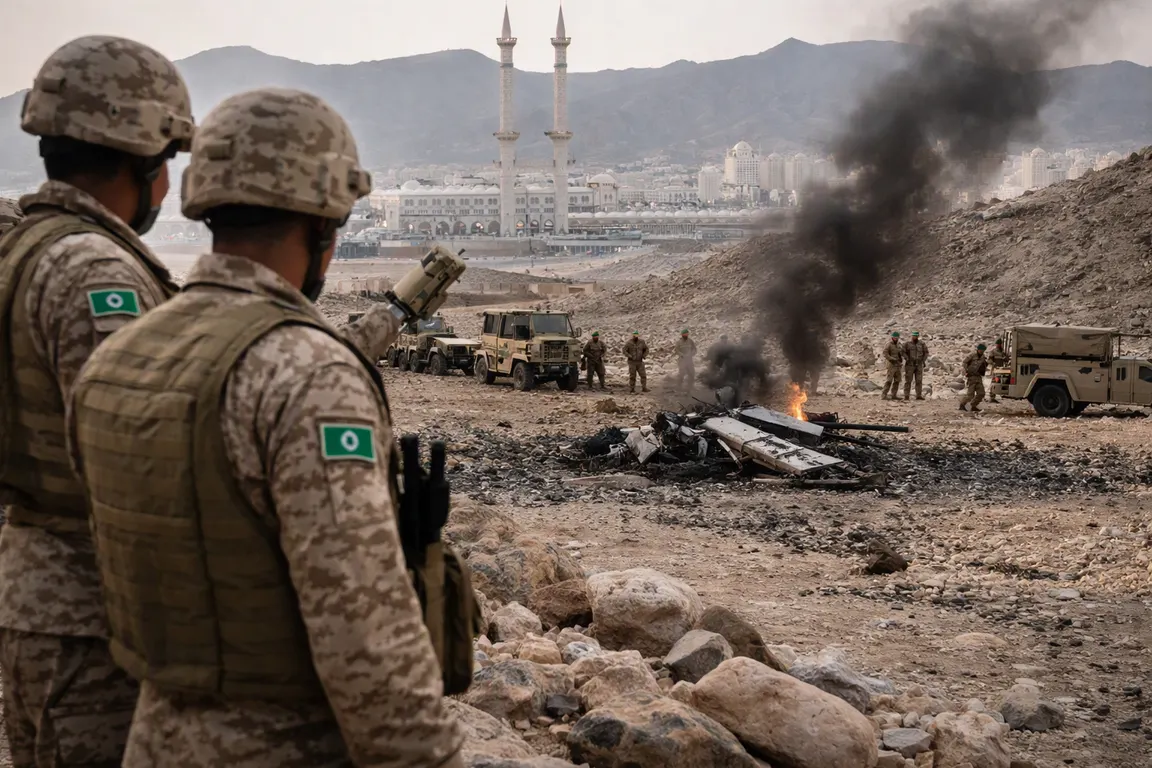
Saudi Royal Air Defence Forces shot down a hostile drone south of Mecca on Sept. 15, marking the first time the kingdom invoked its newly declared red line protecting the Grand Mosque and the Prophet’s Mosque. The unmanned aircraft was intercepted before it entered the restricted airspace that surrounds the two holy sites, officials said.
The drone was detected by radar at roughly 4,000 metres and was heading toward the protected zone. Saudi fighter jets engaged the target with an air‑to‑air missile, destroying it in mid‑air. Coalition spokesperson Turki al‑Maliki confirmed the interception but did not disclose the drone’s origin.
The incident comes amid an intensifying Houthi campaign against Saudi oil and aviation assets. In recent months the Yemeni rebels have launched ballistic missiles and drones at Saudi oil facilities, including the East‑West pipeline, prompting Riyadh to reinforce air‑defence systems around critical energy sites.
U.S. Central Command officials told Israeli media that Israeli analysts supplied real‑time targeting data to Saudi commanders for the operation. Saudi officials have not publicly confirmed the intelligence exchange, but the claim underscores a reported deepening of cooperation between Riyadh and Jerusalem.
The Guardian, Al Jazeera and ZeroHedge reported the interception, though none provided independent video of the drone’s flight path. The Organisation of Islamic Cooperation condemned the alleged attack as “heinous,” while the Houthi movement denied any intent to strike Mecca, calling Saudi accusations a “worn‑out lie.”
Authorities have placed the Mecca region on an elevated alert level. Low‑altitude flights are restricted for the next 48 hours, and security checks at airports and on the ground have been tightened ahead of the upcoming Hajj season. Airlines have warned of possible flight delays as Saudi air‑space restrictions are re‑evaluated.
Analysts say the red‑line declaration could shift regional security calculations. If Saudi leadership views any threat to the holy sites as credible, it may expand its defensive posture and draw additional partners such as Israel, the United Arab Emirates and Egypt into coordinated actions.
A joint Saudi‑Israeli debrief is expected, according to sources familiar with the matter, to assess the intelligence that led to the interception and to determine whether further collaborative measures are warranted. Until a formal investigation releases its findings, the launch point of the drone and the extent of any Israeli involvement remain unanswered, leaving open questions about proportionality and the impact on pilgrim safety and global oil markets.