

Saudi‑Backed Bab el-Mandeb Offensive Targets Houthi Holdouts
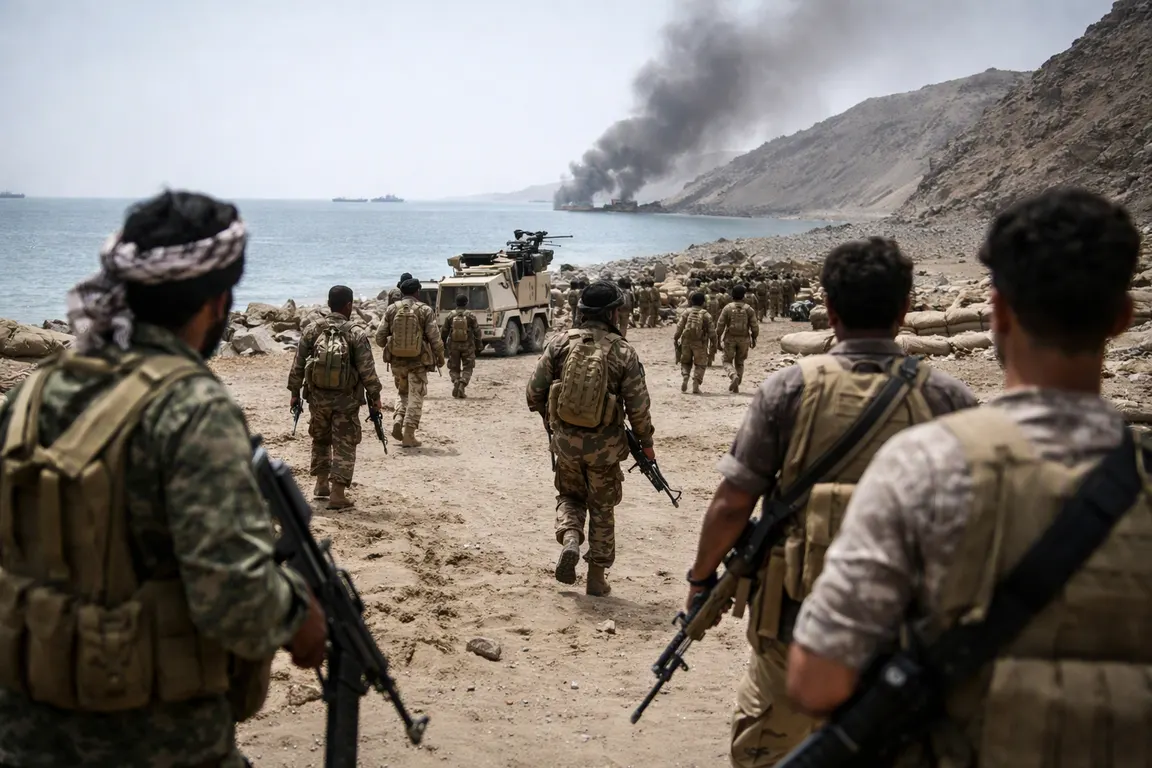
Yemen’s Presidential Leadership Council announced on Oct. 4 that it is launching a full‑scale, Saudi‑backed Bab el‑Mandeb offensive to retake territory held by Iran‑aligned Houthis, including key positions along the strait. Council head Rashad Al‑Alimi ordered all state military, security and civil institutions to join combat operations until "victory" is achieved, and Saudi air power was confirmed to be providing support.
The Bab el‑Mandeb is a narrow maritime chokepoint through which an estimated 20 percent of global oil shipments pass. Disruption there could reverberate through international supply chains and push oil prices higher, especially after recent Houthi attacks on Saudi oil infrastructure and a blockade of Saudi vessels in the strait earlier this summer.
Saudi Arabia’s contribution includes a fleet of U.S.-built F‑15s, Eurofighter Typhoons and Tornado strike aircraft, according to Reuters, though specific units were not disclosed. ZeroHedge, which tracks the campaign’s logistics, says more than 100,000 pro‑government Yemeni troops are slated for mobilization. The council’s tweet, echoed by BBC and Al Jazeera, frames the operation as a campaign to restore state authority across Yemen, but independent verification of ground progress or civilian impact has not emerged.
The offensive follows a series of Houthi escalations. In summer 2026 the group announced a blockade of Saudi ships in the Bab el‑Mandeb, and on Oct. 2 it sparked a visible smoke plume at the Riyadh refinery, underscoring its ability to threaten Saudi energy assets. Goldman Sachs data released the same day showed crude oil flows through the Strait of Hormuz returning to pre‑war levels, suggesting a shift in Iranian leverage that may have emboldened Saudi Arabia to intensify its involvement in Yemen.
For civilians in contested governorates, the heightened fighting raises immediate risks of displacement, casualties and disruption of essential services such as water, electricity and health care. Humanitarian agencies warn that mobilizing large numbers of troops could further strain an already fragile aid delivery system and limit access to besieged populations.
Commercial shipping also faces heightened risk. Vessels transiting the Bab el‑Mandeb could encounter attacks, mines or sudden closures if fighting reaches the coastline. Some shipping companies have already begun rerouting traffic, adding transit time and cost, and potentially tightening global oil markets if the strait experiences renewed disruptions.
The broader geopolitical balance is at stake. While the Houthis are aligned with Iran, the Saudi‑backed offensive underscores Riyadh’s willingness to project power beyond its borders to protect maritime routes and oil facilities. Analysts note that a prolonged conflict in the strait could draw in additional regional actors and complicate diplomatic efforts aimed at de‑escalation.
The next steps remain uncertain. The council has not released a timetable for major operations, and no casualty figures have been made public. Observers will watch for signs of ground advances, the intensity of Saudi air sorties and any Houthi response, including potential attacks on shipping or Saudi infrastructure. The humanitarian community is preparing contingency plans for mass displacement, but the scale of the response will depend on how quickly the offensive moves beyond initial strikes.
As the first wave of combat unfolds, the world’s focus will be on whether the Bab el‑Mandeb can remain open and whether civilian suffering can be limited amid a conflict that now threatens both regional stability and global energy markets.