

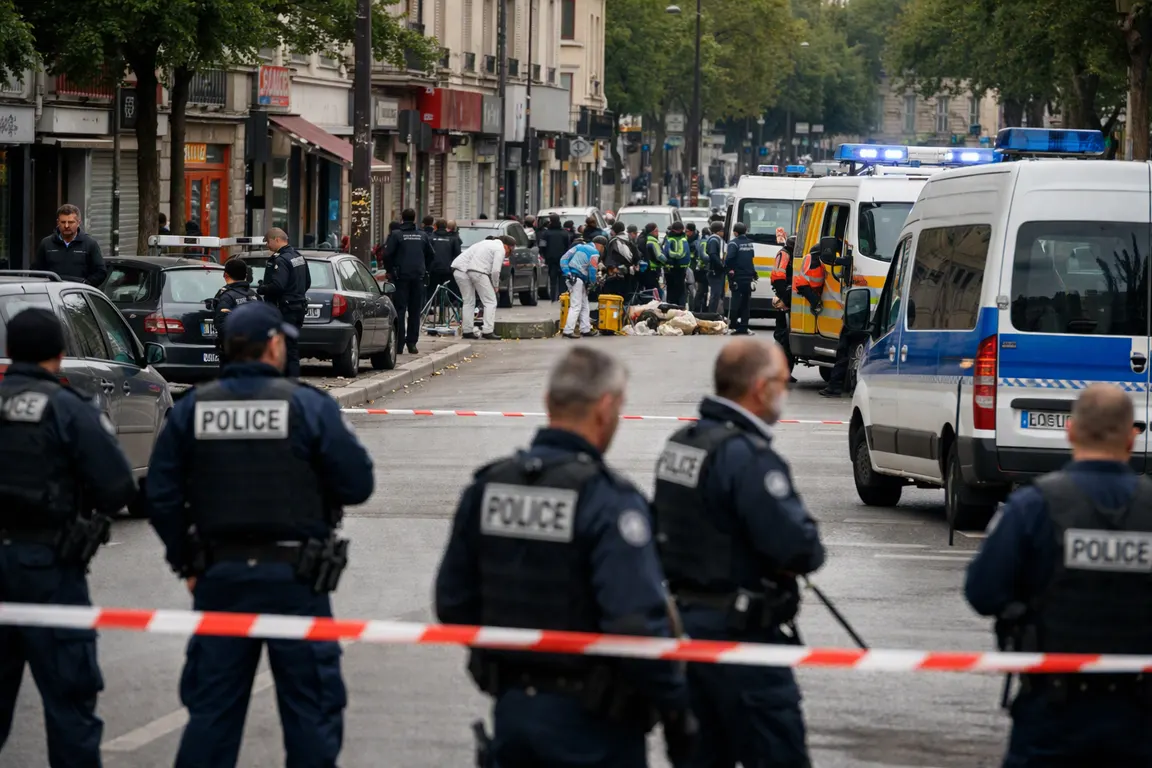
A Saint-Denis shooting terrorism label was applied on Friday after a gunman opened fire in the northern Paris suburb, killing one person and wounding five, including a 12‑year‑old girl. Police detained a male suspect at the scene.
Interior Minister Gérard Darmanin said the investigation will be treated as a "crime of terrorism," while Prime Minister Sébastien Lecornu confirmed the casualty figures at a press briefing.
The classification arrives as France deals with a series of recent attacks that have kept the country on high alert. By labeling the Saint‑Denis incident as a possible terrorist act, officials have opened a debate over whether the threat also encompasses hate‑driven violence against minority communities and how limited counter‑terrorism resources should be allocated.
Police secured the area within minutes and arrested the suspect, whose identity has not been released. The terrorism label activates a legal framework that allows prosecutors to seek harsher penalties and to mobilise specialised investigative units.
Media outlets have offered differing interpretations of the motive. The Independent suggested a possible Islamophobic angle, the Wall Street Journal highlighted anti‑immigrant rhetoric, while the BBC and NBC focused on the terrorism classification without naming a target group. These divergent frames reflect uncertainty about the shooter’s intent and raise questions about whether the case will be pursued under terrorism statutes or hate‑crime provisions.
Local authorities have begun providing assistance to victims’ families, and social services are supporting the injured, including the child. Community leaders in Saint‑Denis, a district with sizable Muslim and immigrant populations, have called for calm and transparent communication from the government. Nearby businesses reported a temporary drop in foot traffic as residents avoided the area, illustrating the immediate economic impact of such incidents.
France’s counter‑terrorism apparatus, already stretched by operations across the country, now faces the prospect of allocating additional resources to a case that may straddle both terrorism and hate‑crime domains. Security officials have not announced new measures, but the incident is likely to test coordination between intelligence services, police units and community outreach programmes.
Legal experts note that the distinction matters: a terrorism finding triggers national‑security protocols, while a hate‑crime designation would emphasise protection of specific groups and could shape future policy debates on hate‑crime legislation.
The investigation is still in its early stages. Prosecutors have not disclosed the evidence that led to the terrorism label and have not ruled out alternative motives tied to race, origin or religion. Detectives are examining the suspect’s background and any possible extremist affiliations.
A formal judicial inquiry into the suspect’s motives is expected, followed by a report from the interior ministry on the case’s classification. Until those findings are released, the public will watch closely to see how France balances its counter‑terrorism priorities with the need to safeguard vulnerable communities.