

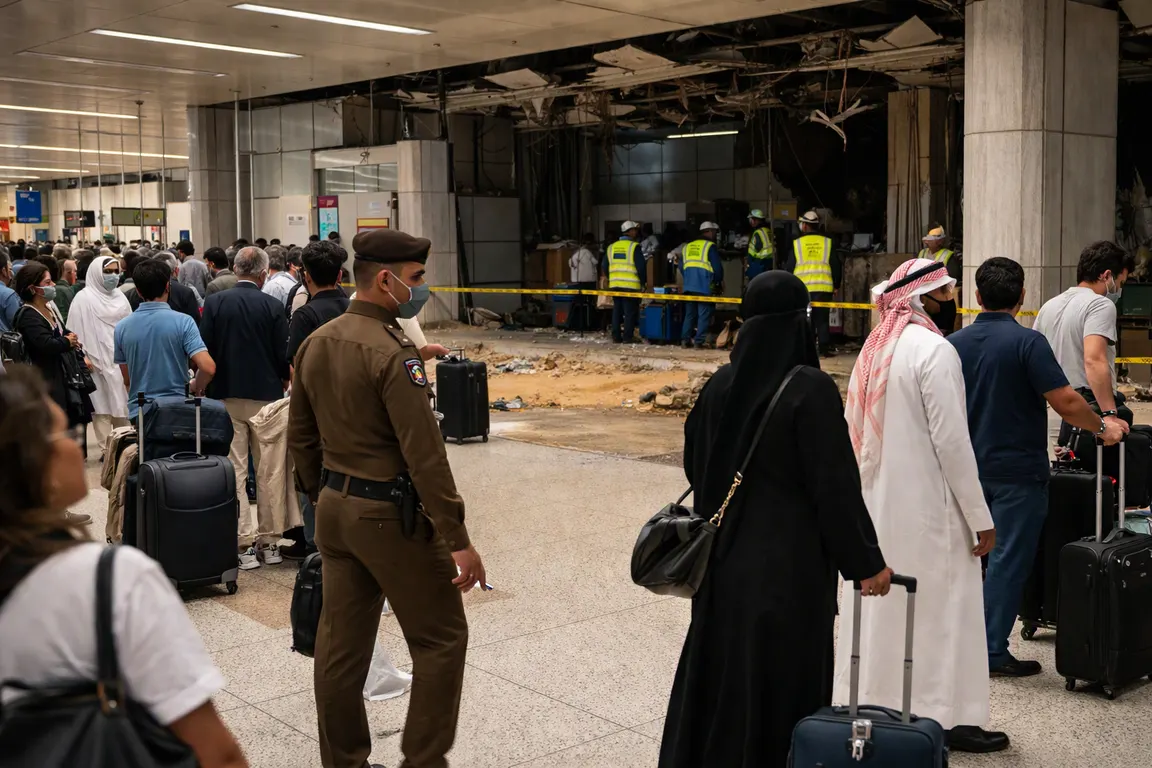
Saudi Arabia’s main international gateway, King Khalid International Airport, resumed normal operations at 6 p.m. Thursday, less than a day after a Riyadh airport missile strike killed three people and injured several others.
The October 8 attack is the most direct assault on Saudi civil‑aviation infrastructure since the Yemen conflict began in 2015. Restoring the hub within 24 hours demonstrated logistical resilience and the pressure to keep the Gulf’s busiest airport serving thousands of travelers, regional commerce and a fragile tourism sector.
Houthi forces launched the missiles from Yemen in the early morning, hitting a Saudia passenger aircraft parked on the tarmac. The strike ignited a fire that destroyed the plane and killed Captain Hamoud Ali Alkalthami, Saudia’s first pilot fatality in the conflict. Saudi civil‑defense officials reported three deaths in total, three additional injuries, and shrapnel damage to a children’s nursery and a medical clinic adjacent to the runway.
The airport was shut temporarily, grounding dozens of flights and stranding thousands of passengers bound for Europe, the Gulf and beyond. Airlines rerouted travelers through Dubai, Doha and Abu Dhabi, while Saudia and other carriers recorded immediate operational losses, including aircraft damage, crew overtime and higher insurance premiums for flights over the Red Sea corridor.
The brief shutdown rippled through the regional network, prompting airlines across the Middle East to review security protocols and contingency plans for airport infrastructure. The strike comes amid a wave of Houthi attacks that have killed three and injured 36 across Saudi Arabia between Oct 5 and Oct 7, suggesting a shift toward high‑visibility civilian targets aimed at pressuring Saudi economic lifelines.
U.S. officials issued a new State Department travel warning, urging heightened vigilance for American citizens and recommending alternative routes where possible. Business travelers faced uncertainty about future itineraries, and tourism operators warned of potential revenue loss if disruptions continue.
The rapid reopening underscores Saudi civil‑aviation authorities’ capacity to restore critical services, but repeated attacks on airports could erode confidence in the safety of Saudi air travel. Observers caution that airlines may reconsider route structures and passengers could seek alternative hubs if the threat persists.
The United States and Saudi Arabia, along with allied security agencies, are expected to conduct a joint assessment of how to protect civilian infrastructure from missile strikes. The outcome will influence airline operations and broader diplomatic calculations surrounding the Red Sea corridor and the contested Bab al‑Mandeb Strait.