

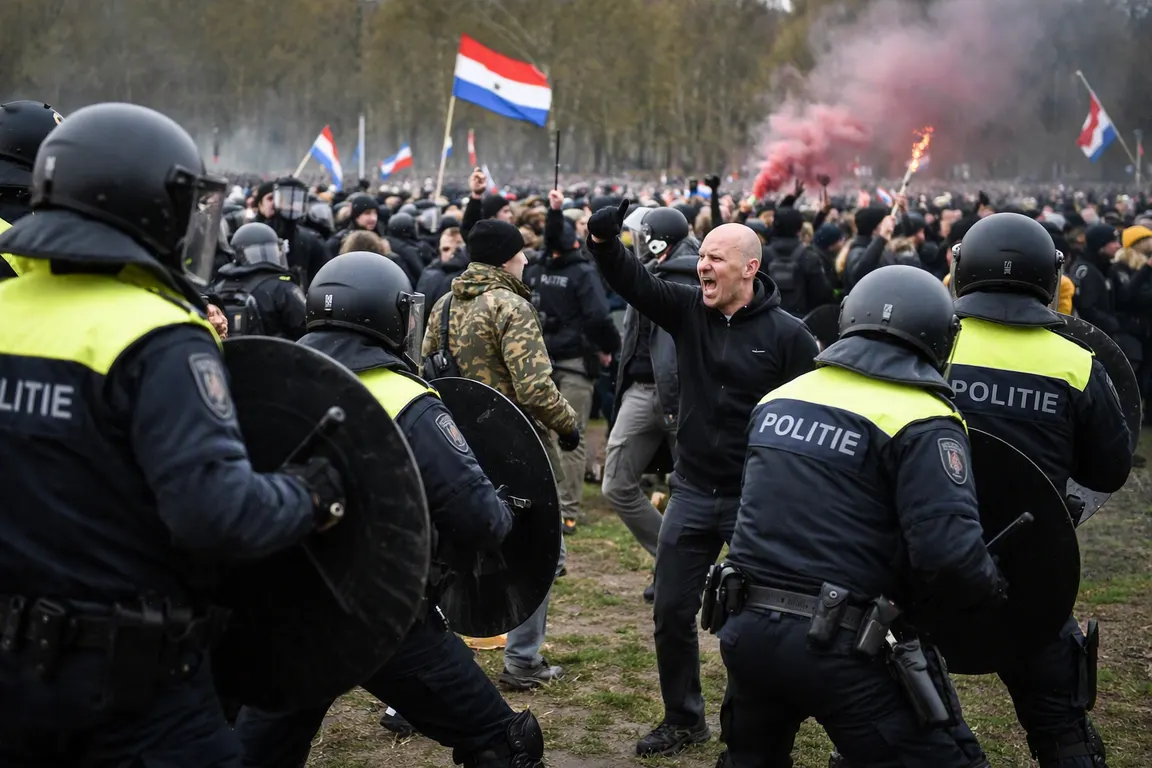
Police moved in on Saturday to disperse a banned far‑right anti‑immigration rally that turned violent in Malieveld park, The Hague. Demonstrators ignited fireworks, shouted antisemitic slogans and performed Nazi salutes, prompting riot police in The Hague to order the crowd to disperse. The operation resulted in at least 24 arrests, public broadcaster NOS reported.
The Hague municipality revoked the rally’s permit on public‑order grounds after intelligence warned of a high risk of violence. Despite the ban, hundreds of participants gathered in the city’s central park, which is normally used for large assemblies. Within minutes of their arrival, clashes erupted. Protesters threw fireworks and other projectiles at officers, while some raised Nazi salutes and chanted antisemitic slogans. Justice Minister David van Weel posted on X that the behaviour was “unacceptable” and called for an “extremely firm” response.
Riot police formed a cordon, gave a verbal order to disperse and then used batons and shields to clear the area. NOS said 24 individuals were taken into custody; charges are expected to include public disorder, assault on police and incitement of hatred, though exact accusations have not yet been released. No injuries were reported among civilians, but the park was temporarily shut down and a heightened security presence was visible.
The incident highlights Dutch authorities’ willingness to intervene decisively when extremist street actions threaten public order. By banning the march and deploying riot police, officials signaled that violent tactics will not be tolerated, a stance that could shape how future demonstrations are policed across the country.
Legal experts note that the ban rests on the Dutch Public Order Act, which allows municipalities to deny permits when a gathering is likely to cause serious disturbance. The number of arrests, confirmed only by NOS, leaves open how many participants will face prosecution and what penalties may follow. While the firm response may deter future extremist rallies, it could also fuel grievances among far‑right groups that view the crackdown as a suppression of free speech.
Compared with a similar protest last year, the police response was more pre‑emptive. In the earlier incident, a police car was set ablaze and a D66 party headquarters was attacked after authorities delayed their intervention. This time, officials acted before the crowd could fully coalesce, limiting property damage and preventing injuries.
The broader implication for Dutch civil society is that permits for public demonstrations will likely be scrutinized more closely, especially when extremist symbols or rhetoric are anticipated. Advocacy groups may need to adjust planning strategies, and political parties could face tighter oversight when arranging rallies.
A formal investigation by the Public Prosecution Service will examine the arrests and the conduct of both protesters and police. The findings will inform whether the current legal framework adequately addresses extremist street politics or if legislative adjustments are required. Until then, the incident remains a focal point for debate over how liberal democracies balance the right to assemble with the imperative to safeguard public order.