

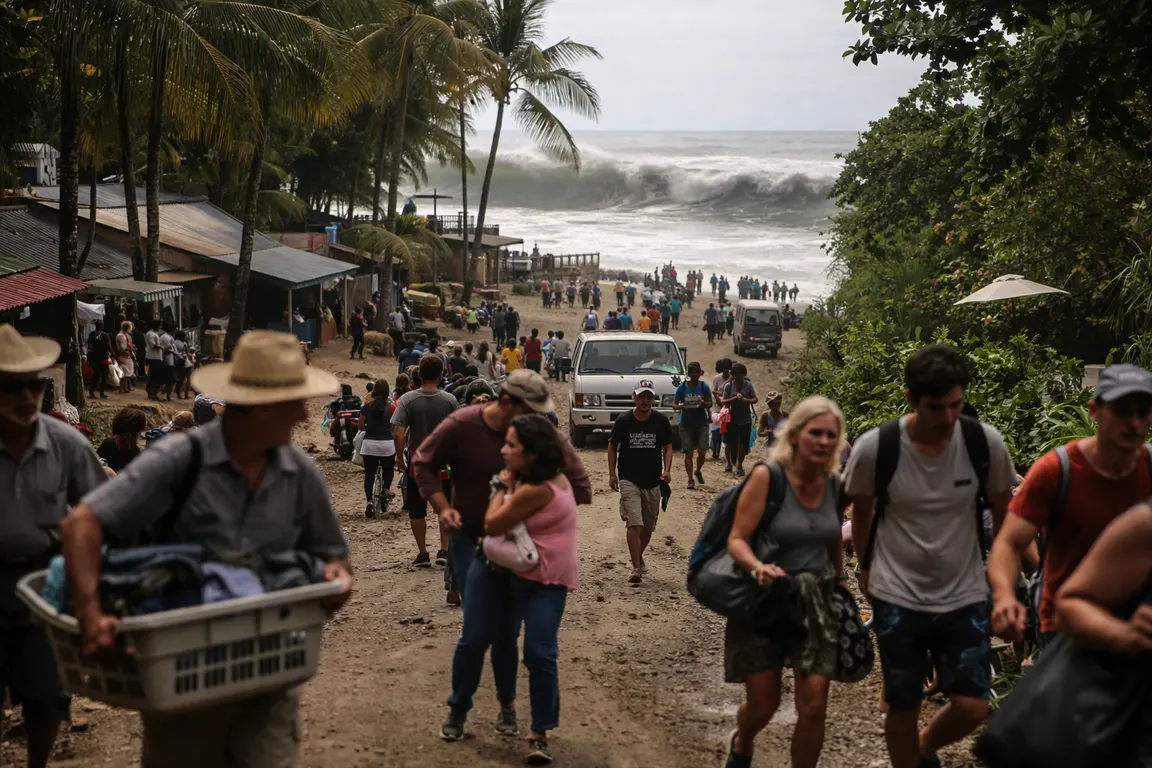
A magnitude 7.6 Panama earthquake tsunami struck near the village of Pitaloza Arriba on the southern coast at 1:56 p.m. EST on Oct. 9, 2026. The tremor prompted tsunami warnings for nine Pacific‑coast nations and forced airlines to reroute flights at Tocumen International Airport.
The United States Geological Survey located the epicenter about 14 km southwest of Pitaloza Arriba at a depth of roughly 33 km (20.5 mi). Initial reports listed the quake at 7.6; a later USGS‑linked tweet mentioned a possible 8.0, but no final magnitude has been released.
Tsunami advisories were issued for Panama, Colombia, Ecuador, Nicaragua, Guatemala, Chile and other Pacific‑coast nations, later extending to the U.S. West Coast and British Columbia. No casualties or damage have been confirmed so far.
Airlines responded within minutes, diverting inbound and outbound flights from Tocumen. Passengers bound for Central America faced cancellations or rerouting to alternate hubs, adding pressure to neighboring airports handling the extra traffic. Regional aviation authorities issued guidance on fuel, crew rest and passenger accommodation.
Panama’s National Civil Protection System activated evacuation protocols for low‑lying districts. Colombia’s maritime agency ordered a temporary halt to Pacific‑port operations, while Ecuador and Chile opened shelters and dispatched teams to monitor tide gauges. The coordinated alerts show how a single rupture can generate waves that travel thousands of kilometres, threatening fisheries, ports and coastal infrastructure far from the epicenter.
The quake follows a series of large seismic events in the region, including a magnitude‑7.0 tremor in Venezuela in June and two magnitude‑7.2 quakes in Colombia and Peru in August. Seismologists note that the Caribbean‑South American plate boundary remains highly active, increasing the likelihood of aftershocks and future main‑shock events.
Authorities in Panama have pledged to release an official magnitude once USGS finalizes its analysis and to update evacuation orders based on the latest tide‑model data. Neighboring countries are monitoring the same data streams and stand ready to mobilize additional aid if needed.
The immediate priority for regional governments is rapid damage assessment, verification of critical infrastructure such as bridges and power lines, and coordination of cross‑border rescue resources should a tsunami materialize. The next several hours will determine whether the tsunami warnings translate into actual wave impacts and how effectively the coordinated response can mitigate the broader economic and humanitarian fallout of this seismic event.