

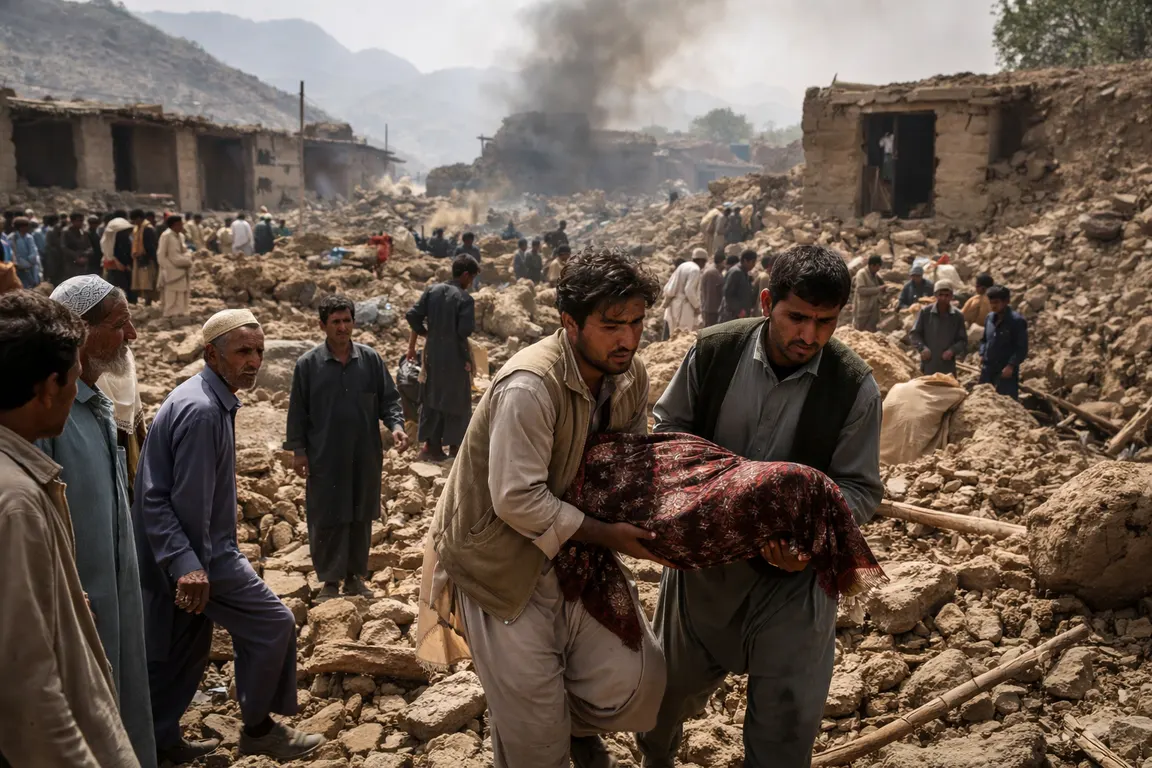
At least 36 civilians were killed in recent Pakistani airstrikes on eastern Afghanistan, according to Afghan officials. The attacks have escalated tensions between the two countries and raised concerns about regional stability. Pakistan claims to have killed 25 militants in the airstrikes, which targeted three eastern provinces in Afghanistan, including Paktia, Paktika, and Kunar.
The Taliban government in Afghanistan has denied harboring militants. Disagreement between Afghan and Pakistani officials over the number of civilian casualties and the presence of militants in Afghanistan has fueled the tensions. The conflict began in February, with weeks of violence killing hundreds and displacing tens of thousands, followed by a ceasefire in March and sporadic attacks since then, including the recent Pakistani airstrikes.
Pakistan's information minister, Attaullah Tarar, stated that the operations included ground operations in border areas. The airstrikes have affected Afghan civilians, with many killed or wounded, and have raised concerns about regional stability and the potential for further conflict. As the death toll from Pakistani airstrikes on Afghanistan continues to rise, the fragile peace between the two countries is on the brink of collapse.
The international community has played a limited role in mediating the conflict, and it remains to be seen what concrete steps will be taken to prevent further escalation. The UN has reported that the conflict has displaced tens of thousands of people, and the situation is likely to worsen without a lasting resolution. With the current state of relations between Pakistan and Afghanistan at a low point, the next step will be crucial in determining the future of the region.
The recent escalation in violence has significant implications for regional stability, and the need for a lasting resolution is becoming increasingly urgent. The Afghan and Pakistani governments must work towards a peaceful resolution to the conflict, and the international community must play a more active role in supporting these efforts. Only through a concerted effort can the violence be brought to an end and the region be stabilized.