

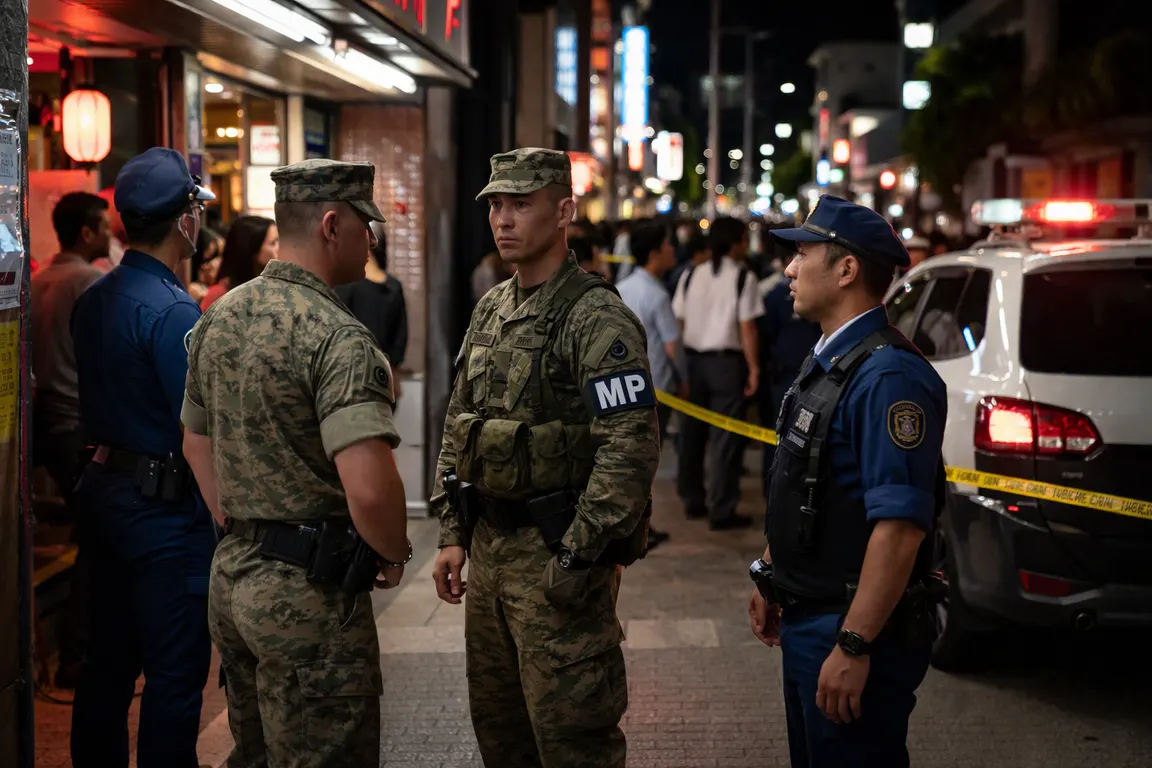
Japanese authorities imposed a midnight‑to‑5 a.m. curfew and an alcohol ban on U.S. troops in Okinawa, effective immediately and set to last for a month. The order follows the arrest of Marine Devin Jacob Ballard on suspicion of strangling 39‑year‑old resident Anna Yagi.
The curfew, issued by the Okinawa prefectural government in coordination with national security agencies, requires all U.S. personnel to be off‑base and in designated housing by midnight. Consumption of alcoholic beverages is prohibited for the duration of the order.
Ballard’s arrest, reported by Al Jazeera, is the first time a U.S. Marine has been detained in Okinawa on suspicion of killing a Japanese civilian. Police have not disclosed the exact date of the arrest, but the curfew was announced within hours of the news reaching local officials.
The incident has reignited long‑standing resentment toward the U.S. military presence on the island. Demonstrations erupted in several municipalities, with protesters demanding accountability and broader reforms of the bases. Organizers described the actions as a response to “impunity” they associate with the American presence.
Commanders expressed concern that the restrictions could disrupt training schedules and joint exercises, especially as regional tensions rise. Local law‑enforcement agencies will also need to allocate personnel to enforce the curfew, diverting resources from routine patrols.
For Okinawan businesses that rely on patronage from U.S. personnel, the ban could mean a short‑term loss of revenue. Night‑time establishments warned of reduced sales, while community leaders emphasized the need for safety and respect for local norms.
The investigation into Yagi’s death remains ongoing. Japanese prosecutors will file formal charges if evidence supports a homicide allegation. Neither the U.S. Department of Defense nor senior military officials have issued a public statement on the curfew or the broader policy response.
The curfew comes as senior officials from Washington and Tokyo prepare for a series of security talks aimed at strengthening the alliance. The upcoming U.S.–Japan security discussions, slated to begin next week, are expected to address the diplomatic fallout from the incident and consider additional measures to preserve operational effectiveness.
The month‑long restrictions underscore the delicate balance between maintaining the U.S. military’s operational readiness and addressing local concerns about safety and conduct. How the curfew is enforced and its impact on both the troops and the Okinawan community will likely shape public sentiment and future base‑related policies.