

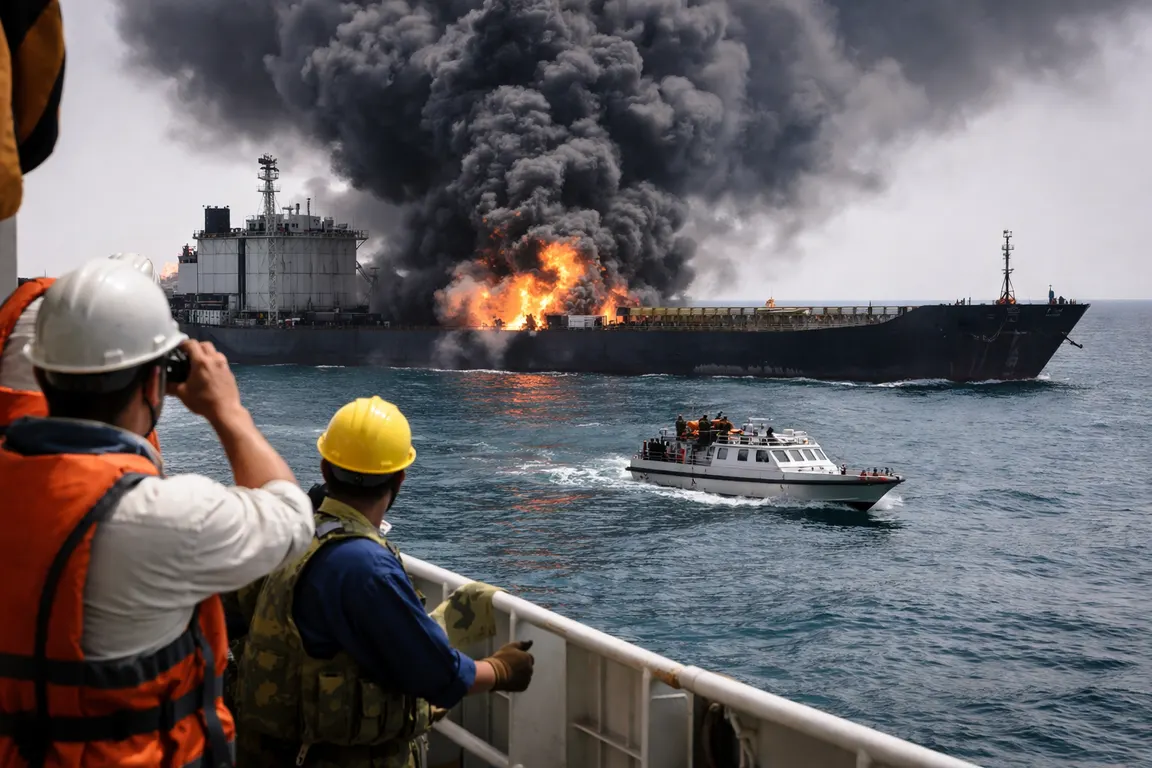
The safety of global energy supplies is under threat as over 60 commercial ships have been attacked in the Persian Gulf, Strait of Hormuz, and Gulf of Oman since March 1, highlighting the impact of oil tanker attacks. The recent surge in attacks has raised concerns about the safety of global energy supplies, with potential price increases and disruptions to the economy.
The UN has urged countries to help evacuate and repatriate approximately 6,000 sailors stranded in the Strait of Hormuz, citing a humanitarian and human rights crisis. The US military has launched strikes on Iran in response to Tehran-backed Houthi rebels attacking oil tankers in the Red Sea.
Crude prices have surpassed $100 a barrel due to the escalating conflict. The Strait of Hormuz is a critical chokepoint, with one-fifth of the world's oil passing through it. The Bab el-Mandeb Strait is another key waterway affected by the conflict, with ships being rerouted around Africa to avoid the area.
A Danish-flagged tanker, Torm Innovation, was rerouted from Yanbu, Saudi Arabia, through the Suez Canal and around the Cape of Good Hope due to security concerns. The conflict is expected to lead to higher energy prices, potentially affecting consumers and the global economy.
The immediate consequences of the attacks on oil tankers for global energy supplies and prices are a major concern. The US military response to the Houthi rebel attacks has raised questions about the long-term implications of the conflict for the stability of the region and global energy security.
As the conflict in the Middle East escalates, the world's energy supplies are being impacted, with the fate of thousands of sailors and the global economy hanging in the balance. The next step will be to see how countries respond to the UN's call to evacuate and repatriate the stranded sailors, and how the global community will work to ensure the safety of energy supplies and prevent further price increases.