

Netanyahu UNGA Speech Sparks Walkouts and Protests
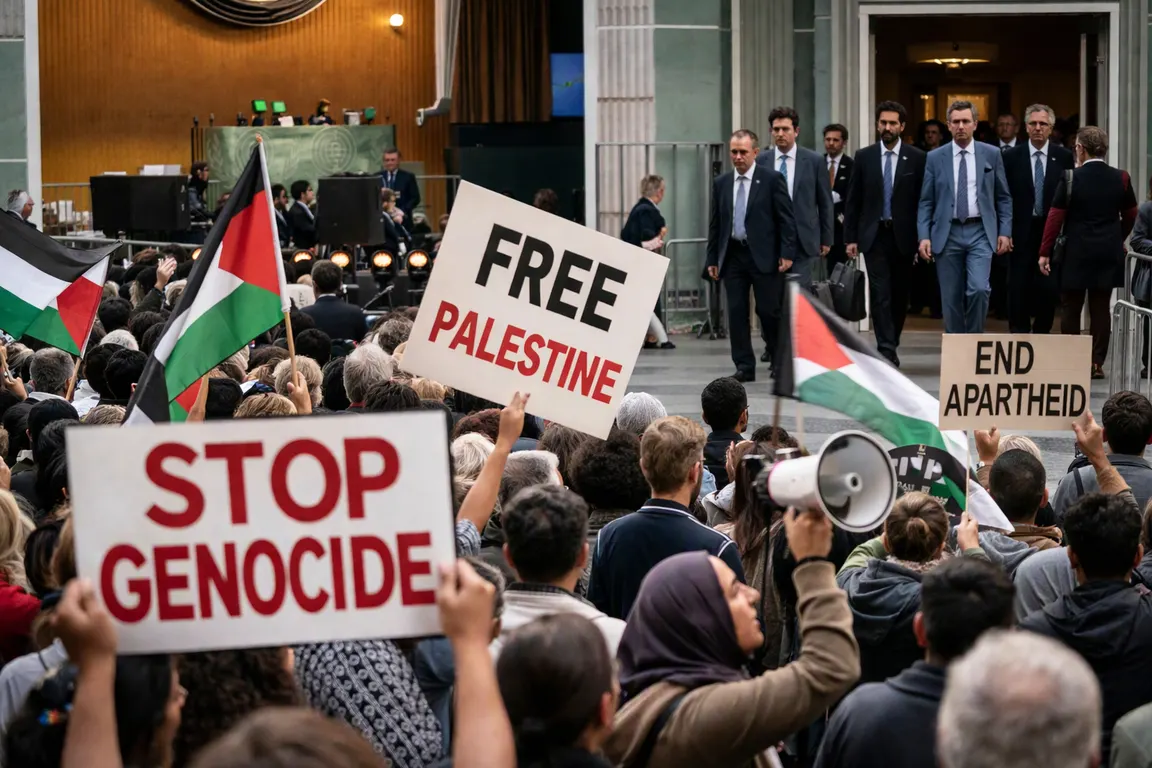
Israeli Prime Minister Benjamin Netanyahu’s UNGA speech on Sept. 17, 2024 triggered walkouts by several delegations and sparked protests outside the New York hall, underscoring the deepening rift between Israel and the United Nations.
The prime minister used the opening‑session platform to defend recent Israeli strikes on Iranian‑linked targets and to reject accusations of genocide in Gaza, calling the claims “the greatest lie of the century.” He framed Israel’s security challenges as a “seven‑front war,” naming Hamas, Hezbollah, the Houthis, Iran, militias in Iraq and Syria, and “Palestinian terrorists in Judea and Samaria.”
Netanyahu also turned his remarks toward New York City’s mayor, Zohran Mamdani, asserting that “many Jews no longer feel safe in New York” and accusing the mayor of silencing Israel. He labeled dissenting U.N. delegates “moral cowards,” and condemned Qatar and Turkey for “spreading falsehoods.” Western European governments were described as applying “double standards.”
During the speech, delegations from several countries—reported by NBC News to include European, Arab and a few U.S. allies—stood and left the chamber. Outside the General Assembly, demonstrators gathered, chanting and holding signs condemning Israel’s actions. No new policy initiatives were announced; the address was largely a defensive narrative rather than a rollout of legislative or operational measures.
Media reactions varied. The Manila Times noted the lack of substantive new proposals, while the Independent World highlighted the personal showdown with the New York mayor and the diplomatic fallout. The New York Post called the speech “fiery and defiant,” suggesting a rhetorical win for Netanyahu despite the walkouts.
The walkouts carry practical implications. Relations between Israel and the delegations that exited—spanning European, Arab and some U.S. allies—are likely to face heightened strain, complicating future negotiations on humanitarian aid and cease‑fire arrangements. In the United States, the clash with Mayor Mamdani may reverberate in local politics, influencing the city’s sizable Jewish community and prompting statements from elected officials.
At the United Nations, the visible dissent signals growing polarization that could hinder consensus‑building on the Israel‑Gaza conflict. Member states openly expressing moral opposition may limit the U.N.’s ability to convene a unified response, at least in the short term.
As the General Assembly proceeds, diplomatic briefings are expected to address the fallout. Israel’s foreign ministry has signaled it will engage with concerned delegations, but whether the walkouts translate into substantive shifts in multilateral dialogue or remain symbolic protests remains to be seen.