

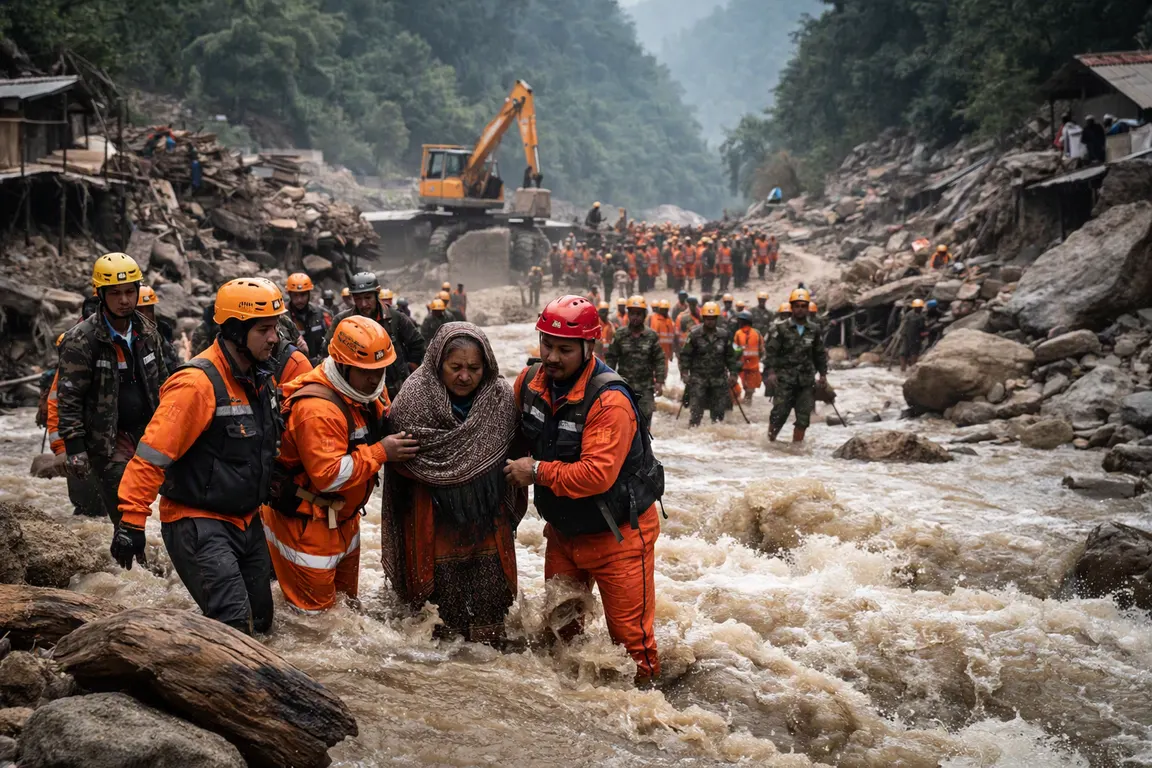
Rescue teams on the Nepal‑Tibet border are battling swollen rivers and collapsed roads after flash floods killed more than 540 people and left at least 1,500 missing on Wednesday, Aug. 21. The disaster has also driven 33 British families to Kathmandu seeking answers about relatives lost in the deluge.
The death toll and the number of missing test Nepal’s disaster‑response capacity, threaten a second wave of flooding, and leave roughly 93,000 residents in what the International Federation of Red Cross and Red Crescent Societies (IFRC) calls “great need.” Immediate humanitarian aid, restoration of transport links, and clear information for families are now essential to prevent further loss of life and to stabilise the fragile border economy.
The floods swept valleys along the border, tearing apart bridges and washing away sections of road that connect remote villages to market towns. Initial reports cited by the Guardian put the death count at 538; Al Jazeera later reported the figure had risen to “more than 540.” Missing‑person tallies vary, with the Guardian listing about 1,500 and the Red Cross estimating over 1,900. The discrepancy reflects the speed of the crisis and the lack of a single, government‑issued register.
Aid agencies have mobilised despite the logistical nightmare. The IFRC’s “great need” designation triggers emergency shelter, food and medical supplies for the 93,000 people affected. Destruction of key mountain passes leaves many villages isolated, forcing rescuers to rely on helicopters and foot patrols. Meteorological services have warned of a possible second flood wave, prompting authorities to slow some operations to avoid further destabilising weakened slopes.
Families arriving at Tribhuvan International Airport face a stark reality: Kathmandu hospitals are fielding a flood of inquiries, trying to verify whether loved ones are “critical, dead or released.” The presence of 33 British nationals among the missing has prompted the UK Foreign, Commonwealth & Development Office to coordinate consular support, but the absence of a centralised casualty list hampers precise assistance. Nepali families are gathering in makeshift prayer halls, hoping for news that may never arrive.
The disaster highlights gaps in Nepal’s preparedness. Although the country has a legal framework for disaster risk reduction, the sheer force of glacial‑fed rivers and the rugged terrain exposed weaknesses in early‑warning systems and infrastructure resilience. Regional trade routes that depend on the border passes are now suspended, disrupting supply chains for agricultural produce, construction materials and other goods.
Looking ahead, the IFRC plans to scale up field operations, and the Nepalese government has pledged to fast‑track repairs of critical bridges. Meteorologists will continue monitoring upstream glacial melt—the primary driver of the floods—to issue timely alerts. For families still waiting at Kathmandu’s hospitals, a coordinated verification process is the next step, one that could clarify the status of thousands of missing persons and shape aid allocation in the coming weeks.