

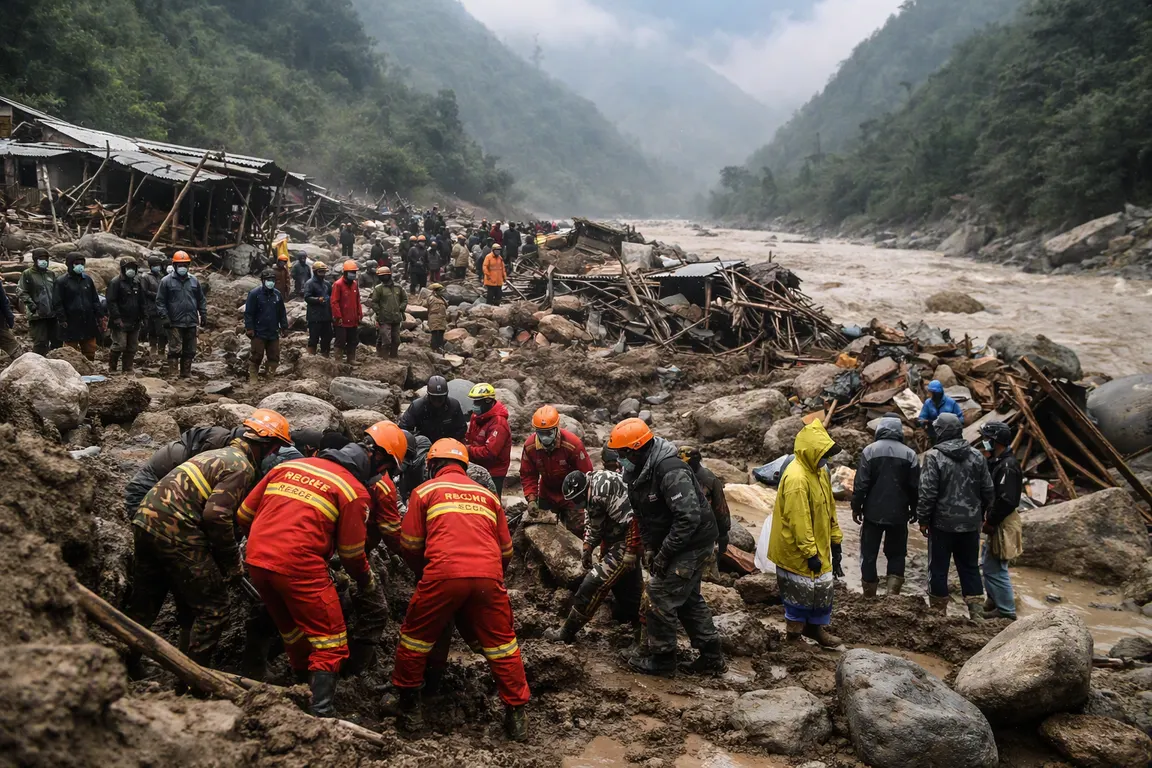
At least 165 people have been confirmed dead after Nepal Tibet flash floods and mudslides ripped through the border region in early September, and rescue teams are still searching for more than 500 people reported missing. The disaster, triggered by unusually heavy monsoon rains, turned remote valleys on both sides of the border into a massive search‑and‑rescue operation.
The death toll includes local residents, Nepali guides and a large number of foreign tourists. Nepal has listed 340 foreign nationals as missing, among them 15 Australians, several Americans, and citizens of India, the United Kingdom, Malaysia and Ukraine. The scale of the loss is testing regional disaster coordination and prompting both Nepal and China to review emergency protocols, border‑area infrastructure and travel advisories.
The Guardian reported the 165 deaths within days of the floods. Chinese authorities have not released official casualty figures, so the total remains unverified beyond the Nepali count. Nepali tour operator Himalayan Glacier Trekking lost contact with a group of 47 trekkers, 15 of whom were Australians. NBC News confirmed that several Americans are among the hundreds of tourists still unaccounted for. Local officials on both sides estimate that more than 500 people remain missing across the affected valleys.
Search efforts are led by Nepal’s disaster‑response agency in partnership with the Nepal Army, while Chinese rescue teams operate on the Tibetan side. Consular officials from the United States, United Kingdom, India, Australia, Malaysia and Ukraine have deployed liaison officers to assist families and help locate their nationals. The operation involves helicopters, ground crews and community volunteers navigating landslides and swollen river channels.
The floods exposed gaps in early‑warning systems that span the trans‑border trekking corridor. Villagers reported receiving little notice before water surged through narrow gorges, a shortfall attributed to fragmented meteorological data sharing between Nepal and China. Experts say the region’s rugged terrain hampers real‑time monitoring, and the lack of a joint alert mechanism likely contributed to the high casualty rate.
Beyond the immediate human toll, the disaster threatens the livelihood of communities that depend on trekking tourism. Roads, bridges and guesthouses have been damaged, and reconstruction could take months. Operators such as Himalayan Glacier Trekking face reputational risk and potential cancellations. The Nepal Tourism Board has issued an advisory urging travelers to postpone treks in the affected districts until safety assessments are completed, while Chinese authorities are reviewing access routes on the Tibetan side.
The incident also strains Nepal‑China cooperation. Both governments have pledged to continue joint rescue operations, but the absence of shared casualty data has sparked calls for a formal cross‑border disaster‑response framework. Regional experts suggest a coordinated early‑warning network, standardized evacuation protocols and joint training exercises to reduce future risks in the Himalayas.
Rescue teams expect to continue searching for missing persons over the coming weeks. Officials from Kathmandu and Beijing have scheduled a bilateral meeting on disaster management later this month. Until the missing are accounted for and the full extent of infrastructure damage is assessed, the border region remains a focal point for international concern and a reminder of the vulnerabilities inherent in high‑altitude trekking corridors.