

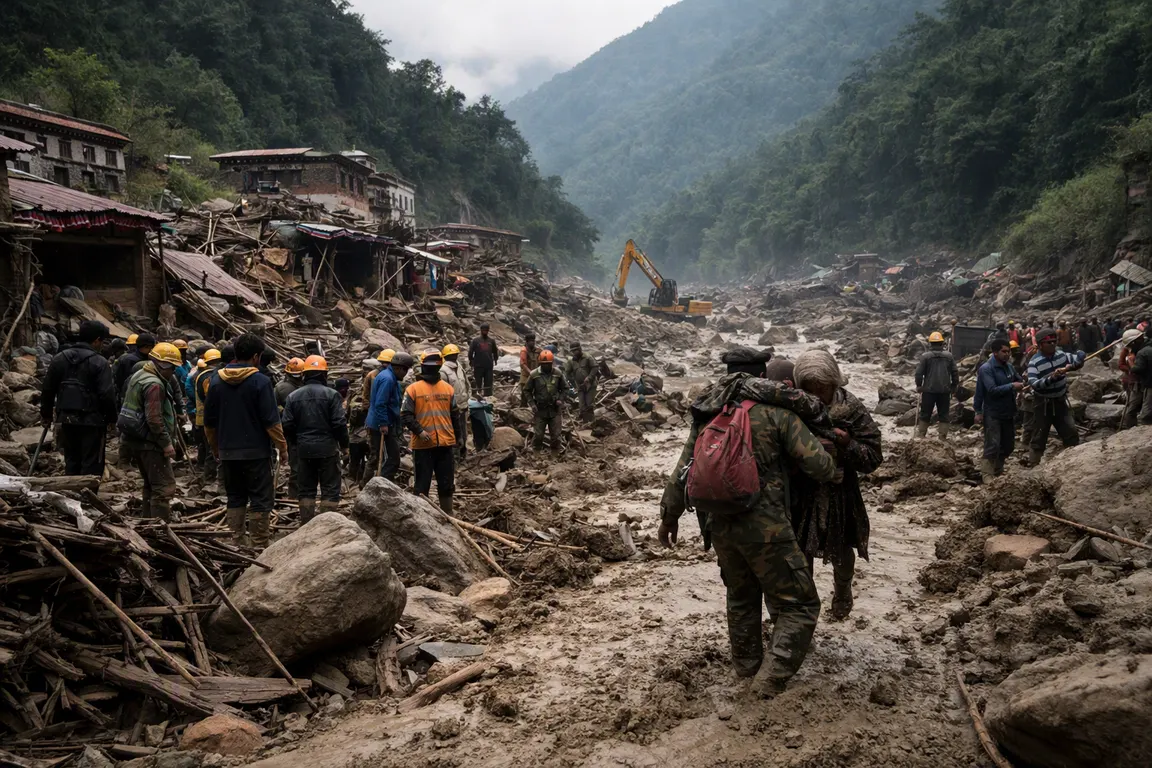
A sudden Nepal Tibet flash flood swept through villages on the frontier in early August, killing at least 157 people and leaving 403 missing, according to Nepal’s Tourist Board. Dozens of Australian tourists and nearly 50 Americans are among those unaccounted for.
The disaster has become an international rescue effort. Governments in Australia, the United States and Nepal are confirming the status of their citizens, coordinating cross‑border teams and investigating the flood’s trigger while trying to prevent further loss.
Scientists say an ice‑rock cascade – either a glacial‑lake outburst or a sudden rock‑ice fall – likely unleashed the torrent that ripped down the valley, destroying homes, bridges and roads. The Wall Street Journal cites the cascade hypothesis as the leading explanation, though the exact mechanism remains unconfirmed.
Rescue operations are under way on both sides of the border. Nepalese forces, aided by teams from India, China and Australia, are searching for survivors, clearing debris and reopening limited access to isolated settlements. Australian Minister for Social Services Tanya Plibersek said the government is "urgently working to confirm the welfare" of its citizens, while the U.S. State Department has dispatched consular officers to assist American families.
Infrastructure damage is severe. Key mountain bridges have collapsed and main roads are buried under mud and rock, forcing rescue crews to rely on helicopters and foot patrols. The loss of transport routes delays medical aid and threatens cross‑border trade, a vital lifeline for the region’s remote communities.
The tourism sector has been hit hard. Operators have suspended inbound tours to the affected area, and insurers expect a surge in claims for lost lives and disrupted trips. The Himalayas depend heavily on adventure tourism, and the disaster could dent future visitor numbers.
Officials warn the death toll could rise as more information emerges. Nepal’s government has pledged to work with neighboring countries and international partners to rebuild destroyed infrastructure and improve early‑warning systems for glacial hazards.
For families abroad, the priority is confirmation of loved ones’ fates. The coordinated, multinational response underscores the growing human cost of climate‑linked mountain hazards and the need for better preparedness in the region.