

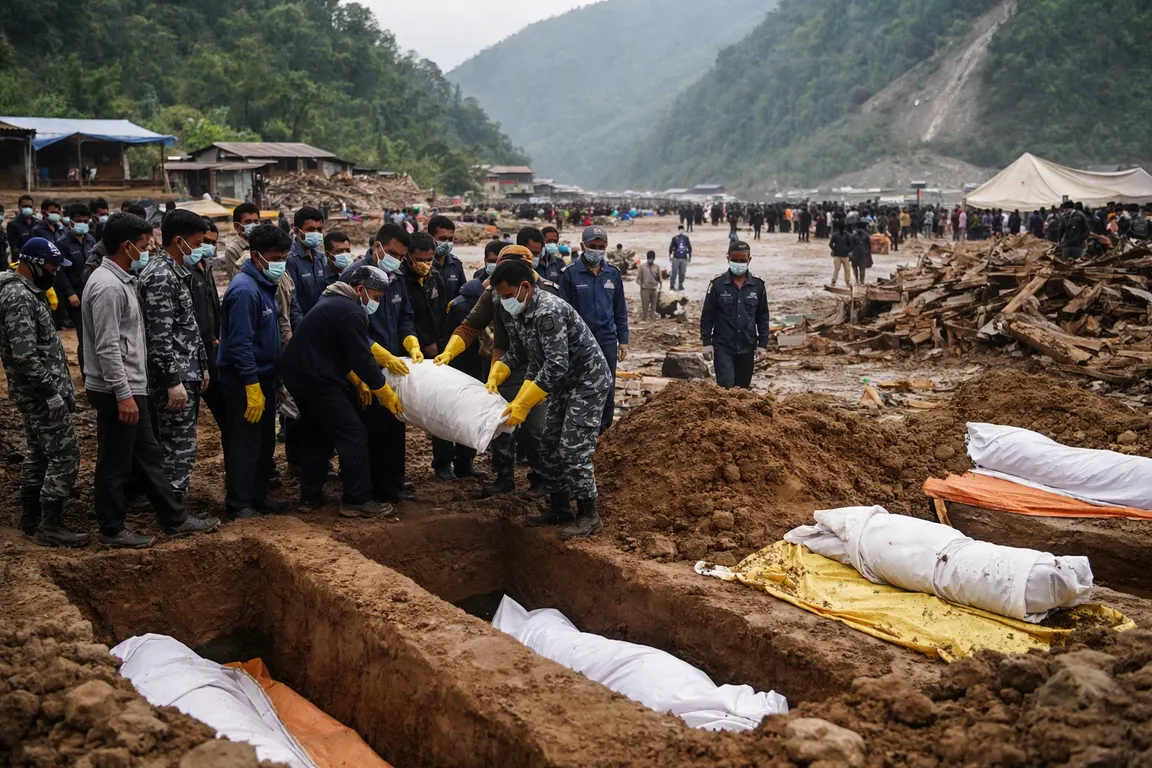
The disaster ministry began temporary burials on Tuesday after taking DNA samples, while officials appealed for more than 1,000 freezer units to keep the dead refrigerated. This response is part of the broader Nepal flash floods relief effort.
The crisis started on May 22 when a glacial outburst flood surged across the Nepal‑Tibet border, destroying villages in Dhading and neighboring districts. By May 30, the confirmed death toll was between 750 and 800, with roughly 2,500 people still missing, according to local and international reports.
Decomposing bodies now pose a public‑health risk. The ministry’s protocol calls for a quick burial after DNA swabs, followed by exhumation once identification is complete. Officials say they need over a thousand freezer units to store the remains, but no delivery timeline has been set. Health workers warn that without cold storage, bacterial growth could spread in the crowded camps where survivors are sheltering.
A key highway linking Kathmandu with the western provinces collapsed on May 26, four days after floodwaters receded. The road, already weakened by the torrent, gave way under saturated ground, cutting off the main supply line for relief convoys. Aid trucks now must use narrow, unpaved detours that add hours to each trip, slowing the delivery of food, medicine and equipment. Local merchants say the blockage has halted trade, threatening the livelihoods of thousands who depend on the route.
Foreign nationals are also caught in the scramble. The Manila Times listed 589 missing foreigners, while other outlets describe the figure as “hundreds.” Consular officials from several countries have opened hotlines and are coordinating with Nepali authorities to verify the status of their citizens, adding diplomatic pressure on Kathmandu to accelerate rescue efforts.
Rescuers continue to battle “leg‑sucking mud,” a term used by reporters to describe the thick, water‑laden earth that can pull a person under. The terrain remains unstable, and there are unverified reports that some bodies may have been swept downstream into India.
Hospitals in the capital are at full capacity, and temporary shelters are straining sanitation systems. The need for DNA kits, forensic experts and cold‑storage equipment has turned the recovery phase into a logistical race against time.
International aid agencies have pledged assistance, but delivery depends on clearing the highway or establishing air‑lift corridors. Until those hurdles are cleared, families will remain without closure, and the public‑health threat from temporary burials will linger.